

Disclosure: this article contains affiliate links. If you buy through them, we may earn a commission at no extra cost to you. Prices were checked in September 2026.
Quick answer: Coursera’s Professional Certificates from Google, IBM, and Microsoft carry real hiring weight. Coursera’s own research with Dynata found employers are 76% more likely to interview a candidate who holds one. A single audit course or a generic Specialization mostly sits on your LinkedIn and does little else. Coursera Plus costs $160 a year right now, and it only pays for itself if you actually finish three or more certificate-length programs in that year, not one.
What You’re Really Buying on Coursera
Nobody signs up for a $49 monthly subscription to feel good about learning. They sign up because a recruiter is scanning a resume in six seconds and they want one more line that survives the scan. That distinction changes every decision in this review: the question is never “is this course good,” it’s “does this specific credential move me from the reject pile to the interview pile.”
Coursera sells three very different products under one brand: single courses, Professional Certificates built with named companies, and full university degrees. Employers treat these three completely differently, and most buyers never separate them before paying.
Which Coursera Certificates Do Employers Actually Recognize?
Professional Certificates from Google, IBM, and Meta are the ones that show up in actual hiring conversations. Coursera and market research firm Dynata found employers are, on average, 76% more likely to interview a candidate with a professional certificate than one without. A separate Coursera employer survey found 86% of U.S. employers agreed that an industry micro-credential strengthens a job application, and 39% said they had already hired someone who had one.
Google alone runs certificates in Data Analytics, IT Support, Cybersecurity, Project Management, and UX Design through its own $49-a-month subscription, hosted on Coursera (grow.google, 2026). IBM runs AI Engineering, AI Product Manager, and Data Science tracks. Meta still actively runs Front-End Developer, Back-End Developer, iOS Developer, Android Developer, and Marketing Analytics certificates, all live and enrolling as of this year. Microsoft has added Project Management, AI Product Manager, and Python Development.
Here’s the part nobody tells you before you swipe your card: these company-branded certificates are entry-level signals, not senior-level ones. They tell a hiring manager “this person has baseline, verified exposure to the tools,” which is exactly what gets a career-changer or a new grad past an applicant tracking system. They do not replace three years of shipped projects on a resume for a mid-level role.
Which Coursera Certificates Are Basically LinkedIn Wallpaper?
Individual course certificates for one-off, ungraded, non-proctored courses carry almost no hiring signal on their own. A single “Introduction to X” certificate from an audit-track course tells an employer you clicked through video lectures, nothing more. The same goes for generic, unbranded Specializations that aren’t tied to a named employer partner: they’re fine for your own learning plan, weak as a resume line.
I’d put it bluntly: if the certificate name doesn’t include a company or university a recruiter already respects, treat it as personal development, not a job application asset. Save the ones from Google, IBM, Meta, Microsoft, or a named university for the resume. File everything else under “things I learned,” not “credentials I earned.”
Is Coursera Plus Worth It If You Only Take Two or Three Courses a Year?
This is where most reviews get lazy and just say “yes if you learn a lot.” Here’s the actual math using live September 2026 pricing.
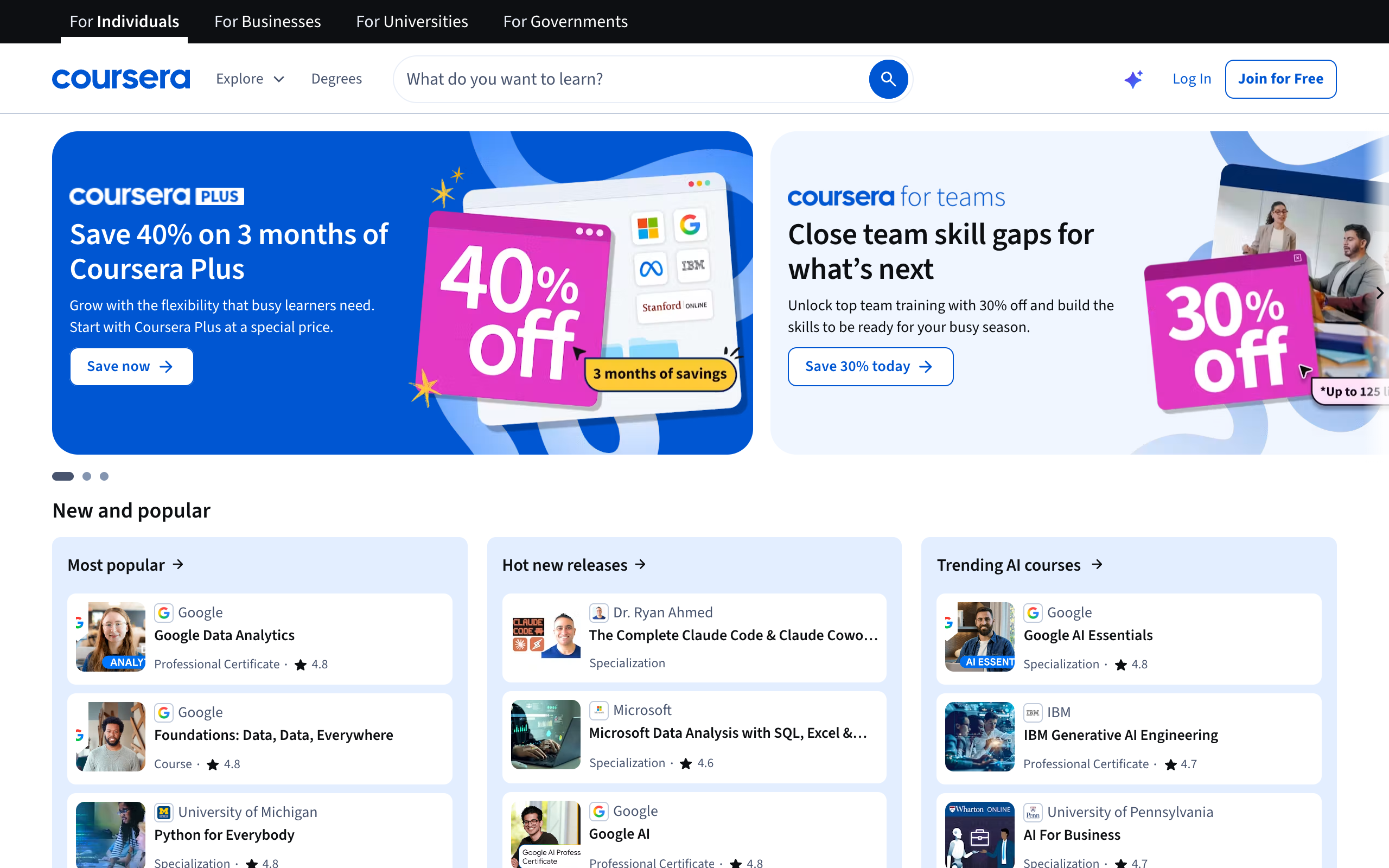
Coursera Plus currently runs $24 a month or $160 a year, both shown with a “Save 40%” promotional banner on the pricing page, so expect the sticker price to move around depending on when you sign up. The $160-a-year plan works out to $13.33 a month. It covers most individual courses and Specializations, unlimited certificates once your trial ends, and a 7-day free trial with a 14-day money-back window on the annual plan.
What it does NOT cover is the part that trips people up: Google’s, IBM’s, and Microsoft’s flagship Professional Certificates run on their own separate subscription, commonly $49 a month, completely outside Coursera Plus. So if your actual goal is a Google Data Analytics or IT Support certificate, Coursera Plus buys you nothing toward that specific goal. You’re paying $49 a month for the certificate track regardless.
Google’s own program page says most learners finish a certificate in three to six months studying under 10 hours a week. Do the math: three months at $49 a month is $147, already close to a full year of Coursera Plus at $160. Four months is $196, more than the entire year of Plus. So the real break-even question isn’t “how many courses do I take,” it’s this: are you doing general Specializations available inside Plus’s catalog, or are you chasing one specific company-branded certificate that Plus doesn’t touch?
If it’s the former and you’ll actively study more than about three months total across the year, the $160 annual plan wins outright. If it’s the latter, Coursera Plus is close to irrelevant to your goal, you’re paying the certificate’s own monthly fee no matter what.
Coursera Plus vs. edX, Udemy, DataCamp, and LinkedIn Learning: Real Prices
| Platform | Price | What it actually gets you |
|---|---|---|
| Coursera Plus | $24/mo or $160/yr (promo pricing, Sept 2026) | Most courses/Specializations; excludes flagship Professional Certificates, MasterTrack, and degrees |
| Google Career Certificates | $49/mo | Data Analytics, IT Support, Cybersecurity, Project Management, UX Design; 3-6 months typical |
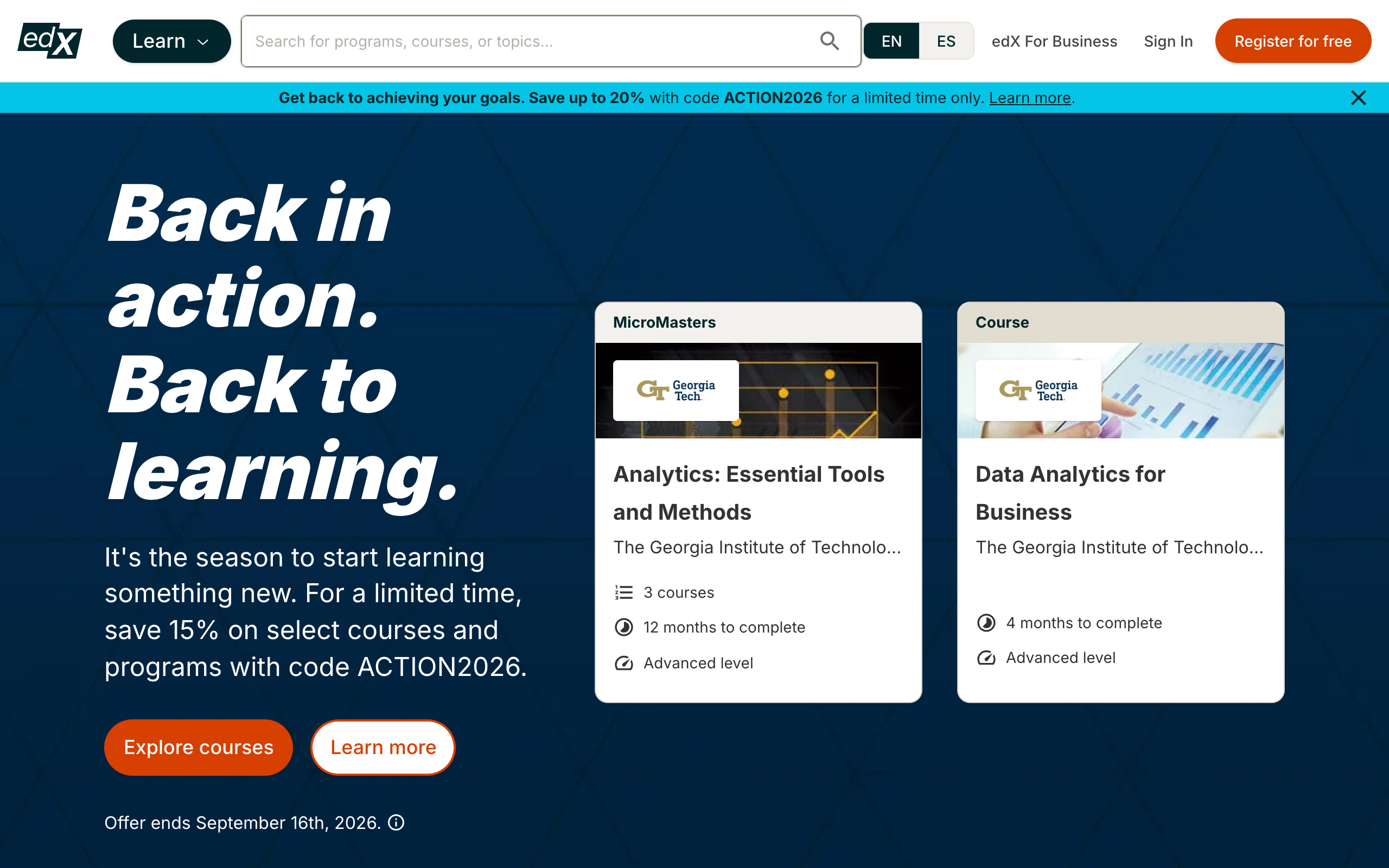
| edX | $50-$300 per verified certificate; Professional Certificate programs a few hundred to ~$1,200 | University-branded verified certificates, MIT/Harvard-affiliated content |
| Udemy | List $19.99-$199.99, actual sale price usually $9.99-$12.95; Personal Plan subscription $14-$20/mo | One-off practical courses, no accreditation, huge discount culture |
| DataCamp | Premium from around $7/mo on annual promo pricing (standard rate roughly $20/mo) | Data science and analytics skill tracks, hands-on coding exercises |
| LinkedIn Learning | $29.99-$39.99/mo, or about $19.99/mo billed annually ($239.88/yr) | Broad business/software/creative library, bundled free with LinkedIn Premium |
Notice what’s missing from that table: nobody except edX and Coursera’s own Professional Certificates ties a specific dollar figure to a specific named employer credential. Udemy and DataCamp compete on breadth and price, not on “will a recruiter recognize this,” and that’s a fair trade if resume signal isn’t your goal.
Should You Pay $2,000+ for a MasterTrack Certificate or Online Degree?
MasterTrack Certificates are Coursera’s least understood product. They cost roughly $2,000 to $5,000 as a one-time fee (commonly split into four payments, with a 5% discount for paying up front), for 15-25% of a real master’s program’s credits, graded by actual faculty. If you later get admitted to the full degree, those credits can transfer. University of Illinois and University of Michigan both run MasterTrack programs. Neither MasterTrack nor full online degrees are included in Coursera Plus at any price.
Full online bachelor’s and master’s degrees run through partner universities like University of London, Georgetown, University of Illinois Urbana-Champaign, and University of Colorado Boulder. Coursera doesn’t publish flat tuition on its degrees hub page, tuition is set by each university and varies by program, so you have to click into the specific degree page to see real numbers before you commit.
A personal note: I’ve watched people jump straight to a $3,000 MasterTrack certificate before ever finishing a single $49-a-month Professional Certificate in the same field. Test the subject and the format cheap first. The expensive tier doesn’t get easier just because you paid more for it.
The Completion Problem Nobody Puts in the Marketing
Here’s the uncomfortable number the sales page won’t show you: research on MOOC platforms puts average course completion around 7.6%, with traditional completion-rate calculations ranging from 0.7% to 52.1% depending on how a “student” is even counted (Open Praxis comparative completion-rate research, 2026). Some elite-university MOOCs have logged dropout rates as high as 95-97%, including one widely cited Coursera bioelectricity course where roughly 350 of 12,700 registrants ever sat the final exam.
That statistic matters directly to your wallet: if you buy Coursera Plus or a $49-a-month certificate subscription and stop logging in after three weeks, which is the statistically normal outcome, you’re paying for a habit you haven’t built yet, not for the credential. Buy the smallest, cheapest access tier first and prove to yourself you’ll actually finish before scaling up to Plus or a certificate subscription.
Peer Grading Is Still a Real Weak Point
Coursera assignments in many courses are graded by other students, not instructors. Reported problems include inconsistent feedback, language-barrier grading, delayed reviews when too few peers are active, and coordinated grade-swapping through outside chat groups, a persistent issue Class Central has tracked for over a decade of coverage. To Coursera’s credit, peer grading is shrinking: peer-graded assignments dropped from about 39% of courses in 2023 to roughly 25% today, and only about 10% of newly published courses still use it. Still, if a specific course you’re eyeing uses peer grading, read a few reviews on that exact course page first. This is exactly the kind of detail a glossy landing page will never surface for you.
How to Apply for Coursera Financial Aid (Step by Step)
- Open the course, Specialization, or certificate page you want and find the “Financial Aid Available” link, usually placed just under the Enroll button.
- Fill out the application form, which requires a minimum of roughly 150 words explaining your financial situation and why the course matters to your goals.
- Submit it. The application is free and takes about 15-20 minutes.
- Wait roughly 15 days for a decision. Approvals commonly range from 75% to 100% off, depending on your country and the course provider.
- Remember financial aid is granted per course, not per program, so a five-course Specialization or Professional Certificate needs five separate applications.
- Use the course within 180 days of approval or you’ll need to reapply.
Who Should NOT Buy Coursera Plus or a Professional Certificate

Skip Coursera Plus if you already know exactly which single Google, IBM, or Microsoft certificate you want, since Plus doesn’t cover those and you’ll pay their separate monthly fee anyway. Skip any Coursera purchase entirely if you’ve never finished an online course before, start with a free-audit course first and see if you finish it before paying anyone. Skip MasterTrack and full degrees if you haven’t already completed at least one shorter program in the same subject, the dropout math above applies even harder at the $2,000+ tier. And skip Coursera altogether if what you actually need is a portfolio of shipped work, not a certificate; for developer and design roles past the entry level, a live GitHub or Behance is worth more than another badge.
If you’re weighing Coursera against other AI-assisted learning tools for a broader project, our roundup of education and translation AI tools covers where Coursera fits next to newer AI tutors, and our guide to free education and translation tools is the better starting point if you want to test the waters at zero cost before paying anyone.
FAQ
Is a Coursera certificate the same as a college degree?
No. Professional Certificates and Specializations are non-degree credentials. Only Coursera’s degree-hub programs, run through partner universities like University of London or Georgetown, grant an actual bachelor’s or master’s degree.
How long does a Google Career Certificate actually take?
Google’s own program page states most learners finish in three to six months while studying under 10 hours a week, at $49 a month during that period.
Does Coursera Plus include Google, IBM, or Meta Professional Certificates?
Generally no. These flagship, company-branded certificates run on their own separate monthly subscription outside Coursera Plus. Always check for the Coursera Plus badge on the specific program page before assuming it’s included.
Can I get a Coursera certificate for free?
You can audit most individual courses for free, which gives you the material without grading or a certificate. To earn a certificate at no cost, apply for financial aid on that specific course page.
Is Coursera worth it if employers don’t recognize the certificate?
It can still be worth it for the skill itself, but for hiring signal, stick to certificates carrying a name a recruiter already respects: Google, IBM, Meta, Microsoft, or an accredited university.
What happens if I cancel Coursera Plus halfway through a course?
You lose access to graded content and certificate eligibility for anything not finished before cancellation, since Plus is a subscription, not a one-time purchase.
The Bottom Line
Buy Coursera Plus if you’re a generalist who’ll actively study more than about three months total this year across multiple Specializations. Buy a single Google, IBM, Meta, or Microsoft Professional Certificate directly if you have one specific job title in mind, since Plus won’t cover it anyway. Skip both if you haven’t proven to yourself, with one free audited course, that you’ll actually finish what you start. The 7.6% average completion rate isn’t a Coursera problem, it’s a you problem, and no subscription tier fixes it for you.