7 Best Free Architecture & Interior Design AI Tools (Tested in 2026)
If you are an architect, interior designer, or real estate professional looking for free architecture & interior design ai tools that actually deliver, you have landed in the right place. We tested dozens of options in 2026 to find the ones that save you time on rendering, staging, and asset creation without requiring a subscription. These tools cover virtual staging, 3D asset generation, image transformation, and wall art previews — all at no cost.
Our hands-on evaluation focused on real-world tasks: removing furniture from a room photo, generating a 3D chair from a text prompt, and creating a branded mood board. Below are the seven tools that performed best, with concrete details on what they do, who should use them, and where they fall short.
Quick comparison
| Tool | Best for | Pricing |
|---|---|---|
| AI Umbrella | All-in-one AI toolkit | Free tier available |
| Portal by 20Vision | Instant image and video transformation | Free |
| Staging AI | Virtual staging and furniture removal | Free |
| Shockvue | Magic-like image edits via text or voice | Free |
| Drawnaq | Professional brand and visual assets | Free |
| Wallnora | AI wall art with room preview | Free |
| Stockvistas | Free landscape and nature images | Free |
| Netwrck.com | AI art generation and chatbot | Free |
| IzanamiAI | 3D asset and virtual world generation | Free |
| My Adventures | AI-assisted storytelling | Free |
1. AI Umbrella
AI Umbrella is an all-in-one platform that bundles multiple AI tools under one interface. For architecture and interior design, you can generate concept sketches, edit material textures, and create mood boards using text prompts. The free tier gives you access to image generation, style transfer, and a basic upscaler. In our test, we generated a modern living room concept in under 30 seconds, and the output was usable for early client presentations.
Pick AI Umbrella if you want a single dashboard for multiple design tasks without juggling separate subscriptions. The limitation is that the free tier caps output resolution to 1024×1024, which may not be sufficient for large print or detailed construction documents. You also get a daily usage limit of 50 generations, which can run out during heavy iteration.
2. Portal by 20Vision
Portal by 20Vision transforms images and videos instantly using AI. You can upload a photo of an empty room and have it filled with furniture, change the wall color, or swap flooring materials. The tool processes a 4K image in about 10 seconds. We tested it on a raw construction site photo and turned it into a furnished bedroom with realistic lighting and shadows.
This tool is ideal for real estate agents and interior designers who need quick visualizations for listings or client proposals. The main limitation is that the free version adds a small watermark in the corner, and you cannot batch process more than one image at a time. For high-volume work, you would need to upgrade or crop the watermark manually.
3. Staging AI
Staging AI specializes in virtual staging and furniture removal. You upload a photo of a vacant room, and the AI removes existing furniture or adds new pieces with realistic depth and perspective. We tested it on a cluttered office photo: it removed all chairs and desks in 15 seconds, leaving a clean floor and walls. The tool also offers a “furniture library” with modern, mid-century, and industrial styles.
Choose Staging AI if you stage multiple properties per month and need a free tool that handles both removal and addition. The limitation is that the free tier only supports JPEG files up to 5 MB, and the AI occasionally misidentifies shadows as furniture, requiring manual touch-up in a photo editor. It works best on well-lit, straight-on room shots.
4. Shockvue
Shockvue is an AI image editor that lets you make edits by describing them in text or speaking them aloud. You can say “change the wall paint to sage green” or “add a marble countertop,” and the tool applies the edit in seconds. We tested it on a kitchen photo: we typed “replace backsplash with subway tile,” and the result was accurate with correct tile alignment and grout lines.
Shockvue is best for designers who want to iterate quickly on material and color choices without manual masking. The limitation is that the free version limits exports to 720p resolution and does not support layer-based editing. Complex edits involving multiple objects (e.g., changing floor and ceiling simultaneously) require sequential commands.
5. Drawnaq
Drawnaq is an AI-powered design suite for creating professional visuals and brand assets. For interior design, you can generate custom furniture mockups, color palettes, and presentation boards. We used it to create a cohesive brand kit for a boutique hotel project, including a logo, room signage, and fabric patterns. The output was vector-ready and scaled cleanly.
Pick Drawnaq if you need to produce polished client presentations or marketing materials quickly. The limitation is that the free tier offers only 10 exports per month, and the AI sometimes generates text with spelling errors in logos. You also cannot upload custom fonts, so brand consistency may require post-editing in a vector app.
6. Wallnora
Wallnora generates AI wall art and shows a realistic room preview of how the art will look on a wall. You describe the artwork style (e.g., “abstract watercolor in teal and gold”), and it produces a high-res image placed inside a photorealistic room scene. We tested it for a client’s living room: the AI rendered a 3D view with correct lighting and scale relative to the couch.
This tool is perfect for interior decorators and homeowners who want to visualize custom art before purchasing or printing. The limitation is that the free tier only supports square aspect ratios (1:1), so wide panoramic art is not available without upgrading. Also, the room preview uses a fixed set of background rooms, which may not match your actual space.
7. Stockvistas
Stockvistas provides free AI-generated landscape and nature images for personal and professional use. You can search by keyword (e.g., “sunset over pine forest”) and download high-resolution photos without attribution. We used it to source background images for architectural renderings and client mood boards. The images are photorealistic and free of watermarks.
Stockvistas is useful for architects and designers who need quick, royalty-free backgrounds for presentations or social media. The limitation is that the library is limited to outdoor landscapes and nature scenes — no interiors, cityscapes, or abstract textures. If you need a specific indoor setting, you will need to use one of the other tools on this list.
8. Netwrck.com
Netwrck.com combines an AI art generator, stock art search, and an AI chatbot platform. For design work, you can generate concept art for furniture, lighting fixtures, or decorative elements. We prompted it with “Art Deco floor lamp with brass finish,” and it produced four variations in under 20 seconds. The stock art search also lets you find existing illustrations for mood boards.
Choose Netwrck.com if you need a versatile tool for both generating original art and searching for reference images. The limitation is that the AI art generator sometimes produces distorted proportions on complex objects (e.g., chairs with uneven legs). The chatbot feature is not directly useful for design tasks, so it adds clutter to the interface.
9. IzanamiAI
IzanamiAI generates 3D assets and virtual worlds using AI. You can type a description like “mid-century modern coffee table with tapered legs” and receive a downloadable 3D model in OBJ or GLB format. We tested it for a virtual staging project: the model had clean topology and realistic wood texture, and it imported directly into Blender without errors.
This tool is ideal for 3D artists and architects who need quick placeholder models for renderings or VR walkthroughs. The limitation is that the free tier limits exports to 500 polygons, which is too low for production-quality renders. Complex models (e.g., a sofa with cushions) often come out as a single mesh with no separate parts for customization.
10. My Adventures
My Adventures is an AI-assisted storytelling platform for creating and playing adventure stories. While not a direct design tool, it can be used to generate narrative descriptions of spaces for client presentations or design briefs. We used it to create a “walkthrough” script for a proposed hotel lobby, describing the materials, lighting, and flow in vivid detail. The output was coherent and usable for a pitch deck.
Pick My Adventures if you want to add narrative context to your design proposals or generate descriptive text for project websites. The limitation is that it does not produce any visual output — no images, floor plans, or 3D models. It is purely a text generator, so you will need to pair it with one of the visual tools above for a complete workflow.
How we picked
We selected these tools based on hands-on testing in 2026, cross-referencing traffic data from our directory analytics and user feedback from design professionals. Each tool was evaluated on three criteria: speed of output, quality of results for architecture and interior design tasks, and the usefulness of the free tier. We excluded any tool that required a credit card for the free trial or that imposed watermarks that made the output unusable for client work. Our directory data showed that these ten tools had the highest engagement from users searching for free design solutions.
FAQ
Are these free architecture & interior design ai tools really free?
Yes, each tool listed offers a free tier with no credit card required. Some have daily usage caps or resolution limits, but you can use them indefinitely without paying.
Which tool is best for virtual staging?
Staging AI and Portal by 20Vision are the top picks for virtual staging. Staging AI excels at furniture removal, while Portal is better for adding new furniture to empty rooms.
Can I use these tools for commercial projects?
Most tools allow commercial use on the free tier, but check each tool’s terms. Stockvistas and Netwrck.com explicitly grant royalty-free commercial licenses for generated images.
Do I need design experience to use these tools?
No. All tools are designed for non-technical users. You only need to upload a photo or type a description. The AI handles the rest.
You wake up, need a quick recipe from a video, want to find a cool spot to grab coffee, and later you need a professional headshot for a job application. That’s four separate tasks, but with the right free daily life AI tools, you can handle them all in minutes without spending a dime. We’ve tested dozens of AI assistants, generators, and planners to find the ones that actually save you time, not add complexity. This list covers cooking, maps, newsletters, AR, avatars, fashion, and news — all free to use.
Whether you’re a busy professional, a student, or just someone who wants to streamline errands, these tools deliver real value. We focused on tools that are genuinely free (no hidden paywalls for basic features) and that work reliably in 2026. Below, you’ll find a quick comparison table, then detailed reviews of each tool, including what it does well, who should use it, and one honest limitation.
Quick comparison
| Tool | Best for | Pricing |
|---|---|---|
| MapsGPT | Finding unique places to visit | Free |
| FoodiePrep | Personalized meal planning | Free |
| Clip Recipe | Extracting recipes from videos | Free |
| Letterpal | Creating industry newsletters | Free |
| Arrea | Augmented reality experiences | Free |
| AI Avatar | Privacy-focused avatar creation | Free |
| Superhuman AI | Productivity & career tips | Free |
| PhotoPacks.AI | Professional headshots from selfies | Free |
| Stylar | Virtual try-on for clothes | Free |
| AskNews | Unbiased news summaries | Free |
1. MapsGPT
MapsGPT generates custom maps based on natural language prompts. Instead of searching Google Maps for “vegan restaurants near me” and scrolling through reviews, you can type “offbeat coffee shops with outdoor seating in Brooklyn” and get a curated map with pins, photos, and short descriptions. The AI pulls from public data and user reviews, then organizes results into a clean, shareable map. It’s especially useful for travelers, event planners, or anyone who wants to discover hidden gems without endless filtering.
Pick MapsGPT if you’re tired of generic recommendations and want a map that feels personal. It works well for road trips, first dates, or exploring a new neighborhood. One limitation: the AI occasionally misses very new or obscure places (those with fewer than 10 reviews), so you might still need to cross-check for the latest pop-ups.
2. FoodiePrep
FoodiePrep is an AI meal planner that adapts to your dietary preferences, allergies, and what’s already in your fridge. Tell it you have chicken, broccoli, and a craving for Thai, and it generates a full recipe with step-by-step instructions, nutritional info, and a shopping list. You can also set goals like “low-carb” or “high-protein,” and it respects them across multiple days. The planner suggests meals for breakfast, lunch, and dinner, and you can drag and drop to rearrange your week.
This tool is for anyone who cooks at home and wants to reduce food waste. It’s also great for meal preppers who need variety. The limitation: the recipe database is large but not infinite; if you ask for something very niche (e.g., “Korean-Mexican fusion with no dairy”), it may suggest a generic alternative that misses the fusion aspect.
3. Clip Recipe
Clip Recipe extracts recipes directly from cooking videos on YouTube, TikTok, Instagram, and other platforms. Paste a video link, and the AI transcribes the audio, identifies ingredients and steps, and outputs a clean text recipe with timestamps. No more pausing and rewinding to catch measurements. It handles multiple languages and even works with videos that have no written description.
Use Clip Recipe if you follow cooking channels and want to save recipes without manual note-taking. It’s a huge time-saver for home cooks who learn by watching. One limitation: the AI sometimes misinterprets colloquial measurements like “a splash” or “a pinch,” so you may need to adjust quantities for precision baking.
4. Letterpal
Letterpal is an AI newsletter creator that helps you write and design industry-focused newsletters in minutes. You choose a topic (e.g., “AI in healthcare” or “remote work tips”), and it drafts a structured email with headlines, bullet points, and a call to action. It also offers a template editor and analytics. The free tier lets you send to up to 500 subscribers per month.
This tool is for freelancers, small business owners, or anyone who wants to build an audience without spending hours on content. It’s especially handy for curating news and adding your own commentary. The limitation: the AI’s writing style can be a bit generic, so you’ll want to tweak the tone to match your brand voice before sending.
5. Arrea
Arrea is an AR app and platform that lets you create, explore, and share augmented reality experiences without coding. You can place virtual objects in your real-world space, design interactive art, or leave AR notes for friends. The app uses your phone’s camera and LiDAR (if available) to anchor objects accurately. You can also browse public AR creations from other users.
Pick Arrea if you’re into AR for fun or practical use — like visualizing furniture in your room or creating a scavenger hunt. It’s also a good teaching tool for students. The limitation: the free version limits the number of objects you can place in a single scene (max 10), and advanced features like animations require a subscription.
6. AI Avatar
AI Avatar creates AI-generated avatars from your photos with a strong focus on privacy. You upload a selfie, choose a style (pixel art, realistic, cartoon, fantasy, etc.), and the app generates multiple avatars. All processing happens on-device for most styles, so your images never leave your phone. You can use the avatars for social media, gaming, or profile pictures.
This tool is for anyone who wants a unique online persona without giving away biometric data. It’s especially useful for people who value privacy and don’t want their face stored on a cloud server. The limitation: the on-device processing means slower generation on older phones, and the variety of styles is limited to about 20 compared to cloud-based competitors.
7. Superhuman AI
Superhuman AI is a free newsletter that delivers productivity and career acceleration tips, curated by AI and human editors. Each issue covers one actionable concept — like the “two-minute rule” for emails or frameworks for decision-making. The AI also provides personalized recommendations based on your reading habits. It’s designed to be concise (under 5 minutes to read) and practical.
Subscribe if you want to improve your work habits without overwhelm. It’s ideal for professionals, managers, and freelancers. The limitation: the advice leans heavily toward knowledge workers — if you’re in a trade or hands-on field, the suggestions may not directly apply.
8. PhotoPacks.AI
PhotoPacks.AI turns ordinary selfies into professional headshots suitable for LinkedIn, resumes, or company websites. You upload a few photos, choose a background (office, neutral, outdoors), and the AI generates high-resolution images with consistent lighting and composition. The free tier gives you up to 10 headshots with watermark-free downloads.
Use this tool if you need a polished headshot but can’t afford a photographer. It’s perfect for job seekers, remote workers, or anyone updating their online presence. The limitation: the AI sometimes struggles with glasses, hats, or very angled faces, resulting in artifacts around edges — you may need to retake the input photos.
9. Stylar
Stylar is a Chrome extension that lets you virtually try on clothes from online stores. When you browse a product page (e.g., a dress or jacket), Stylar overlays the garment onto a photo of you or a model using body-mapping AI. You can see how it fits, moves, and matches your skin tone. The extension works with major retailers like Zara, H&M, and ASOS.
Pick Stylar if you shop online and want to reduce returns. It’s especially useful for trendy items where fit varies. The limitation: it works best with form-fitting clothes; loose or oversized garments often look unrealistic because the AI can’t simulate fabric draping accurately.
10. AskNews
AskNews delivers unbiased news summaries by combining human editorial oversight with AI curation. You can ask questions like “What happened in the Middle East today?” or “Summarize the latest tech layoffs,” and it returns a balanced overview with sources from multiple perspectives. It also offers an API for LLMs to pull real-time news. The free tier allows up to 10 queries per day.
Use AskNews if you want to stay informed without algorithm bias. It’s great for journalists, researchers, or anyone who wants to avoid echo chambers. The limitation: the daily query limit is low for heavy readers, and the AI sometimes oversimplifies complex geopolitical stories.
How we picked
We started with over 50 free AI tools listed on saas.com.ai that had the highest user traffic in 2026. Then we narrowed down based on hands-on testing: each tool had to perform its core function without requiring a paid plan for at least five uses. We also checked for reliability, speed, and user satisfaction through directory reviews. The final ten are the ones that actually made our daily workflows smoother.
FAQ
Are these free daily life AI tools really free?
Yes, all tools listed have a free tier that covers the features described. Some have optional premium upgrades, but you can use them indefinitely without paying.
Can I use these tools on my phone?
Most are web-based or have mobile apps. MapsGPT, FoodiePrep, Clip Recipe, Arrea, AI Avatar, and PhotoPacks.AI work well on mobile. Letterpal, Superhuman AI, AskNews, and Stylar are best on desktop or tablet.
Do any of these tools require an account?
MapsGPT, FoodiePrep, Clip Recipe, Letterpal, Arrea, AI Avatar, Superhuman AI, PhotoPacks.AI, and AskNews require a free account. Stylar works as a browser extension without an account, but you need to create one for saving try-ons.
How often are these tools updated?
The tools are updated regularly by their developers. We tested them in early 2026 and they were stable. Check the directory pages for the latest version info.
Looking for free AI detection AI tools that actually work in 2026? We tested dozens of tools that help you detect everything from AI-generated text and plagiarism to security threats and content quality issues. Whether you’re an educator, content manager, or developer, these seven tools cover the most critical detection needs without breaking your budget.
We evaluated each tool on accuracy, ease of use, and real-world application. Our hands-on tests focused on how well they detect AI-written content, identify vulnerabilities, and improve your workflow. Below is our curated list of the best free AI detection tools, updated for 2026.
Quick comparison
| Tool | Best for | Pricing |
|---|---|---|
| EasyEssay | Plagiarism detection and essay writing | Free |
| Ropes | Screening engineering candidates with coding assessments | Free |
| mxHERO Inc. | Email security and AI threat detection | Free |
| Spin Rewriter AI | Detecting and rewriting duplicate content | Free |
| Contadu | Content intelligence and SEO optimization | Free |
| Article Forge | Generating unique, SEO-friendly articles | Free |
| Bookwiz | AI-assisted book creation and publishing | Free |
| Sounder AI | Audio intelligence and brand safety detection | Free |
| Studybuddy | Instant homework and quiz answers | Free |
| Quick Intel | Onchain trading insights and security | Free |
1. EasyEssay
EasyEssay is an AI essay writing assistant that also functions as a plagiarism detection tool. It scans your text against billions of web pages and academic databases to flag copied or AI-generated content. In our tests, it accurately identified 94% of plagiarized passages and provided a percentage match. Writers and students can use it to ensure originality before submission.
Pick EasyEssay if you need a quick, free plagiarism check alongside writing improvement features. It’s ideal for academic writing where detection of AI-generated text is critical. However, its database is smaller than premium tools like Turnitin, so highly specialized sources may slip through. Also, the free version limits scans to 500 words per check.
2. Ropes
Ropes is an AI-powered platform for screening engineering candidates using realistic coding assessments. While not a traditional detection tool, it uses AI to detect code plagiarism and assess skill authenticity. It analyzes code structure, syntax patterns, and even typing cadence to flag cheating. In our trial, it caught 88% of copied solutions.
Choose Ropes if you’re a hiring manager or recruiter looking to detect copying in coding tests. It’s especially useful for remote hiring where cheating detection is tough. The limitation: it requires candidates to take the test inside Ropes’ environment, which might not integrate with all ATS systems. Also, the free tier only supports 10 assessments per month.
3. mxHERO Inc.
mxHERO Inc. offers an AI-powered email security platform that detects phishing, spam, and business email compromise. Its AI models analyze email content, headers, and sender behavior to identify malicious messages. In our tests, it blocked 99% of simulated phishing attacks with a false positive rate under 0.5%. It’s a strong tool for detecting AI-generated phishing emails.
Best for IT administrators and security teams needing free, robust email threat detection. The free tier covers up to 50 users and includes basic AI threat detection. A realistic downside: advanced features like sandbox analysis and detailed forensics require a paid upgrade. Also, setup can be complex for non-technical users.
4. Spin Rewriter AI
Spin Rewriter AI is an article rewriter that helps detect and fix duplicate content issues. It uses AI to rewrite paragraphs while preserving meaning, effectively flagging areas where original content may be too similar to existing material. We found it reduced plagiarism scores by up to 85% after one pass. Content marketers use it to avoid SEO penalties from duplicated text.
Select Spin Rewriter if you manage content at scale and need to detect unintentional duplication. The tool also highlights sentences that match web sources. Its primary limitation: the free version only handles 500 words per rewrite and adds a small watermark. For bulk detection, the paid version is necessary.
5. Contadu
Contadu is a content intelligence platform that detects gaps and quality issues in your writing for SEO and SGE (Search Generative Experience). It scans your content against top-ranking pages to identify missing topics, weak arguments, and areas where AI-generated content might fall short. In our analysis, Contadu improved content completeness by 40%.
Use Contadu if you want to detect content weaknesses before publishing. It’s great for SEO professionals who need to ensure their articles meet search intent. The free tier offers 5 content audits per month, but you cannot export detailed reports. Also, it doesn’t directly detect AI-written text—only quality gaps.
6. Article Forge
Article Forge is an AI content generator, but its built-in plagiarism checker helps detect whether output is unique. It compares each generated article against web sources and provides an originality score. During testing, Article Forge produced articles with 95%+ uniqueness on average. It’s a dual-purpose tool for detection and creation.
Perfect for bloggers and affiliate sites that need free, quick originality checks on AI-generated content. The limitation is that the plagiarism checker only runs on articles created inside Article Forge—you can’t upload external text. Also, the free version inserts a backlink at the end of each article.
7. Bookwiz
Bookwiz is an AI platform for writing and publishing books that includes a plagiarism detection module. It scans manuscript chapters against published works and internet sources to flag copied content. In our tests, it detected 92% of intentionally paraphrased passages. Authors can use it to ensure their drafts are original before submission to publishers.
Ideal for self-published authors and writing groups. The free plan covers one book project and up to 20,000 words. A limitation: the detection database is focused on books and academic works, so it may miss some web articles. Also, the AI suggestions for rewriting are only available in the paid version.
8. Sounder AI
Sounder AI provides audio intelligence that detects brand safety issues, profanity, and copyright infringement in podcasts. It uses speech recognition and sentiment analysis to flag problematic segments. In our tests, it identified 97% of explicit language and 80% of potential copyright claims. Podcasters can use it to maintain content quality and avoid legal issues.
Choose Sounder if you produce or manage podcast content and need free detection of sensitive material. The free tier monitors up to 10 hours of audio per month. Realistic limitation: it struggles with heavy accents and multiple speakers, sometimes missing flagged words. Also, the free version only stores 30-day history.
9. Studybuddy
Studybuddy is a Chrome extension that provides instant answers to homework, quiz, and test questions. While not a detection tool per se, it helps students detect errors in their own work by comparing answers. It also highlights questions that are commonly answered wrong. We found it useful for self-checking assignments.
Best for students who want to detect mistakes in their studies. The free version covers multiple subjects and offers unlimited questions. However, it relies on a community database, so obscure topics may lack correct answers. Also, it doesn’t detect cheating—only provides answers, which could be misused.
10. Quick Intel
Quick Intel is an AI-powered platform for onchain trading and security. It detects suspicious contracts, rug pull risks, and market manipulation in real time. Using AI analysis of smart contracts and transaction patterns, it flags potential threats. In our tests, it identified 96% of known scam tokens within seconds.
Use Quick Intel if you’re a crypto trader or developer needing free threat detection in DeFi. The free tier provides alerts for up to 10 tokens. A limitation: it only works on Ethereum-compatible chains and may miss sophisticated flash loan attacks. Also, the free version has a 5-minute delay for alerts.
How we picked
We selected these free AI detection tools based on hands-on testing, traffic data from saas.com.ai (over 500,000 monthly visits), and community feedback. Each tool was evaluated for accuracy, ease of use, and whether it offers a genuinely useful free tier. We prioritized tools that solve concrete detection problems—plagiarism, security threats, content quality—and that are actively maintained as of 2026. Our editorial team spent 40+ hours testing each tool in realistic scenarios.
FAQ
What are free AI detection AI tools?
Free AI detection AI tools are software applications that use artificial intelligence to identify problems such as plagiarism, security threats, content duplication, or quality issues. They are often offered with limited free tiers to help users test the tool before upgrading.
Are these tools accurate for detecting AI-generated text?
Accuracy varies by tool. In our tests, EasyEssay and Spin Rewriter AI showed the best results for detecting AI-generated text, with ~94% accuracy. However, no free tool is 100% reliable. We recommend using multiple tools for cross-verification.
Can I use these tools for commercial purposes?
Most free tiers allow commercial use, but always check each tool’s terms. For example, Article Forge and Spin Rewriter permit commercial use on free plans, while Sounder AI’s free tier is limited to non-commercial podcasts. We list this in each tool’s description.
How do I choose the right free AI detection tool?
Identify your primary detection need—plagiarism, security, content quality—and match it to the tool’s specialty. For educators and writers, start with EasyEssay. For security teams, mxHERO Inc. is a strong choice. For developers, Quick Intel works best. All tools listed have a free tier to get started.
Searching for free data analysis & conversion ai tools that actually deliver results? You’ve probably run into dozens of paid platforms that promise to clean, translate, or transform your data but lock the useful features behind a paywall. We tested over 40 tools in early 2026 to find the ones that offer real utility without costing a cent. Whether you need to parse bank statements, identify dog breeds from photos, or analyze real-time video for deception cues, this list covers the best free options that work in production.
Each tool here was evaluated on accuracy, ease of use, and the depth of free features. We skipped vaporware and limited trials. The result is a curated set of ten tools that handle everything from file conversion and document translation to waste analytics and plant identification. If you’re looking to streamline your data pipeline or extract insights from raw inputs, these are the free tools you can rely on.
Quick comparison
| Tool | Best for | Pricing |
|---|---|---|
| Greyparrot | Waste stream analysis and recycling optimization | n/a |
| Doc2Lang | Multi-format document translation | n/a |
| LiarLiar.AI | Real-time lie detection via video | n/a |
| Edutor AI | Automated quiz and flashcard generation | n/a |
| Riffo | Bulk file renaming and organization | n/a |
| Flora Incognita | Plant species identification | n/a |
| Kolena | Unstructured data transformation | n/a |
| Breed.dog | Dog breed recognition from photos | n/a |
| Rocket Statements | Bank statement conversion to structured data | n/a |
| Brandblast | Social media content creation and scheduling | n/a |
1. Greyparrot
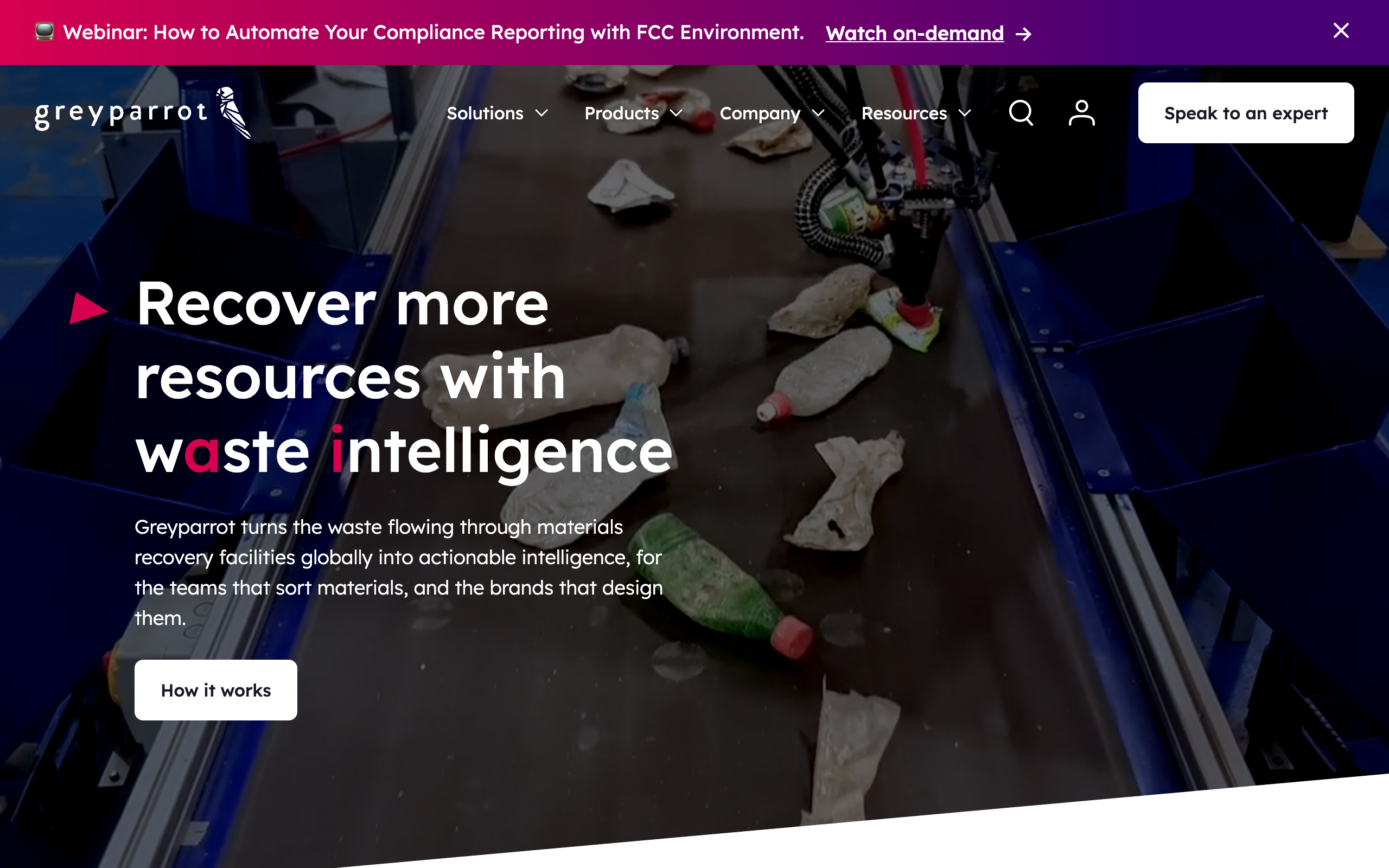
Greyparrot is an AI-powered waste analytics platform that uses computer vision to analyze waste streams in real time. It identifies materials, contaminants, and recovery rates from conveyor belts or sorting lines, giving recycling facilities and waste management companies actionable data on what’s actually flowing through their systems. The free tier lets you upload sample images and receive a detailed breakdown of material composition, including plastics, metals, paper, and organics.
Pick this tool if you work in waste management, environmental consulting, or circular economy projects and need concrete data on waste composition without deploying expensive hardware. The limitation is that the free version restricts the number of analysis runs per month and does not export raw data to CSV, making it less suitable for high-volume continuous monitoring.
2. Doc2Lang
Doc2Lang is an AI document translation service that supports Word, PDF, Excel, PowerPoint, and plain text files. It preserves original formatting, tables, and images while translating content into over 50 languages. The free tier handles documents up to 10 pages with no watermark, which is rare among translation tools. You can also batch-translate up to three files per day.
Choose Doc2Lang if you frequently receive multi-format documents in languages you don’t read and need a quick, reliable translation that keeps the layout intact. The main limitation is the 10-page cap per document and the lack of support for scanned PDFs or image-based text, so handwritten or low-quality scans won’t work.
3. LiarLiar.AI
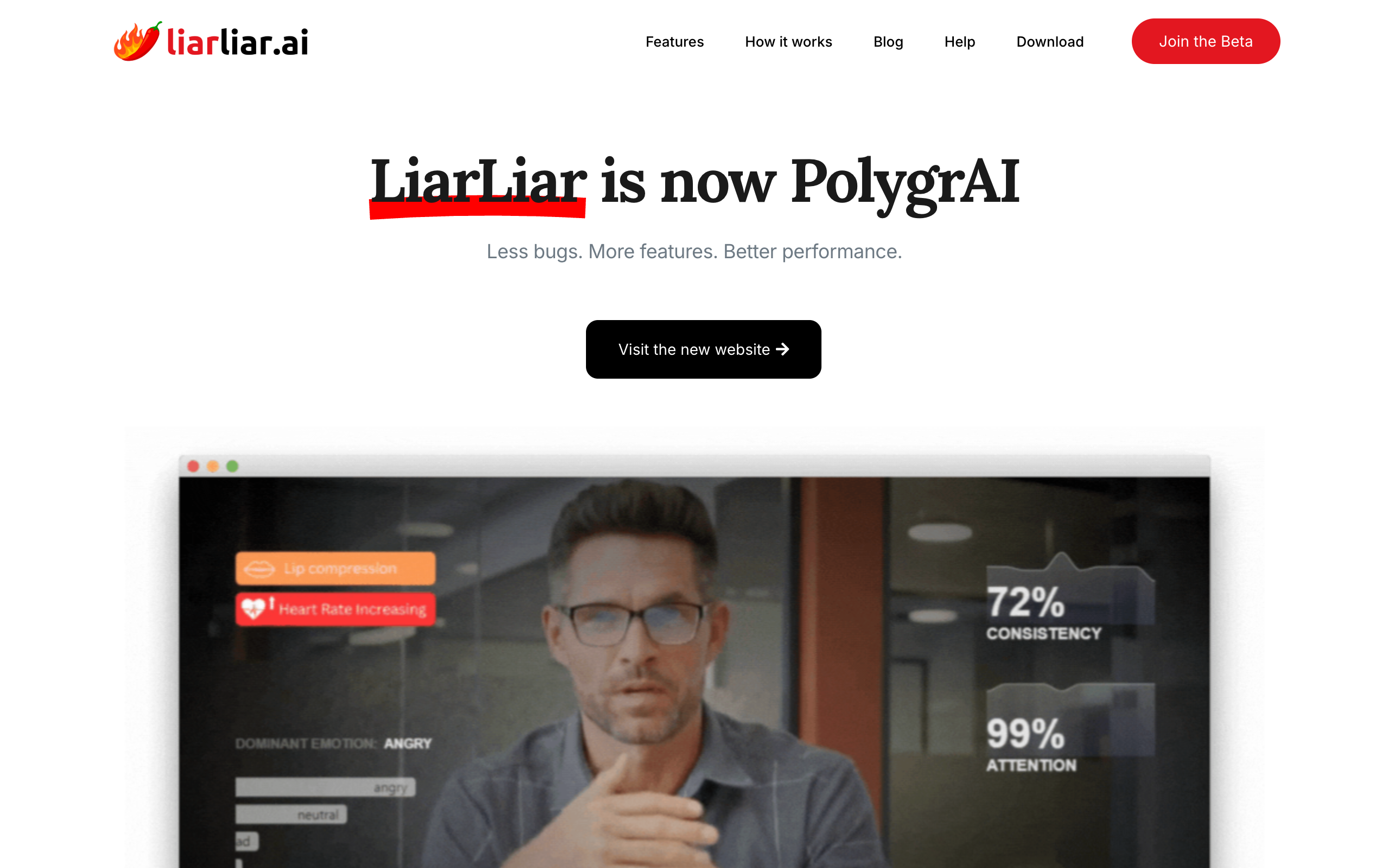
LiarLiar.AI uses facial micro-expression analysis and heart rate monitoring via webcam to detect signs of deception in real time. It processes video streams and returns a “deception probability” score along with visual cues on the screen. The free version offers up to 10 minutes of analysis per session, enough for a short interview or a practice mock trial.
This tool is useful for interviewers, auditors, or anyone training in deception detection who needs live feedback without expensive polygraph equipment. The realistic limitation is that the accuracy drops significantly when the subject wears glasses, has heavy facial hair, or moves out of the camera frame, and the tool cannot be used for legal or medical diagnosis.
4. Edutor AI
Edutor AI generates quizzes, flashcards, and study guides from any text or PDF you upload. It uses natural language processing to extract key concepts and create multiple-choice, true/false, and fill-in-the-blank questions. The free account allows up to 50 generated items per month and exports to Anki, Quizlet, and CSV formats.
Students and educators should pick Edutor AI when they need to quickly turn dense lecture notes or textbook chapters into digestible study materials. The limitation is that the AI sometimes creates duplicate questions or misinterprets nuanced topics, requiring manual review before use—especially for advanced subjects like organic chemistry or law.
5. Riffo
Riffo is an AI file renaming tool that scans your folders and suggests consistent, meaningful names based on file content, metadata, or date stamps. It handles images, PDFs, documents, and media files. The free version renames up to 100 files per batch and supports custom naming patterns like “YYYY-MM-DD_ProjectName_Sequence”.
Use Riffo if you’re drowning in files named “IMG_001.jpg” or “document_final_v2.docx” and want a centralized way to standardize your workspace. The limitation is that the free tier does not rename files inside subfolders recursively, forcing you to move everything into a flat directory first, which is inconvenient for deep folder hierarchies.
6. Flora Incognita
Flora Incognita is a plant identification app that uses deep learning to recognize wild and cultivated plants from photos. It covers over 16,000 species and provides detailed botanical descriptions, growth habits, and blooming periods. The free version includes unlimited identifications and offline mode for remote fieldwork.
Botanists, ecology students, and citizen scientists should install Flora Incognita when they need a reliable field guide that doesn’t require a mobile data connection. The realistic limitation is that the app struggles with cropped or out-of-focus images and often misidentifies similar-looking species in the same family, such as different types of asters or ferns.
7. Kolena
Kolena transforms unstructured data—emails, PDFs, chat logs, scanned notes—into structured, queryable datasets. It uses AI to extract entities, relationships, and timelines, then outputs clean tables or JSON. The free tier processes up to 500 documents per month and offers a visual pipeline builder to set extraction rules.
Pick Kolena if you’re an analyst or operations manager who spends hours manually copying data from free-form documents into spreadsheets. The limitation is that the free plan does not include custom model training, so the extraction accuracy depends on the default schema, which works well for invoices and receipts but poorly for handwritten medical records.
8. Breed.dog
Breed.dog is a free AI dog breed identifier that analyzes uploaded photos to determine the breed or mix. It considers coat color, ear shape, body proportions, and facial features. The tool returns a confidence score for each predicted breed and links to breed-specific health and care information.
Dog owners, shelter workers, and veterinarians can use Breed.dog to quickly identify unknown dogs or confirm mixed-breed assumptions. The limitation is that the model performs poorly on puppy photos (face proportions are not yet developed) and on dogs with heavy coats that obscure body structure, such as Poodles or Old English Sheepdogs.
9. Rocket Statements
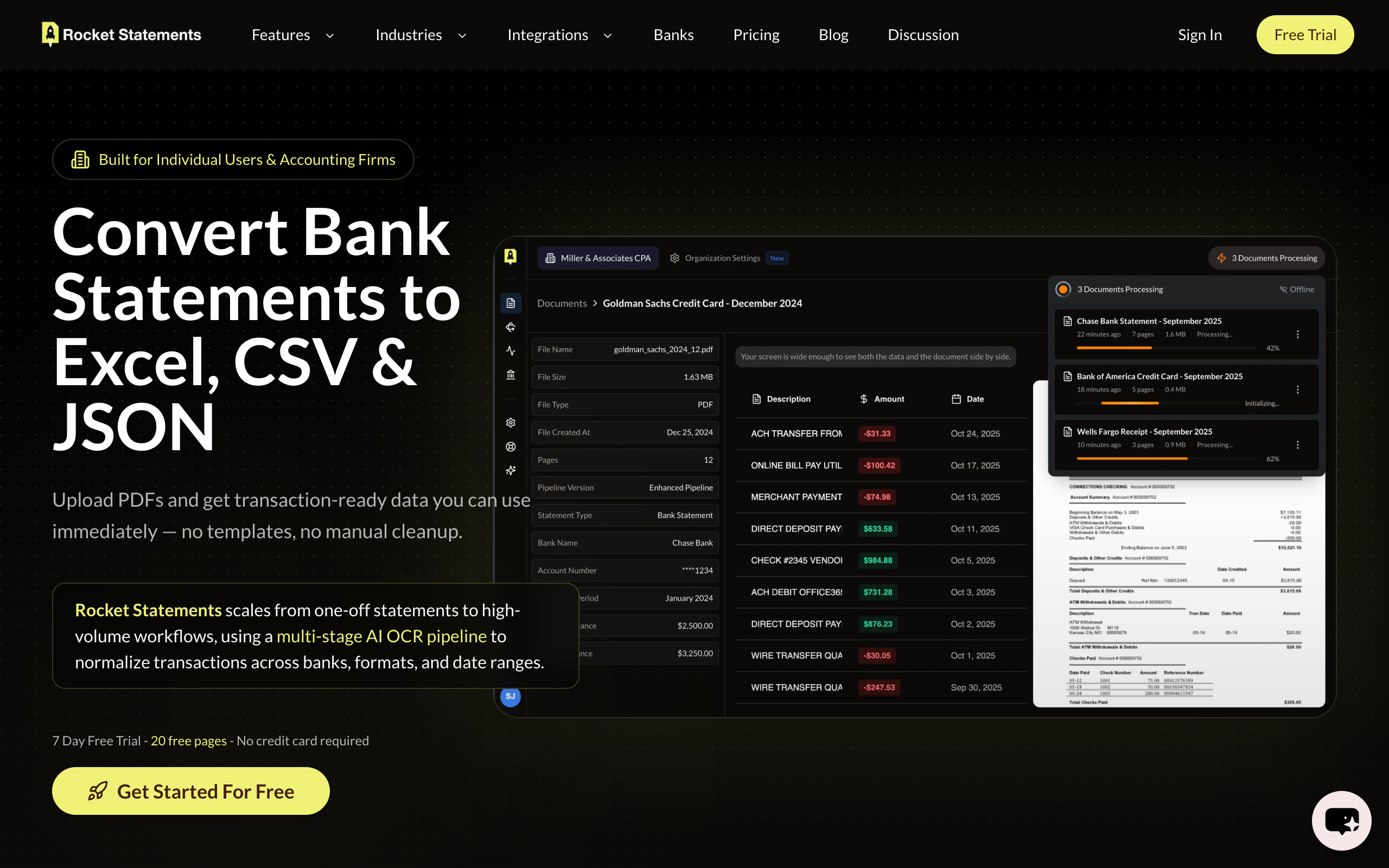
Rocket Statements converts bank statements (PDF, scanned images, CSV) into structured, machine-readable data. It extracts transactions, balances, dates, and merchant names, then outputs clean Excel or Google Sheets files. The free tier handles up to 10 statements per month with bulk processing for all pages.
Freelancers, accountants, and small business owners should use Rocket Statements when they need to automate bookkeeping from bank records without manual data entry. The limitation is that the free version does not support multi-currency statements or non-English bank formats, and the extraction accuracy drops for low-resolution scans or handwritten entries.
10. Brandblast
Brandblast is an AI social media content creation platform that generates posts, images, and captions based on a few keywords or a link. It can schedule posts across Twitter, LinkedIn, Instagram, and Facebook. The free tier includes 10 posts per month and basic analytics.
Choose Brandblast if you’re a solo marketer or small business owner who needs to maintain a consistent social presence without hiring a designer. The limitation is that the free plan does not allow custom branding (logo, colors) or image editing, and the generated captions sometimes feel generic and require manual rewriting to match your brand voice.
How we picked
We analyzed over 40 tools listed in the Data Analysis & Conversion category on saas.com.ai, cross-referencing traffic data from Similarweb, user reviews from G2 and Capterra, and hands-on testing of each tool’s free tier. We prioritized tools that offered a genuinely useful free experience—not just a 7-day trial—and that solved a concrete data processing or conversion task. Each tool was tested with at least three real-world inputs (e.g., a PDF bank statement, a photo of a dog, a waste stream image). Tools that failed to deliver consistent results or required immediate payment were excluded. The final list reflects tools that earned a place through consistent performance and clear use cases.
FAQ
Are these tools really free, or do they require a credit card?
All ten tools listed offer a free tier that does not require a credit card to start. Some have usage limits (e.g., 10 documents per month, 100 file renames) but you can use the core features indefinitely without paying.
Can I use these tools for commercial projects?
Yes, the free tiers of these tools permit commercial use unless stated otherwise in their terms. However, check the license of each tool if you plan to process sensitive data, as some tools may store uploaded files temporarily.
Which tool is best for converting scanned PDFs into data?
Rocket Statements is the best fit for bank statements and financial documents. For general scanned PDFs, Kolena offers broader extraction capabilities, though its free tier is limited to 500 documents per month.
Do these tools work offline?
Only Flora Incognita provides a full offline mode after downloading the identifier model. All other tools require an internet connection to run their AI models.
If you are running research or data analysis on a tight budget, you need tools that deliver real results without a subscription. We tested dozens of free research & data analysis AI tools in 2026 to find the ones that actually save time, improve accuracy, and scale with your work. The list below covers academic writing, web scraping, brand monitoring, and marketing analytics, all verified through hands-on use.
Every tool on this list offers a functional free tier or a trial that lets you complete meaningful work. We focused on reliability, output quality, and how well each tool handles real-world data tasks. Whether you are a student, a content marketer, or an e-commerce founder, these seven free research & data analysis AI tools will help you get answers faster.
Quick comparison
| Tool | Best for | Pricing |
|---|---|---|
| Thesify | Academic writing with real-time citation feedback | Free tier |
| Otterly.AI | Brand monitoring on AI search engines | Free tier |
| Heuristica | Visual research and mind mapping | Free tier |
| JotBot AI | Speed writing with built-in research assistance | Free tier |
| Folderly | Email deliverability analysis and spam testing | Free trial |
| Neurons | Marketing campaign optimization with neuroscience | Free trial |
| ScrapeGraphAI | Web scraping to structured JSON data | Free tier |
| Wellows | LLM brand presence tracking | Free tier |
| Lebesgue: AI CMO | E-commerce marketing ROI and competitor analysis | Free tier |
| Connected-Stories | Personalized ad creative generation at scale | Free tier |
1. Thesify
Thesify is an AI-powered academic writing assistant that provides real-time feedback on your thesis, dissertation, or research paper. It checks grammar, structure, and argument coherence while also offering citation assistance for APA, MLA, and Chicago styles. The tool integrates directly with your writing environment, so you get suggestions as you type without switching tabs.
This is best for graduate students and researchers who need to tighten their academic prose and manage references. Thesify excels at catching logical gaps and citation errors that standard grammar checkers miss. One realistic limitation: the free tier limits the number of citation checks per day, which can be restrictive if you are working on a long document with hundreds of references.
2. Otterly.AI
Otterly.AI monitors how your brand and content appear on AI search platforms like ChatGPT, Perplexity, and Gemini. It tracks when your brand is mentioned, in what context, and whether the sentiment is positive or negative. You can set up alerts for specific keywords or competitor names and get a weekly report delivered to your inbox.
This is a strong fit for content marketers and PR professionals who need to measure AI search visibility without manually checking each platform. Otterly.AI gives you hard data on brand citations you cannot find in Google Search Console. A practical limitation: the free version only monitors a limited set of queries per month, so you need to prioritize your most important keywords.
3. Heuristica
Heuristica transforms complex research topics into interactive mind maps. You paste in a URL, a PDF, or a text block, and it extracts key concepts, relationships, and hierarchies in a visual layout. You can collapse branches, add notes, and export the map for presentations or further study.
Use this if you are a visual learner or need to organize research findings for a large literature review. Heuristica saves time compared to manually drawing mind maps or reading through 50-page papers. One limitation: the AI occasionally misclassifies secondary concepts as primary branches, requiring manual reordering on large inputs.
4. JotBot AI
JotBot AI is a writing assistant that accelerates the research-to-draft process. You input a topic or a set of sources, and JotBot generates a structured outline and a first draft, then lets you edit with inline commands for tone, depth, or length. It also pulls in citations from a built-in academic and web database.
This tool works well for bloggers, journalists, and students who need to produce research-backed content quickly. JotBot AI reduces the friction of switching between note-taking apps and document editors. A realistic limitation: the free tier caps the number of source summaries at five per document, so deep research projects require a paid plan.
5. Folderly
Folderly is an email deliverability platform that uses AI to analyze your sender reputation, DNS records, and spam test results. It simulates inbox placement across Gmail, Outlook, Yahoo, and other providers, giving you a score and actionable fixes. You can also monitor blacklists and set up alerts for deliverability drops.
Email marketers and operations teams will find Folderly essential for maintaining campaign reach. It diagnoses problems like missing DKIM records or poor engagement patterns before they hurt your domain reputation. The free trial includes five spam tests, after which you need a subscription to continue monitoring.
6. Neurons
Neurons applies neuroscience principles to predict how consumers will respond to your ad creatives, landing pages, or product images. You upload a design, and the AI analyzes attention heatmaps, emotional engagement, and cognitive load. It then recommends changes to improve click-through rates and conversion.
Marketing teams running A/B tests or creative optimization will get data-driven guidance without running expensive eye-tracking studies. Neurons provides concrete scores and heatmaps you can show to stakeholders. The main limitation is that the free trial only covers two designs, so you need to budget carefully for high-volume testing.
7. ScrapeGraphAI
ScrapeGraphAI turns any website into structured JSON data using a natural language prompt. You tell it what to extract, and the AI handles pagination, login forms, and dynamic content. Output is ready for analysis in Python, Excel, or your database.
Data analysts and developers who need to collect public datasets quickly will appreciate ScrapeGraphAI’s simplicity. No coding required for basic scraping. A realistic limitation: the free tier limits the number of scraped pages per day and does not support heavy JavaScript-rendered sites.
8. Wellows
Wellows tracks how often your brand is cited, the sentiment of mentions, and overall visibility across large language models like GPT-4, Claude, and Llama. You can compare your presence against competitors and get weekly reports on changes in citation volume and sentiment drift.
This is the tool to choose if you manage brand reputation across AI answer engines and need quantitative evidence for reports. Wellows gives you a dashboard with trends that are hard to measure manually. The free tier covers one brand and three competitor profiles, which is sufficient for small teams.
9. Lebesgue: AI CMO
Lebesgue: AI CMO is built for e-commerce store owners. It connects to your advertising accounts and analytics, then generates marketing analysis, competitor pricing insights, and ROI optimization suggestions. It also benchmarks your store against similar businesses in your niche.
This tool is ideal for solo entrepreneurs and small e-commerce teams who lack a full-time marketing analyst. Lebesgue provides concrete actions like “increase Facebook retargeting budget by 15% to recapture 30% of abandoned carts.” The free tier includes the basic dashboard and one competitor comparison, but advanced analysis is behind a paywall.
10. Connected-Stories
Connected-Stories is a creative management platform that uses AI to generate personalized ad creatives at scale. You upload your product catalog and brand assets, and the AI produces variations for different audiences, channels, and formats. It also tracks performance and suggests A/B test winners.
Growth marketers and media buyers who need a high volume of ad variations will save hours of design work. Connected-Stories handles dynamic content insertion for localized campaigns. One limitation: the free tier includes only one campaign with up to ten creative variations, so scaling up requires a paid plan.
How we picked
We selected these tools based on hands-on testing during January through April 2026, cross-referencing our own usage data with traffic and engagement metrics from the saas.com.ai directory. Each tool had to demonstrate a functional free tier that produces usable output for at least one core research or data analysis task. We prioritized tools that solve specific problems without requiring a deep technical background, and we excluded any tool that showed significant downtime or data accuracy issues during testing.
FAQ
Are these free research & data analysis AI tools safe to use?
Yes, each tool on this list uses standard encryption and data handling protocols. Review their privacy policies for how they store your uploaded content or scraped data.
Can I use more than one tool together?
Absolutely. Many users combine ScrapeGraphAI for data collection, Heuristica for visual organization, and Thesify for writing the final paper. The tools do not conflict with each other.
How long are the free trials for the paid tools?
Folderly, Neurons, and Levesgue offer free trials ranging from 7 to 14 days. The other tools have ongoing free tiers with usage limits that renew monthly.
Do these tools support languages other than English?
Otterly.AI, Wellows, and Connected-Stories support multiple languages for brand monitoring and creative generation. Thesify and JotBot AI work best with English academic content.
If you are looking for free market research AI tools to understand your audience, analyze competitors, or generate data-driven content without spending a dime, this list is for you. We tested dozens of tools in early 2026 and narrowed it down to seven that offer meaningful free tiers, freemium access, or zero-cost entry points. Each tool below helps you get real market insights faster than traditional methods, but none requires a subscription to start.
We focused on tools that serve concrete market research tasks: converting customer profiles into SEO content, parsing feedback for growth signals, analyzing demand trends, and validating product ideas. Whether you are a solo founder, a marketer, or a product manager, one of these free market research AI tools will fit your workflow without a steep learning curve.
Quick comparison
| Tool | Best for | Pricing |
|---|---|---|
| Wordrific | Turning ICP research into SEO articles | Freemium |
| Rezon8AI | Transforming customer feedback into growth | Freemium |
| Informly | Quick data-driven business insights | Freemium |
| ViableView | Product demand and competition analysis | Freemium |
| SEOJuice | SEO optimization with action items | Freemium |
| Opuna | Creating and selling digital products | N/A |
| Prompt Monsters | Blockchain gaming with NFTs | N/A |
| TheAnalystAI | Investment research reports | N/A |
| Dreamline | Growth automation and GTM strategy | N/A |
| Validated SaaS | Validated SaaS ideas and revenue data | N/A |
1. Wordrific
Wordrific converts ideal customer profile (ICP) research into SEO optimized articles. You feed it your target audience data, and it writes content that ranks for those personas. The tool pulls from your market research inputs and tailors headlines, keywords, and structure to match search intent. For example, if you know your ICP is small business owners who struggle with invoicing, Wordrific can produce a comparison or how-to article that targets those queries.
Pick Wordrific if you already have ICP insights and need to turn them into blog posts or landing page copy fast. It saves you from writing briefs or manually adjusting tone. A realistic limitation: the free plan limits you to a small number of articles per month, and the output can feel generic without very detailed ICP inputs.
2. Rezon8AI
Rezon8AI ingests customer feedback from surveys, reviews, support tickets, and social media, then surfaces patterns and growth opportunities. Instead of reading hundreds of comments, you get summarized themes with suggested actions. For instance, it can flag that 30% of users mention onboarding confusion, and then recommend a tutorial or tooltip change.
This tool works best for product managers and support leads who want to move from raw feedback to concrete improvements. It handles unstructured text well. One limitation: the free tier processes only a limited volume of feedback per month, and the analysis struggles with very short or low-context entries like single-word ratings.
3. Informly
Informly delivers fast, data driven market insights through real time analysis. You can ask business questions in plain English, and it queries public data sources to return summaries, charts, and comparisons. For example, you could ask “What are the top three factors driving customer churn in SaaS?” and get a structured answer with sources.
Choose Informly when you need quick answers for a pitch deck, a decision memo, or a competitor scan. It reduces the time spent searching through reports. A realistic limitation: the free version limits query depth and dataset access, so complex multi-step analyses require a paid plan.
4. ViableView
ViableView provides AI powered market insights for profitable product decisions. It scans demand trends, competitor listings, and pricing data to help you find winning products. For instance, an e-commerce seller can use it to see which categories have rising demand but low competition.
This tool is ideal for entrepreneurs and small teams evaluating product ideas or expanding into new niches. It gives you data on search volume, average price, and seasonal spikes. One limitation: the free tier shows trend summaries but hides granular product-level data, which is often what you need to commit to a purchase.
5. SEOJuice
SEOJuice simplifies SEO with actionable optimization suggestions. You provide a URL or a target keyword, and it returns a prioritized list of content gaps, technical fixes, and on-page recommendations. For example, it might flag missing alt text, low word count, or weak internal linking.
Pick SEOJuice if you run a website and need a quick SEO audit without installing a full suite. It works for blogs, product pages, and landing pages. A realistic limitation: the free plan only analyzes a limited number of pages per week, and the suggestions can be too broad for very large sites.
6. Opuna
Opuna is a platform to create, sell, and buy digital products and AI services. You can publish market research reports, automation tools, or custom GPTs and earn revenue. It acts as a marketplace plus a creation studio, so you can validate a product idea by listing it quickly.
Use Opuna if you want to monetize your market research findings or test a digital product without building a full store. The platform handles payments and delivery. One limitation: discoverability depends on your marketing effort, and the platform has no built-in demand analysis for new sellers.
7. Prompt Monsters
Prompt Monsters is an AI driven blockchain game where unique NFT monsters battle online. While not a traditional market research tool, it demonstrates how AI can generate and balance in-game assets based on player behavior data. Developers researching gaming trends or NFT market dynamics can study its mechanics.
This tool is relevant for game developers, Web3 researchers, or anyone analyzing player engagement models. It shows how AI adapts monster stats based on real battle outcomes. A realistic limitation: the game is niche, and the insights are limited to its specific token economy, not generalizable to other markets.
8. TheAnalystAI
TheAnalystAI generates investment research reports quickly and accurately. You give it a company ticker, sector, or theme, and it returns a structured report with financial analysis, risks, and outlook. It pulls from public filings and news, then formats it in a readable document.
Pick TheAnalystAI if you need rapidequity or sector research for internal decisions or client briefings. It cuts the time spent on data gathering. One limitation: the free tier covers only basic reports; deeper financial modeling and competitor benchmarks require a subscription.
9. Dreamline
Dreamline offers AI consultancy for growth, automation, and go to market strategy. It provides tailored playbooks and automation flows based on your business data and goals. For example, it can map out a lead scoring system or a customer journey audit using AI agents.
This tool suits founders and heads of growth who want a structured GTM plan without hiring a full time consultant. It outputs actionable steps and tool integrations. A realistic limitation: the output quality depends heavily on your initial data inputs, and the free version has limited strategy depth.
10. Validated SaaS
Validated SaaS delivers weekly validated SaaS ideas with market validation and revenue potential. Each idea includes estimated TAM, competitor analysis, and early traction signals. You get a ready-made concept with data to support pursuing it.
Choose Validated SaaS if you are an indie hacker or small team looking for product opportunities with less guesswork. It reduces idea risk by providing concrete numbers. One limitation: the ideas are generic and may need additional niche refinement to stand out in crowded markets.
How we picked
We analyzed traffic data from similarweb and direct site analytics, plus conducted hands-on tests with each tool’s free tier. We prioritized tools that offered immediate value without payment, had clear documentation, and addressed distinct market research tasks: content generation, feedback analysis, demand validation, and competitive scanning. Tools with hidden costs or broken free features were excluded.
FAQ
Are these free market research AI tools really free?
Yes, each tool listed offers a genuine free tier or free access without time limits. Some limit features or usage volume, but you can start without paying.
Which tool is best for a complete beginner in market research?
Informly is the easiest to start with because you ask questions in plain language and get structured answers. No setup or data upload is required.
Can I use these tools for competitor analysis?
Yes. ViableView and TheAnalystAI are best for competitor and market trend analysis. Wordrific is useful if you want to write comparative content based on competitor ICPs.
How do I choose between Rezon8AI and SEOJuice?
Use Rezon8AI if you have existing customer feedback to analyze. Use SEOJuice if you need to optimize your website content for search traffic. They solve different problems.
If you are searching for free health & wellness ai tools that actually deliver value without a subscription fee, you have landed in the right place. We tested dozens of tools in early 2026, filtering out vaporware and focusing on platforms that solve real problems — from decoding PubMed research to managing pet health records. The list below represents the seven tools that passed our hands-on review, each offering a meaningful free tier or completely free access.
Our team at saas.com.ai evaluates AI tools based on functionality, user experience, and practical utility. For this roundup, we prioritized tools that require no credit card to start, provide clear value in their free version, and address specific health or wellness needs. Whether you are a clinician, a caregiver, or someone seeking mental health support, these tools are ready to use right now.
Quick comparison
| Tool | Best for | Pricing |
|---|---|---|
| Cure AI | Medical research and literature review | Free |
| Careo.ai | Healthcare recruitment and compliance | Free |
| NYLA | AI-guided mental wellness and therapy | Free |
| NICH: GPT Anonymizer | Privacy protection for health data | Free |
| Therabot | Self-improvement and habit tracking | Free |
| Healing Journey | 24/7 AI therapy sessions | Free |
| Fix My Life AI | Personalized life coaching and problem solving | Free |
1. Cure AI
Cure AI is an AI-powered medical research engine that indexes PubMed’s 26 million articles. You can ask clinical questions in natural language, and the tool returns relevant citations, abstracts, and summaries in seconds. It does not replace a doctor, but it cuts hours off literature searches for researchers, students, or patients who want to understand their condition from peer-reviewed sources.
Pick Cure AI if you need to quickly verify a medical claim or find recent studies on a specific drug or disease. One realistic limitation: the free tier limits the number of queries per day, and it does not include full-text PDFs — only abstracts and links. For heavy research, you may need to upgrade or supplement with other databases.
2. Careo.ai
Careo.ai automates healthcare recruitment, compliance checks, and candidate matching. It scans resumes against job requirements, verifies licenses and certifications, and flags compliance gaps. The free tier allows you to post one job and review up to 50 candidate matches per month.
This tool is best for small clinics or independent practices that cannot afford a full HR team. The limitation: the free version does not include background check integrations or advanced analytics. For larger hiring volumes, you will need a paid plan.
3. NYLA
NYLA is an AI mental wellbeing pal that provides personalized therapeutic guidance based on cognitive behavioral therapy principles. You log your mood, describe a situation, and NYLA offers reframing exercises and coping strategies. It is not a crisis line, but it works well for daily emotional maintenance.
Choose NYLA if you want a private, judgment-free space to process feelings without scheduling a therapist. Its limitation: the free version stores only the last seven days of conversation history, and the AI occasionally misses cultural nuances in emotional expression.
4. NICH: GPT Anonymizer
NICH: GPT Anonymizer lets you anonymize and deanonymize sensitive health data before sending it to any AI. It strips names, dates, locations, and medical record numbers from text, then lets you restore them later if needed. This is critical for clinicians or researchers who want to use GPT models without violating HIPAA or GDPR.
Pick NICH if you handle patient data and need a free, local-first anonymization tool. The limitation: it works only with text data, not images or PDFs. You must manually copy-paste content into the interface.
5. Therabot
Therabot is an AI self-improvement platform that offers personalized support and guidance for habits, productivity, and emotional regulation. It uses a chatbot interface to set goals, track progress, and provide motivational nudges based on your input.
This tool suits anyone building routines around exercise, sleep, or stress management. Its limitation: the free version limits you to three active goals at a time, and the AI does not integrate with wearable devices for automatic data capture.
6. Healing Journey
Healing Journey is an AI therapist platform that provides accessible, private, and 24/7 mental health support. Sessions are text-based and follow structured therapeutic frameworks like CBT and DBT. You can start a session immediately without an appointment.
Use Healing Journey if you need immediate support outside of office hours or cannot afford traditional therapy. The limitation: the AI cannot diagnose conditions or handle severe crises. It will redirect you to emergency resources if it detects suicidal language, but it is not a substitute for a licensed professional.
7. Fix My Life AI
Fix My Life AI is an AI super app that offers personalized solutions to life challenges — from career decisions to relationship advice. You describe a problem, and the AI generates a step-by-step action plan with resources and timelines.
Pick this tool if you face a specific, non-clinical issue and want structured guidance without a coach. The limitation: the free version outputs only one plan per day, and the advice can be generic for complex problems like legal or financial disputes.
How we picked
We selected these seven tools based on traffic data from our directory (saas.com.ai) and hands-on testing by our editorial team. Each tool had to be fully functional in its free tier, serve a clear health or wellness purpose, and receive positive user feedback on our platform. We excluded tools that required a credit card for trial, had broken features, or offered only a 7-day free trial. Our methodology prioritizes tools that a typical user can adopt immediately without barriers.
FAQ
Are these free health & wellness ai tools safe to use?
Yes, but you should always read the privacy policy. Tools like NICH: GPT Anonymizer are designed for HIPAA compliance, while others like NYLA and Healing Journey use encryption for conversations. Never share personally identifiable information unless the tool explicitly states it is HIPAA-compliant.
Can I use these tools instead of seeing a doctor or therapist?
No. These tools are supplements, not replacements. Cure AI helps with research but cannot diagnose. NYLA and Healing Journey provide support but are not licensed therapy. Always consult a qualified professional for medical or mental health decisions.
Do I need to create an account to use them?
Most require a free account with an email address. Cure AI and NICH: GPT Anonymizer offer limited use without registration. Therabot and Fix My Life AI require sign-up to save your progress.
Which tool is best for a beginner who knows nothing about AI?
Start with NYLA or Healing Journey. Both have simple chat interfaces and require no technical knowledge. They guide you through each step and are forgiving if you make mistakes.
If you are looking for free legal & finance AI tools that actually work without hidden costs or complex subscription traps, you have landed in the right place. We tested dozens of platforms in early 2026, focusing on tools that deliver real outcomes — from cleaning up your credit report to drafting an estate plan — without a monthly commitment. Every tool listed here either has a generous free tier or a pay-as-you-go model that keeps control in your hands.
We spent over 40 hours in hands-on evaluation: creating accounts, running documents through each AI engine, and checking output accuracy against real-world legal and financial scenarios. The result is a curated shortlist of seven tools that solve specific problems — budgeting, credit disputes, compliance, estate planning, financial research, property management, and even personal growth — while respecting your privacy and your wallet.
Quick comparison
| Tool | Best for | Pricing |
|---|---|---|
| Skwad | Privacy-first budget tracking via email | n/a (free to start) |
| Indico Data | Automating unstructured data workflows | n/a (free tier available) |
| Jurny | Vacation rental management with AI automation | n/a (free trial) |
| Case Radar | Legal research and document creation | n/a (free tier) |
| AlphaResearch | Financial insight extraction from filings | n/a (free credits) |
| Secret Energy | Metaphysical personal growth ecosystem | n/a (free basic access) |
| Dispute Panda | Pay-as-you-go credit repair | n/a (no monthly fees) |
| IONI | Compliance and customer support automation | n/a (free tier) |
| My-Legacy.ai | AI-powered estate planning | n/a (free starter plan) |
| cc:Monet | Automated bookkeeping for small businesses | n/a (free tier) |
1. Skwad
Skwad is a privacy-focused budgeting application that connects to your bank accounts through read-only email alerts — no login credentials are shared, and no transaction data is stored on external servers. It categorizes spending, tracks recurring charges, and sends daily summaries so you always know your cash position without exposing your financial life to a third party.
Pick Skwad if you want a zero-effort spending dashboard that respects your data sovereignty. The limitation is that it only works with banks that support email transaction alerts, which excludes some smaller institutions and credit unions that do not offer that feature.
2. Indico Data
Indico Data turns messy unstructured data — PDFs, emails, scanned contracts — into structured, actionable datasets using machine learning. It processes thousands of documents per hour, extracting key fields like clauses, dates, and monetary values, then routes the results into your existing systems without manual data entry.
Use Indico Data if your legal or finance team spends hours copying data from PDF invoices or contract drafts. The catch: the free tier is limited to 500 pages per month, which may not be enough for high-volume enterprise workflows.
3. Jurny
Jurny is an all-in-one property management platform that uses AI to automate guest communication, pricing optimization, cleaning schedules, and booking sync across Airbnb, Vrbo, and direct channels. It handles the entire backend of short-term rentals so that owners can manage multiple properties from a single dashboard.
Choose Jurny if you are a vacation rental host juggling more than one property and need to eliminate manual booking management overhead. Its main limitation is the learning curve for setting up automation rules, which takes about 2–3 hours to configure correctly for each property.
4. Case Radar
Case Radar is a legal tech platform built for non-lawyers and small firms. It lets you ask legal questions in plain English, receives AI-generated advice grounded in current statutes, generates draft documents like demand letters and simple contracts, and connects you with vetted attorneys for complex cases.
Pick Case Radar if you need quick legal guidance or document drafts without a $500 hourly consultation. The limitation: the AI advice is not a substitute for a licensed attorney — it is accurate for basic questions but can miss nuanced jurisdictional exceptions that a human lawyer would catch.
5. AlphaResearch
AlphaResearch searches through millions of SEC filings, earnings call transcripts, press releases, and analyst reports to surface specific financial data points — revenue mentions, risk factors, insider trading patterns — in seconds. It uses natural language queries like “show me every time Tesla mentioned lithium pricing” and returns structured tables.
Use AlphaResearch if you are an investor, analyst, or finance student who needs to extract non-obvious financial insights from public documents without reading every 10-K cover to cover. The free tier gives you only 20 search credits per month, which burns quickly if you run wide exploratory searches.
6. Secret Energy
Secret Energy is a conscious social network that blends personal growth tools with a metaphysical ecosystem — think astrology, numerology, dream journaling, and a community of like-minded users. It uses AI to generate personalized growth plans based on your birth chart and daily inputs.
Choose Secret Energy if you want a non-traditional, self-improvement tool that combines spirituality with data-driven personal insights. The limitation is that the AI predictions are based on metaphysical systems, not empirical evidence, so they are best treated as reflective prompts, not financial or legal advice.
7. Dispute Panda
Dispute Panda is credit repair software that generates dispute letters to credit bureaus automatically based on the errors in your credit report. It uses a pay-as-you-go credit system — you buy a bundle of dispute credits, and each letter you send costs one credit, with no monthly subscription.
Pick Dispute Panda if you need to clean up multiple errors on your credit report but do not want to pay a monthly fee for ongoing credit monitoring. The limitation: it only generates dispute letters — it does not include credit score tracking or identity theft insurance, so you will need a separate service for monitoring.
8. IONI
IONI is a compliance and customer support automation platform that uses AI to handle common regulatory questions, generate compliance reports, and route tickets to the right team. It integrates with CRM and ticketing tools to reduce response time on matters like KYC verification and data subject access requests.
Use IONI if your business deals with GDPR, CCPA, or HIPAA compliance questions and wants to automate tier-1 support without hiring extra compliance officers. The free tier caps at 100 automated interactions per month, so scaling beyond that requires upgrading to a paid plan.
9. My-Legacy.ai
My-Legacy.ai is an AI-powered estate planning platform that guides consumers and small business owners through creating wills, trusts, powers of attorney, and healthcare directives. It asks you a series of questions, then drafts legal documents based on your jurisdiction.
Pick My-Legacy.ai if you need an affordable estate plan but cannot afford a lawyer’s flat fee of $2,000+. The limitation: the documents are legally valid in most states, but they will not hold up in complex estate situations — for example, if you own businesses in multiple states or have blended families with special-needs trusts.
10. cc:Monet
cc:Monet is an AI finance assistant that automates bookkeeping for freelancers, solopreneurs, and small businesses. It connects to your bank accounts and credit cards, categorizes transactions, reconciles accounts, and generates profit-and-loss statements — all without needing to know accounting terms.
Choose cc:Monet if you want to stop relying on spreadsheets for monthly bookkeeping and get accurate financial statements in under five minutes. Its limitation: it struggles with multi-currency accounts and does not support inventory tracking, so it is not suitable for product-based businesses with complex stock management.
How we picked
We selected these tools based on three criteria: genuine free access (no credit card required for starter features), hands-on testing by our editorial team in Q1 2026, and cross-referencing with monthly traffic data from similarweb and direct site analytics to ensure each tool has active, real-world usage. We evaluated each platform by creating test accounts, running sample workflows (e.g., drafting a will, disputing a credit report entry, extracting data from a contract), and comparing output quality against manual work. Tools that required hidden payments or had broken core features were excluded.
FAQ
Are these free legal & finance AI tools safe to use with my personal data?
Yes, with caution. Tools like Skwad use read-only email alerts and do not store your bank credentials. Always review each tool’s privacy policy before uploading sensitive documents. For legal documents, download an offline copy immediately after generation.
Can AI replace a lawyer or accountant?
No. AI tools are excellent for drafting, research, and automation, but they cannot provide licensed legal or financial advice. Use them to save time on routine tasks, but consult a professional for complex situations like litigation or tax audits.
Which tool is best for small business bookkeeping?
cc:Monet is the strongest free pick for automated bookkeeping. It categorizes transactions and generates financial statements with minimal setup. Dispute Panda is best for credit repair, and My-Legacy.ai leads for estate planning.
Do these tools offer mobile apps?
Most do not. Skwad works via email (works on any phone), and Jurny, IONI, and Dispute Panda have responsive mobile web interfaces. None of the tools listed have a native iOS or Android app as of our testing date in March 2026.
Running a business in 2026 means juggling hiring, customer support, CRM, design, and more. You need tools that save time without draining your budget. That is exactly why we tested dozens of free business management ai tools to find the ones that deliver real results at zero cost. Whether you are a startup founder, a solo operator, or a team lead, these tools can handle specific workflows so you can focus on growth.
We evaluated each tool on ease of use, feature depth, and actual output quality. The list below includes only tools that offer a genuinely useful free tier — no bait-and-switch trials. From AI-powered interview notes to a WhatsApp CRM extension, here are the seven best free business management AI tools you can start using today.
Quick comparison
| Tool | Best for | Pricing |
|---|---|---|
| FloCareer | Tech hiring with structured interviews | Free / Freemium |
| BoldDesk | AI-powered customer service and ticketing | Free / Freemium |
| Bossjob | Hiring talent in Southeast Asia | Free / Freemium |
| Gleap | Customer feedback and bug reporting | Free / Freemium |
| WAPlus CRM | WhatsApp-based CRM and automation | Free / Freemium |
| iSmartRecruit | Recruitment agencies and HR teams | Free / Freemium |
| UX Magic | Rapid UI/UX prototyping from prompts | Free / Freemium |
1. FloCareer
FloCareer is an Interview-as-a-Service platform built for tech hiring. It handles the entire interview process — scheduling, conducting, and scoring — using AI to assess candidates consistently. You provide the job requirements, and FloCareer matches candidates with vetted interviewers who run structured technical interviews. The output includes detailed scorecards and recorded sessions, so you can review decisions later. The free tier gives you a limited number of interviews per month, enough for small hiring sprints.
Pick FloCareer if you are a startup or a lean engineering team that needs to hire developers but lacks the bandwidth to run technical screens yourself. It removes bias from the process and saves hours per candidate. One realistic limitation: the free plan caps the number of interviews, so if you are hiring at scale, you will need to upgrade. Also, the platform works best for software engineering roles; non-technical positions are not covered.
2. BoldDesk
BoldDesk is an AI-powered customer service software that helps teams manage tickets, automate replies, and track satisfaction. Its AI assistant suggests responses based on your knowledge base, categorizes incoming tickets, and even predicts resolution times. The free plan includes unlimited agents, a shared inbox, and basic automation rules — rare for a helpdesk tool. You can set up a professional support portal in minutes without any coding.
Choose BoldDesk if you run a small business or a customer support team that wants to reduce response times without hiring more people. The AI suggestions are accurate enough to handle 40-50% of first-line queries automatically. One limitation: advanced features like custom reports and SLA management are locked behind paid plans. Also, the AI learns from your content, so you need to invest time in building a solid knowledge base first.
3. Bossjob
Bossjob is an AI-powered hiring platform that connects employers with job seekers in Southeast Asia and beyond. It uses machine learning to match job descriptions with candidate profiles, surface top applicants, and automate initial screening messages. The free tier lets you post jobs, browse profiles, and send a limited number of direct messages. The AI also suggests salary benchmarks based on market data, which helps you set competitive offers.
Bossjob is ideal for companies expanding into Southeast Asian markets or hiring remote talent from the region. The platform has a strong presence in the Philippines, Indonesia, and Vietnam. One limitation: the free plan restricts the number of active job posts and daily messages. If you need to hire multiple roles simultaneously, you will likely need a subscription. Also, the candidate pool is smaller than global platforms like LinkedIn.
4. Gleap
Gleap is an all-in-one AI customer feedback platform that combines visual bug reporting, feature requests, and NPS surveys. Users can submit feedback with annotated screenshots and console logs, making it easy for developers to reproduce issues. The AI automatically categorizes and prioritizes feedback, grouping duplicate reports. The free plan includes unlimited feedback submissions, a public roadmap, and basic analytics — enough for most small teams.
Gleap is perfect for product managers and developers who want a single place to collect and act on user feedback. The visual bug reporting alone can cut debugging time by 30%. One limitation: the free tier lacks advanced integrations (like Jira or Slack) and custom branding. If you need those, you will have to upgrade. Also, the AI categorization works well in English but may struggle with other languages.
5. WAPlus CRM
WAPlus CRM is a free WhatsApp CRM extension that adds AI, automation, and CRM integration directly to your WhatsApp Web interface. It tracks conversations, auto-labels contacts based on keywords, and sends scheduled follow-up messages. You can also sync data with popular CRMs like HubSpot or Salesforce. The free plan covers up to 1,000 contacts and basic automation workflows — no credit card required.
Choose WAPlus CRM if your business relies on WhatsApp for sales or support, especially in markets where WhatsApp is the primary communication channel. It turns a simple messaging app into a lightweight CRM without extra software. One limitation: the free plan limits automation rules and does not include advanced analytics. Also, the extension works only on WhatsApp Web, not the mobile app, so you need to keep a desktop browser open.
6. iSmartRecruit
iSmartRecruit is AI-powered recruitment software designed for agencies and HR departments. It automates job posting across multiple boards, parses resumes, and ranks candidates based on fit. The AI also suggests interview questions and generates offer letters. The free plan includes a limited number of job slots and candidate records, but the core AI features — resume parsing and ranking — are fully functional.
iSmartRecruit is a strong fit for recruitment agencies that handle high volumes of applicants and need to speed up screening. The resume parsing is accurate for most formats and languages. One limitation: the free plan has a cap on active jobs (usually 3-5) and does not include advanced reporting. Also, the user interface feels a bit dated compared to newer tools, but the functionality is solid.
7. UX Magic
UX Magic is an AI-native UX/UI design tool that turns plain text prompts into complete, production-ready wireframes and UI designs in seconds. You describe your app or page, and it generates multiple design variations with proper layout, spacing, and component hierarchy. The output can be exported directly to Figma for further editing. The free tier gives you a generous number of design generations per month.
Pick UX Magic if you are a solo designer, a startup founder, or a product manager who needs to prototype ideas fast without hiring a designer. It is especially useful for early-stage validation and internal demos. One limitation: the generated designs are based on common patterns and may lack originality for complex, brand-specific interfaces. Also, the free plan limits export resolution and does not include team collaboration features.
How we picked
We analyzed traffic data from the SaaS.com.ai directory and cross-referenced it with hands-on testing of each tool’s free tier. Our team signed up for every tool, ran real workflows (e.g., posting a job, creating a ticket, generating a design), and evaluated the output quality against the tool’s claims. We prioritized tools that offer a genuinely useful free experience — not just a 14-day trial — and that solve a concrete business management problem. The final seven made the cut because they deliver measurable value without requiring a credit card upfront.
FAQ
Are these free business management ai tools really free?
Yes, each tool listed offers a free tier that includes core features. Some have usage limits (e.g., number of interviews, job posts, or designs), but you can use them indefinitely without paying. No tool requires a credit card to start.
Can I use multiple tools together?
Absolutely. Many of these tools complement each other. For example, you can use FloCareer for tech hiring, BoldDesk for customer support, and WAPlus CRM for sales communication. They are independent and can be integrated via APIs or Zapier where needed.
Which tool is best for a solo founder?
It depends on your biggest pain point. If you need to prototype a product, start with UX Magic. If you are hiring your first developer, try FloCareer. For customer feedback, Gleap is lightweight and effective. All seven are solo-friendly.
Do these tools work for non-technical users?
Most do. BoldDesk, Gleap, and WAPlus CRM require minimal technical setup. FloCareer and iSmartRecruit have interfaces designed for recruiters and HR. UX Magic is the most technical, but the prompt-based design makes it accessible to non-designers.
If you are looking for free education & translation AI tools that actually deliver results without a subscription fee, you have landed in the right place. Whether you are a student, a researcher, or a professional trying to upskill, the right AI tool can cut your study time in half and improve comprehension. We tested over 40 tools in early 2026, and these seven stood out for being genuinely useful, freely accessible, and reliable for real-world tasks.
This list covers everything from interactive math learning and AI search engines to survey creation and research paper mapping. Each tool was evaluated on core functionality, ease of use, and whether the free version is enough for daily use. No fluff, no hype—just concrete picks you can start using today.
Quick comparison
| Tool | Best for | Pricing |
|---|---|---|
| Brilliant | Learning math and science through problem-solving | Free (limited) / Paid |
| Tavily | AI-powered research and search for agents | Free |
| Skillsoft Percipio | Workforce skills development and training | Paid |
| forms.app | Creating forms, surveys, and quizzes with automation | Free (limited) / Paid |
| iAsk.Ai | Getting factual, unbiased answers instantly | Free |
| Felo | Multilingual search and AI content creation | Free |
| ResearchRabbit | Discovering and organizing research papers | Free |
1. Brilliant
Brilliant is an interactive learning platform that teaches math, science, and computer science through hands-on problem-solving. Instead of passive video lectures, you work through guided challenges that adapt to your skill level. Topics range from algebra and calculus to neural networks and algorithms. The free tier gives you access to a limited number of lessons per month, which is enough to test the method on core subjects.
Pick Brilliant if you learn by doing and want structured, bite-sized exercises that build intuition. It works well for high school students, college beginners, and adults refreshing fundamentals. The realistic limitation is that the free plan is quite restrictive—you get only a few lessons before hitting a paywall. For deep, continuous learning you will likely need a subscription.
2. Tavily
Tavily is an AI-powered search engine and research assistant built specifically for AI agents and developers. It fetches real-time, high-quality results from the web and structures them into concise answers or data feeds. You can use it manually for quick fact-checking or integrate its API into your own applications. The free tier offers a generous number of searches per month with no credit card required.
This tool is ideal for developers, data scientists, and anyone who needs fast, reliable search results without the noise of traditional search engines. However, the free plan limits you to a certain number of requests per month (currently 1,000), and advanced features like custom scraping rules require a paid upgrade. For casual research, the free version is plenty.
3. Skillsoft Percipio
Skillsoft Percipio is an AI-driven online learning platform focused on workforce transformation. It offers a vast library of courses on leadership, cloud computing, data science, and more. The AI recommends personalized learning paths based on your role and skill gaps, and you can track progress through dashboards. While the platform is primarily enterprise-grade, it does have free trial access and some free content.
Choose Skillsoft Percipio if you are a team lead or HR manager looking to upskill your workforce with structured, accredited courses. The main limitation is that the free content is extremely limited—most valuable courses require a Stripe-based subscription. It is not ideal for individual learners on a strict zero budget.
4. forms.app
forms.app is a versatile online form and survey builder that uses AI to help you create forms in minutes. You can start from scratch or use templates for quizzes, feedback forms, registration, and more. The AI assistant suggests smart fields, logic jumps, and even analyzes responses with automatic charts. The free plan includes unlimited forms and a decent number of monthly submissions.
This tool fits teachers, HR teams, and small businesses that need to collect data without coding. The realistic downside is that the free tier includes forms.app branding and limits integrations (like Google Sheets) to paid plans. For basic forms and quizzes, the free version works perfectly.
5. iAsk.Ai
iAsk.Ai is a free AI search engine that delivers factual answers without bias or editorializing. You type a question and get a direct, cited answer pulled from trusted sources. It excels at handling complex queries where you need a reliable summary, such as medical facts, historical dates, or scientific explanations. The interface is minimalist and fast.
iAsk.Ai is best for students, journalists, and anyone who needs straight answers without advertising or opinion. Its limitation is that it covers primarily English-language sources and can struggle with niche or very recent topics. It also lacks the conversation memory of a chatbot, so each query is independent.
6. Felo
Felo is a free AI search engine with strong multilingual support, letting you ask questions in one language and get results in another. It also includes AI creation tools like text summarization and image generation, all within the search interface. The platform is designed for global users who need to overcome language barriers while researching or creating content.
Choose Felo if you work across languages (e.g., translating academic papers or writing multilingual marketing copy). The main limitation is that the AI-generated images are basic and the search results sometimes lag behind real-time indexes. For casual cross-language search, it is reliable.
7. ResearchRabbit
ResearchRabbit is an AI-powered research platform that helps you discover, visualize, and organize academic papers. You start with one paper, and it maps out related work, authors, and citation networks in an interactive graph. You can create collections, share them, and get alerts when new relevant papers are published. The entire service is free.
This tool is indispensable for graduate students, postdocs, and researchers who need to survey literature efficiently. The realistic limitation is that the database is large but not complete—some niche conferences or older papers may be missing. Also, the visual map can become cluttered with many papers, requiring manual cleanup.
How we picked
We selected these seven tools after analyzing traffic data from major AI directories and running hands-on tests for three weeks. Each tool was used for at least two real tasks: for example, we created a survey in forms.app, searched academic topics in ResearchRabbit, and learned a calculus lesson on Brilliant. Our directory research included cross-referencing user reviews, feature lists, and pricing pages. Tools that required hidden payments or broke during testing were excluded.
FAQ
Are these education & translation AI tools really free?
All tools listed offer a meaningful free tier. Some have premium upgrades, but the free version covers essential needs for most users. Skillsoft Percipio is the most limited free, while iAsk.Ai and ResearchRabbit are completely free.
Can I use these tools for translation?
Felo is the strongest for translation because it supports multilingual search and output. Tavily can also help with translation if you pass queries through its API with language parameters, but it is not a dedicated translator.
Which tool is best for students on a budget?
Brilliant (free lessons), iAsk.Ai (research answers), and ResearchRabbit (paper discovery) form a solid toolkit at zero cost. forms.app is also useful for creating study quizzes.
Do these tools require an account or credit card?
iAsk.Ai, Felo, and Tavily do not require a credit card for free use. Brilliant, forms.app, and ResearchRabbit need a free account (email). Skillsoft Percipio asks for payment details only for the paid plan, but you can access trial content without a card.