
Beehiiv pricing has one honest headline and a lot of fine print. The honest headline: the free Launch plan covers you to 2,500 subscribers with unlimited sends, Scale runs $49 to $329 per month depending on list size ($43 to $290 on annual billing), Max roughly doubles that for white-labeling and extras, and beehiiv takes 0% of your paid subscription revenue. The fine print is everything else: where the price cliffs sit, when Substack’s free-plus-10% deal quietly becomes the expensive option, and which plans you can skip entirely. The fine print is what this article is for.
Disclosure: some links in this post are affiliate links. If you sign up through them, we may earn a commission at no extra cost to you. That never changes our verdict.
Last updated: July 19, 2026.
Key takeaways:
- beehiiv’s Launch plan is free up to 2,500 subscribers, with unlimited email sends (July 2026 pricing).
- Scale costs $49 to $329/mo on monthly billing, or $43 to $290/mo on annual, depending on your subscriber band.
- beehiiv takes 0% of paid subscription revenue; Substack takes 10% plus processing.
- At 10,000 subscribers, beehiiv Scale beats Substack on cost once paid revenue passes about $959/mo.
- The biggest hidden cost is band jumps: one new subscriber can raise your bill by up to 55%.
One thing before the tables. I did not write this from memory or from someone else’s screenshot. I sat with beehiiv’s live pricing page in July 2026 and pulled the numbers tier by tier from the subscriber selector, on both monthly and annual billing, because the headline price you see when you land on that page is just the 1,000-subscriber tier. Almost every “beehiiv costs $43/mo” claim you read elsewhere is quoting that default without telling you. Your actual bill depends on your list size, and the jumps between bands are where budgets quietly break.
If you are still list-building and under 2,500 subscribers, you honestly do not need to finish this article before acting. I would open a free beehiiv account first and read the rest while your publication sets up, because the Launch plan costs nothing and the numbers below only start mattering once you grow.
How does beehiiv pricing work?

Beehiiv prices on one variable: how many subscribers you store. There are four plans (Launch, Scale, Max, Enterprise), and within each paid plan the price steps up through subscriber bands: up to 1,000, 2,500, 5,000, 10K, 25K, 50K, 75K, and 100K. Past 100K you are in “contact sales” territory.
Two things about this model are genuinely unusual and worth saying plainly:
- Email sends are unlimited on every plan, including free. Beehiiv’s own pricing FAQ states: “All beehiiv plans, including the free Launch plan, include unlimited email sends.” You are never charged more for mailing daily instead of weekly. Mailchimp veterans will feel the difference immediately.
- Beehiiv takes 0% of paid subscription revenue. If you charge readers for a premium tier, you keep everything minus Stripe’s standard 2.9% + $0.30 processing fee. Substack takes 10% on top of processing. That gap is the entire economic argument for beehiiv at the serious end, and I will put exact break-even numbers on it below.
The flip side of subscriber-based pricing: you pay for people who never open, because they still sit in your subscriber count. Keep that in mind for the hidden-costs section, because it turns list hygiene into a line item with a dollar value.
Beehiiv pricing tiers: the full 2026 table
These are the live numbers from beehiiv’s pricing page, captured July 2026. The “annual” column is the effective monthly rate when you prepay the year, with the real yearly total in parentheses. Annual billing saves about 12% across the board.
| Subscribers | Launch | Scale (monthly) | Scale (annual) | Max (monthly) | Max (annual) |
|---|---|---|---|---|---|
| Up to 1,000 | $0 | $49/mo | $43/mo ($517/yr) | $109/mo | $96/mo ($1,151/yr) |
| Up to 2,500 | $0 | $69/mo | $61/mo ($729/yr) | $149/mo | $131/mo ($1,573/yr) |
| Up to 5,000 | Not available | $89/mo | $78/mo ($940/yr) | $169/mo | $149/mo ($1,785/yr) |
| Up to 10,000 | Not available | $109/mo | $96/mo ($1,151/yr) | $219/mo | $193/mo ($2,313/yr) |
| Up to 25,000 | Not available | $169/mo | $149/mo ($1,785/yr) | $289/mo | $254/mo ($3,052/yr) |
| Up to 50,000 | Not available | $249/mo | $219/mo ($2,629/yr) | $379/mo | $334/mo ($4,002/yr) |
| Up to 75,000 | Not available | $289/mo | $254/mo ($3,052/yr) | $419/mo | $369/mo ($4,425/yr) |
| Up to 100,000 | Not available | $329/mo | $290/mo ($3,474/yr) | $459/mo | $404/mo ($4,847/yr) |
| 100,000+ | Not available | Enterprise: custom pricing, contact sales | |||
Read that table like an operator, not a shopper. The number that matters is not today’s price but the price two bands up, because that is what you will be paying if your growth plan works. A newsletter going from 2,500 to 10,000 subscribers on Scale sees its annual bill move from $729 to $1,151. Good problem, but budget for it now.
What does the beehiiv free plan (Launch) actually include?
Launch is the most generous free tier in the newsletter space right now, and I do not say that lightly. Up to 2,500 subscribers, unlimited sends, a hosted website with SEO-indexable posts, custom domains, subscribe forms, segments, campaign analytics, the recommendation network, magic links, a link-in-bio page, even podcast hosting for one show. No credit card required.
For context, Mailchimp’s free plan in July 2026 is pitched at businesses with “fewer than 250 contacts”, and a footnote on the same page caps sending on no-credit-card free accounts at 100 emails. Kit’s free plan goes to 10,000 subscribers but allows exactly one basic automation. Substack is free forever but takes 10% the moment you monetize. Beehiiv giving away 2,500 subscribers with custom domains and unlimited sends is a growth-stage acquisition strategy dressed up as generosity, and as the customer you should happily exploit it.
What Launch deliberately withholds is everything that makes money or saves time at scale:
- No email automations. No welcome sequence, no drip series. On a free plan this hurts more than it sounds, because the welcome email is the highest-open-rate message you will ever send.
- No monetization rails. The ad network, paid recommendations (long-time beehiiv users know this feature as Boosts), paid subscriptions, and digital products all sit behind Scale.
- No A/B testing, polls, or surveys.
- Beehiiv branding stays on. And here is the part most reviews miss: paying for Scale does not remove it either. Branding removal is a Max feature. More on that below, because I think it is the most quietly annoying line on the whole pricing page.
- One team seat, basic support. Support is the AI assistant; human support starts on Scale.
My honest read: treat Launch as a real home for roughly your first year of publishing rather than a two-week trial. If you are under 2,500 subscribers and not yet monetizing, staying on free is simply the correct move, and there is nothing cheap about making it. I go deeper on the full product experience in my complete beehiiv review, but for pricing purposes: start free, upgrade when a specific locked feature is costing you money.
What does the beehiiv Scale plan unlock?
Scale is where beehiiv stops being a free email tool and becomes the growth machine the Morning Brew alumni actually built. Everything on Launch, plus email automations, the ad network, paid recommendations, paid subscriptions at a 0% take rate, digital products, surveys and polls, A/B testing, the referral program, advanced website analytics, webhooks, a community feature, three team seats, and human support instead of a bot.
The way I evaluate a plan like this: which features have a dollar sign attached? On Scale, four do.
- Paid subscriptions at 0% take. Charge for premium content, keep everything minus Stripe. This alone reprices the Substack comparison.
- The ad network. Beehiiv connects brands to newsletters and handles the sales motion. Revenue depends entirely on your niche and open volume, so I will not throw fantasy CPM numbers at you, but the point is structural: it is a monetization channel you do not have to build.
- Paid recommendations. Other newsletters pay you for subscribers you send them. Small lists earn small amounts, but it converts your growth into offsetting cash flow.
- Automations. A welcome sequence that sells a product or an affiliate offer turns every new subscriber into pipeline. This is the feature whose absence I feel most on any free plan, on any platform.
Notice the pattern: Scale is priced as a cost but designed as an offset. A publication with real traffic can plausibly cover the $61 to $290 monthly fee from the ad network and paid recommendations alone. A hobby list cannot. That is the honest dividing line for the upgrade.
The cleanest way to know if Scale would pay for itself is to watch your own numbers for a month. Start on the free Launch plan, grow it, and when a locked feature starts costing you real money, you will not need a pricing article to tell you it is time.
What does beehiiv Max add, and who actually needs it?
Max is everything on Scale plus: remove beehiiv branding, a sponsorship storefront, audio newsletters, appointment-type digital products, RSS-to-send, up to 10 publications (versus 3 on Scale), unlimited team seats, priority support, Getty image credits, dynamic content, and AI bot control.
Let me say the quiet part: for most upgraders, Max is a white-label tax. The feature people actually want is removing the beehiiv logo from their emails and site, and beehiiv knows it, which is why branding removal is not on Scale at any price. At the 1,000-subscriber tier, the difference between Scale and Max on annual billing is $53 per month, or roughly $634 per year, mostly to make a logo disappear.
Is that ever worth it? Yes, in three specific cases. Agencies and media operators running multiple publications need the 10-publication ceiling and unlimited seats, and for them Max is priced fairly. Brands where white-labeling is non-negotiable, like a client-facing corporate newsletter, do not really have a choice. And once your team is bigger than three people, Scale’s seat limit forces the issue anyway. If none of those describe you, stay on Scale and put the $600+ into growing the list. A subscriber does not care whose logo is in the footer. Advertisers do not either; they care about your open rate.
Enterprise, past 100K subscribers, adds concierge onboarding, a dedicated account manager, dedicated IP addresses, the Send API, and SSO. If you are there, you are negotiating anyway and this article is not your bottleneck.
How much does beehiiv cost at your list size? Three real scenarios
Abstract tables hide the actual decision, so let me run the three situations that cover most readers.
Scenario 1: You have 0 to 2,500 subscribers
Your beehiiv cost is $0, full stop, until one of two things happens: you cross 2,500 subscribers, or you need a Scale feature before that. If you want automations and monetization at this size, Scale at the 2,500 band is $69/mo on monthly billing or $61/mo on annual ($729/yr).
My take for this bracket: do not pay early out of ambition. The one exception is a welcome-sequence-driven business, like an affiliate or digital-product funnel, where automations are the business model. In that case, file the $729 a year under tools and move on. Everyone else: the free plan plus a fee-free year of list building is the best deal in email right now.
Scenario 2: You have around 10,000 subscribers
You are past the free plan and into real money. Scale at the 10K band: $109/mo monthly, or $96/mo annual for a true cost of $1,151/yr. Max: $219/mo monthly, $193/mo annual ($2,313/yr).
At 10,000 subscribers, $1,151 a year works out to about $0.12 per subscriber per year, with unlimited sends. For comparison at the same list size, Kit’s Creator plan runs $116/mo and Mailchimp Standard runs $135/mo on their July 2026 pricing. Beehiiv at $96 to $109 is the cheapest of the three serious options, and it is the only one whose feature set includes growth mechanics (referrals, recommendations, paid growth) rather than just sending mechanics. If you want to sanity-check my math against your own list, beehiiv’s pricing selector inside a free account shows your exact tier in about a minute.
Scenario 3: You have around 50,000 subscribers
Scale at the 50K band: $249/mo monthly, $219/mo annual ($2,629/yr). Max: $379/mo monthly, $334/mo annual ($4,002/yr). Same math per head: about $0.05 per subscriber per year on Scale annual, which is where subscriber-band pricing starts working in your favor.
At this size the platform fee is no longer the real question, because a 50,000-subscriber list that cannot generate $2,629 a year from ads, sponsorships, paid subs, or its own products has a monetization problem no platform discount will fix. The real question at 50K is deliverability and leverage: whether the tooling grows revenue faster than the fee grows. That is a product question, and it is exactly the ground my beehiiv review covers.
Beehiiv vs Substack pricing: where is the break-even?
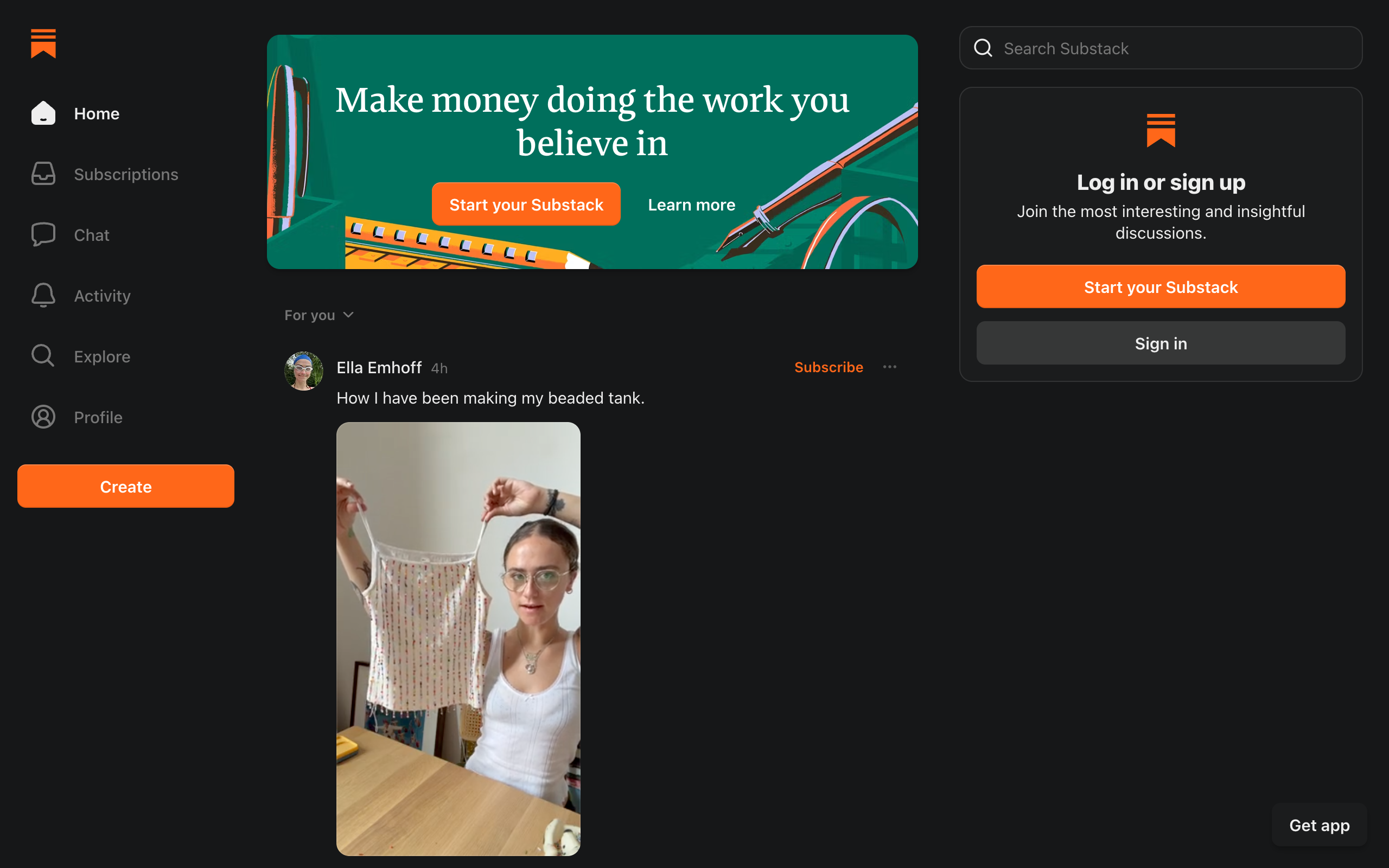
This is the comparison that actually decides platform choices, so let us do arithmetic instead of vibes. Substack charges no platform fee and takes 10% of paid subscription revenue, plus Stripe processing. Beehiiv charges a flat fee and takes 0%, plus the same Stripe processing. Stripe cancels out of the equation, so the break-even is simply: the moment 10% of your annual paid revenue exceeds beehiiv’s annual price, Substack has become the more expensive platform.
| Your list size (band) | beehiiv Scale, annual | Substack costs more once paid revenue exceeds | That is roughly |
|---|---|---|---|
| 1,000 | $517/yr | $5,170/yr | $431/mo in paid subs |
| 2,500 | $729/yr | $7,290/yr | $608/mo |
| 5,000 | $940/yr | $9,400/yr | $783/mo |
| 10,000 | $1,151/yr | $11,510/yr | $959/mo |
| 25,000 | $1,785/yr | $17,850/yr | $1,488/mo |
| 50,000 | $2,629/yr | $26,290/yr | $2,191/mo |
| 100,000 | $3,474/yr | $34,740/yr | $2,895/mo |
To make that concrete with a typical price point: at $8/mo per paying reader, Substack’s 10% costs you $9.60 per paying subscriber per year. Divide beehiiv’s fee by that and you get the head count where the platforms swap places. On the 10K band, $1,151 divided by $9.60 is about 120 paying subscribers. One hundred and twenty. That is 1.2% of the list choosing to pay you $8 a month. Whether that is easy depends entirely on your niche and content, but as a threshold it is small enough that the platform fee should not be the thing standing between you and a paid tier.
So here is my actual position, and it cuts both ways. If you are pre-revenue and unsure you will ever charge readers, Substack’s zero-dollar entry is legitimately hard to argue with, and beehiiv’s fee is a bet on your own growth. But if paid subscriptions are the plan, the math flips fast and keeps flipping harder forever, because Substack’s cut scales with your success while beehiiv’s fee only scales with your list. The full feature-by-feature fight, including the things Substack wins like Notes and network discovery, is in my beehiiv vs Substack breakdown. On pure economics for a monetizing newsletter, beehiiv wins early and by a widening margin.
How does beehiiv pricing compare to Kit and Mailchimp?
Same exercise, same July 2026 capture date, monthly billing, at the three list sizes from our scenarios. Kit’s bands do not align exactly with beehiiv’s (its tiers near these sizes are 3,000 and 55,000), so I used the band you would actually be forced onto.
| List size | beehiiv Scale | Kit Creator | Mailchimp Standard | Substack |
|---|---|---|---|---|
| ~2,500 | $69/mo (or $0 on Launch) | $50/mo (3,000 band) | $60/mo | $0 + 10% of paid revenue |
| 10,000 | $109/mo | $116/mo | $135/mo | $0 + 10% |
| 50,000 | $249/mo | $316/mo (55,000 band) | $450/mo | $0 + 10% |
Three footnotes that matter more than the table:
Mailchimp bills on contacts, not subscribers, and its free plan has been gutted. Its own pricing page now points businesses with “fewer than 250 contacts” to the free plan, and a footnote caps sending on no-credit-card free accounts at 100 emails. Mailchimp is also audience-based billing, so people sitting in your audience can count against your band even when you are not actively mailing them, which makes list hygiene a billing chore. It remains a fine ecommerce marketing suite; as a newsletter platform in 2026 it is the expensive option with the fewest creator features, and I lay out the whole case in beehiiv vs Mailchimp.
Kit is the closest real competitor on price and a genuinely good product. Its free plan reaches 10,000 subscribers, four times beehiiv’s free ceiling, but with exactly one basic automation, and Kit’s visual automations are the main reason to choose it. So its free tier withholds precisely the thing it is best at. Paid-to-paid, Kit and beehiiv are within a few dollars until about 20K subscribers, after which beehiiv pulls ahead. Where the money goes differs: Kit’s fee buys deeper automation for selling your own products; beehiiv’s buys growth and ad monetization. I split those hairs properly in beehiiv vs Kit.
Annual discounts differ. Kit’s annual billing saves about 17%, beehiiv’s about 12%, Mailchimp’s discounting is promo-based (currently 15% off the first year for 10K+ contact accounts). On sticker price alone Kit narrows the gap when both are on annual.
How do you save money on beehiiv?
Five moves, in order of impact:
- Ride Launch to the last possible day. The free plan is fully capable of growing a list to 2,500. Upgrading “to be ready” is donating money to a company that already raised plenty.
- Take annual billing once you are sure. The 12% discount is real money at higher bands: $360 a year back at the 50K Scale tier ($2,629 versus $2,988). But only prepay after a month or two of paid usage has confirmed the platform fits, because an annual commitment on the wrong tool is the most expensive discount there is.
- Prune before you cross a band. Beehiiv charges for stored subscribers, so 200 dead emails sitting at the 2,500 or 10,000 boundary can be the entire difference between two price bands. A quarterly cleanout of never-openers is worth $200 to $700 a year at mid-size tiers. No other line in this article has a better effort-to-savings ratio.
- Use the paid-plan trial. The pricing page offers a free trial on paid tiers (“Try for free” on both Scale and Max). Test automations and monetization inside the trial window instead of paying to explore.
- Let the platform pay its own bill. Turn on paid recommendations and the ad network the day you upgrade. Even modest earnings there are effectively a discount on your subscription, and they are features Kit and Mailchimp simply do not have.
Beehiiv hidden costs: what the pricing page does not advertise
Nothing here is a scandal, but all of it belongs in your budget:
- Band jumps are cliffs, not slopes. Subscriber 2,501 moves Scale from $69 to $89/mo. Subscriber 10,001 moves it from $109 to $169/mo. That second jump is 55% for one subscriber. Know where your cliffs are.
- Branding removal costs a full plan tier. If a clean footer is a hard requirement, your real entry price is Max at $96/mo annual (1,000-sub band), not Scale at $43. Factor it before you fall in love.
- Stripe fees still exist. “0% take rate” means beehiiv takes nothing; Stripe still takes 2.9% + $0.30 per transaction on paid subscriptions. Every platform has this cost, but people mentally file “0%” as “free” and then wonder about the gap in payouts.
- Dedicated IPs are Enterprise-only. On Launch through Max you send from shared infrastructure, and a shared pool is only ever as clean as its worst neighbor. If you are migrating a six-figure list with revenue riding on inbox placement, ask beehiiv’s sales team about IP options before you sign rather than after.
- Annual prepay meets growth. If you prepay a year at one band and outgrow it in month four, you will be paying the difference to move up mid-cycle. Fast-growing lists should model the next band’s annual price, not the current one.
- Your domain is on you. Custom domains are supported on every plan, including free, but the domain itself is a separate $10 to $15 a year at your registrar. Trivial, but it belongs on the list because “custom domains included” reads like “domain included” when you skim.
Which beehiiv plan should you actually choose?
My decision tree, with no “it depends on your unique needs” cop-out:
- Under 2,500 subscribers, not monetizing: Launch. Free. Do not overthink it.
- Any size, running a funnel or monetizing: Scale, annual once validated. This is the correct plan for probably 80% of people who should pay beehiiv anything.
- Agencies, multi-publication operators, white-label requirements, teams over three: Max. You are the minority it is priced for, and for you it is fair.
- Past 100K or migrating a large list with deliverability stakes: Enterprise conversation.
- Pre-revenue paid-newsletter experiment where you might quit in three months: honestly, Substack. Come back when the paid list works; the break-even table above tells you exactly when. And if you want the full field before committing, my best newsletter platforms guide ranks every serious option for 2026.
Frequently asked questions about beehiiv pricing
How much does beehiiv cost per month? In July 2026: the Launch plan is free up to 2,500 subscribers. Scale runs $49/mo at 1,000 subscribers up to $329/mo at 100,000 on monthly billing, or $43 to $290/mo on annual billing. Max runs $109 to $459/mo monthly, $96 to $404/mo annual. Above 100,000 subscribers, Enterprise pricing is custom.
Is the beehiiv free plan really free? Yes. Launch costs $0 with no credit card, up to 2,500 subscribers, with unlimited email sends, a hosted website, and custom domain support. The limits all sit on the feature side: no automations, no monetization features, no A/B testing, and beehiiv branding stays on your emails and site.
How much does beehiiv cost for 10,000 subscribers? At the 10,000-subscriber band, Scale costs $109/mo on monthly billing or $96/mo on annual billing ($1,151/yr). Max costs $219/mo monthly or $193/mo annual ($2,313/yr).
Does beehiiv take a cut of paid subscriptions? No. Beehiiv’s take rate on paid subscriptions is 0% on Scale and above. You pay only Stripe’s processing fee of 2.9% + $0.30 per transaction. Substack, by comparison, takes 10% of subscription revenue plus processing.
Is beehiiv cheaper than Substack? Beehiiv is cheaper than Substack once your paid revenue passes about $959/mo at the 10,000-subscriber tier, because Substack’s 10% cut ($11,510/yr at that revenue) exceeds beehiiv Scale’s $1,151/yr annual fee. Below that line Substack costs less; above it, beehiiv’s lead grows with your revenue.
Is annual billing worth it on beehiiv? Usually, yes. Annual billing saves about 12% (for example, $729/yr instead of $828 at the 2,500-sub Scale tier). Take it after you have validated the platform on monthly billing, and check the next band’s price first if your list is growing fast, since you will pay to move up mid-cycle.
The bottom line on beehiiv pricing
Beehiiv pricing is a bet the company is making that your list will grow, and they price the front door at zero to get that bet on the table. Your job is to take the free side of the wager for as long as possible, then pay only when a locked feature has a provable dollar value: automations feeding a funnel, the 0% take on a paid tier, ad revenue you cannot access on Launch.
Priced that way, beehiiv is the cheapest serious newsletter platform at almost every list size, and the only one where the fee buys growth machinery instead of just a send button. Priced as a monthly subscription you sign up for on day one and forget, it is just another SaaS bill. Which of those two outcomes you get comes down to a single habit: make the platform earn every upgrade.
The zero-risk version of this whole decision takes about ten minutes: open a free beehiiv account, import or start your list, and send something this week. You will know exactly which plan you need long before you owe them a dollar, and until then the answer is none.
Pricing captured from the live pricing pages of beehiiv, Substack, Kit, and Mailchimp, July 2026, tier by tier via each site’s plan selector. Plans and numbers change; confirm current details on beehiiv.com/pricing before you buy.


