
Substack and Patreon both let you charge fans directly for your work, and both take a cut of what you earn, but they are not solving the same problem. Substack is built around the email newsletter: you write, it lands in an inbox, and a chunk of your readers might upgrade to paid. Patreon is built around the membership relationship: fans join to support you and unlock perks, whether you make podcasts, videos, art, comics, or, yes, written posts. Pick based on the format your work actually lives in, not on which platform your favorite creator uses.
Key takeaways
- Substack is newsletter-first. Every post is an email plus a web page, and Substack’s Notes and recommendation network are built to help new readers discover you through other newsletters.
- Patreon is membership-first and format-agnostic. It works as well for a podcast feed or a Discord-adjacent community as it does for written posts, but it was never designed to be your email tool.
- Fees are close but not identical. Substack takes 10% of paid subscription revenue. Patreon now charges new creators a flat 10% too, though creators who joined before August 2025 may still sit on legacy Lite (5%), Pro (8%), or Premium (12%) plans. Both add standard payment processing on top.
- Neither platform hands you your own website or SEO-indexed archive the way a dedicated newsletter tool does. That is the gap a platform like beehiiv is built to close.
- The real decision driver is distribution, not features. Substack’s growth engine is other newsletters recommending you. Patreon’s growth engine is you bringing an existing audience in from YouTube, TikTok, or a podcast feed and asking them to pay for more.
Disclosure: some links in this post are affiliate links. If you sign up through them, we may earn a commission at no extra cost to you. That never changes our verdict.
What is the actual difference between Substack and Patreon?
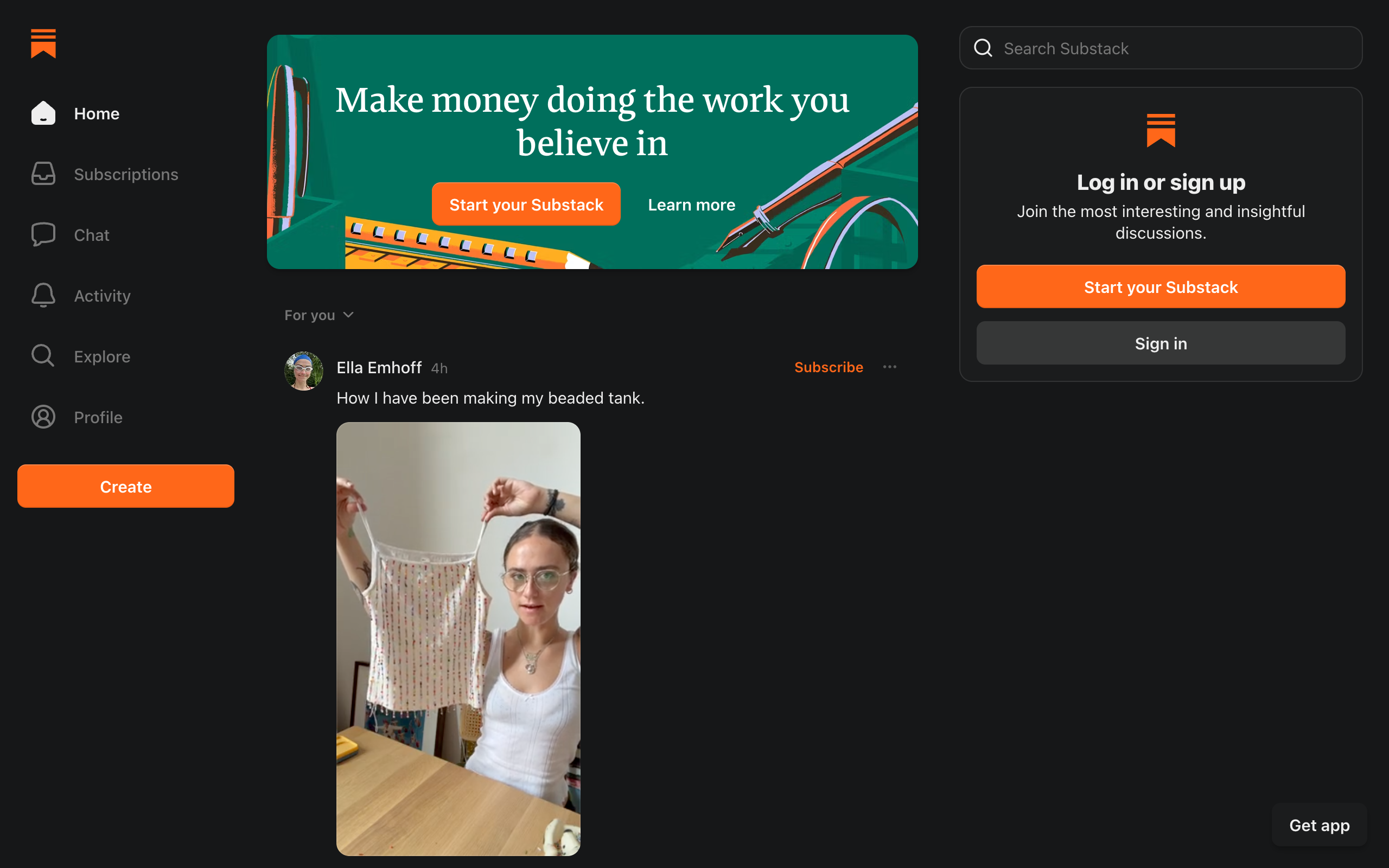
The short version: Substack is a publishing tool that happens to support payments, and Patreon is a payments and membership tool that happens to support publishing. That single distinction explains almost every other difference between them.
On Substack, the unit of value is the post. You write something, it goes out as an email to your full list, and a paywall gate decides whether free or paid subscribers can read the whole thing. The platform’s discovery layer, Notes (Substack’s Twitter-like feed) and the recommendation network (other writers endorsing you to their subscribers), exists to grow your subscriber count through the act of publishing itself.
On Patreon, the unit of value is the membership tier. You define tiers ($3, $10, $25, whatever), attach perks to each (early access, bonus episodes, a Discord role, a physical sticker), and members pay monthly or per creation to stay in. Patreon does not particularly care whether the content behind the paywall is a newsletter post, a 45-minute podcast episode, an unlisted YouTube video, or a folder of concept art. That flexibility is the whole product.
This is why comparing them head to head only makes sense once you know what you are actually publishing. If your output is text that reads well in an inbox, Substack’s format fits without any translation. If your output is audio, video, or a bundle of different perks, Patreon’s tier system fits more naturally, and Substack becomes a workaround (posting audio embeds inside an email, for instance) rather than a native use case.
How do Substack and Patreon compare on paper?
| Factor | Substack | Patreon |
|---|---|---|
| Core format | Email newsletter + web post | Membership tiers, any content type |
| Cost to start | Free, no monthly fee | Free, no monthly fee |
| Platform fee on paid revenue | 10% of paid subscription revenue | Flat 10% for creators who joined after August 4, 2025; legacy Lite/Pro/Premium creators pay 5% / 8% / 12% |
| Payment processing | Stripe’s standard rate, around 2.9% + $0.30 per transaction | Around 2.9% + $0.30 per pledge of $3 or more; a higher “micro” rate of roughly 5% + $0.10 applies under $3 |
| Discovery / growth tooling | Notes feed, cross-newsletter recommendations, “Substack app” surface | Patreon’s own discovery is thin; growth mostly relies on the creator’s outside audience (YouTube, TikTok, podcast) |
| Email marketing tools | Native, since posts are emails; limited automation and segmentation | Basic post/announcement emails to patrons; not built as a marketing tool |
| SEO / owned website | Each post gets a URL, but per-post SEO controls are thin | Creator pages are index-light; not designed to rank in search |
| Best-fit content | Written essays, opinion, reported newsletters, fiction serials | Podcasts, video, art/comics, multi-perk communities |
| You own the email list | Yes, exportable | Limited; Patreon is built around the platform relationship, not a portable list |
What does Substack actually cost?
Substack has one plan, and it applies to everyone: free to publish, free to read, free to build a list of any size. The catch is entirely on the monetization side. Substack takes 10% of your paid subscription revenue, and on top of that, Stripe (the payment processor Substack runs on) charges its standard rate, around 2.9% plus $0.30 per transaction, as of mid-2026. Combined, most writers land somewhere around 13% to 16% of gross paid revenue going to fees before it hits their bank account.
Run the math on a $10-per-month subscriber and the gap is visible immediately: Substack’s cut is $1.00, Stripe’s cut is roughly $0.59, and you keep around $8.30 to $8.40. That is not a rounding error once you have a few hundred paid subscribers; it is real money leaving every single month, forever, with no tier that reduces the percentage as you grow. I break down the exact math and where the 10% starts to genuinely hurt in my full Substack pricing breakdown.
What does Patreon actually cost?

Patreon’s structure changed in a way that matters if you are comparing current numbers against an old blog post. Historically, Patreon offered three tiered plans: Lite at 5%, Pro at 8%, and Premium at 12%, and creators picked based on how much of Patreon’s toolset (merch, publishing tools, analytics) they needed. As of August 4, 2025, new creators no longer choose a tier; they are placed on a single standard plan that charges a flat 10% of earnings. Creators who signed up before that date keep their legacy plan and its old percentage, which is one of the few times in this category where being an early adopter of a platform is a genuine, ongoing financial advantage.
On top of the platform fee, Patreon charges payment processing separately from the platform cut: around 2.9% plus $0.30 per pledge of $3 or more, and a steeper “micro-pledge” rate near 5% plus $0.10 for anything under $3. That micro-pledge rate is worth flagging because it is easy to miss: if your lowest tier is a $2 or $3 tip jar, the processing fee alone eats a disproportionate chunk of it, which is one reason most successful Patreon creators price their entry tier at $5 or higher rather than $1 or $2.
Net result: for a creator who joined after August 2025, Substack and Patreon land in roughly the same place, around 10% platform fee plus standard processing. The real cost difference between the two platforms is not the fee line, it is what you get in exchange for it, and that is where they genuinely diverge.
Where does Substack win?
The Notes feed and recommendation network actually move subscribers
Substack’s biggest structural advantage is that growth is baked into the act of publishing. When another writer recommends you, their existing subscribers are shown a one-click “subscribe” option inside their own inbox and reading app, and no similar mechanism exists natively on Patreon. Newer or smaller newsletters routinely report that recommendations from a handful of larger, adjacent writers account for a meaningful share of their list growth in the first year. Patreon has nothing structurally equivalent; its version of discovery is a browsable creator directory that most patrons never use to find someone new.
Writing is the native format, not a workaround
If you are producing essays, reported pieces, or a fiction serial, Substack’s editor, paywall placement, and email-plus-web-post format require zero adaptation. You write, you hit publish, the email goes out and the post lives on your own subdomain. On Patreon, publishing text means using the “Posts” feature, which functions fine but was clearly designed second, after the platform’s video and audio-first roots as a Kickstarter-adjacent tool for YouTubers and podcasters.
You own something closer to a real email list
Every Substack subscriber, free or paid, is a row in an exportable list with an email address you can take with you. Patreon’s relationship is more platform-locked: you can message patrons through Patreon, but the portability and email-marketing muscle around that relationship is thinner, and Patreon was never trying to be an ESP.
Where does Patreon win?
It is genuinely format-agnostic
Podcasters, video essayists, musicians, comic artists, and tabletop game designers all use Patreon successfully because it does not force their output into an email-shaped box. A private podcast RSS feed behind a Patreon paywall, gated early access to a YouTube video, a Discord role tied to a tier: none of that maps cleanly onto Substack’s model, and trying to force it usually means running Patreon and Substack side by side anyway, which a lot of hybrid creators do.
Tiered perks let you monetize attention beyond “pay to read”
Substack’s paywall is essentially binary: free content or paid content. Patreon’s tier system lets you build a genuine perk ladder, a $5 tier for early access, a $15 tier for a monthly Q&A, a $50 tier for a shoutout, that captures fans willing to pay more for more without requiring you to write more content to justify it. For creators whose real value is access and community rather than word count, this is a materially better monetization shape.
It fits an existing audience you built somewhere else
Most successful Patreon pages are the monetization layer bolted onto an audience that already exists on YouTube, TikTok, Twitch, or a podcast app. Patreon does not need to help you find new fans because it assumes you are bringing them from elsewhere. If your growth engine is already social or audio, Patreon slots in without asking you to also become a newsletter writer.
Worth noting before you commit to either: if what you actually want is a newsletter that grows itself and keeps 100% of your paid revenue at the flat-fee tier, beehiiv is free to try up to 2,500 subscribers, no card required, and it takes 0% of paid subscriptions on its Scale plan and above. Worth a look before you lock into either platform’s fee structure.
How hard is it to switch between them later?
Switching costs are asymmetric, and it is worth knowing that before you commit to either platform as a first move. Moving away from Substack is relatively low friction: you can export your subscriber list as a CSV at any time, and because every subscriber is a real email address rather than a platform-locked account, importing that list into Patreon, beehiiv, or anywhere else is a mechanical task, not a negotiation. The content itself does not transfer automatically, but the audience does.
Moving away from Patreon is messier in practice, mainly because the relationship patrons have is with the pledge and the perks, not with an email address you fully control. You can message your patron list and encourage them to follow you elsewhere, but you cannot simply export “your Patreon audience” into a new platform’s paid subscription system the way you can with an email list; each patron has to individually decide to re-subscribe somewhere else, and a meaningful percentage never make that jump. Creators who have done this migration describe it less as an export and more as a re-launch, complete with a new sign-up push and a real drop-off rate.
The practical implication: if there is any chance you will want to change platforms in a year or two, starting with an email-first tool (Substack, or a flat-fee alternative like beehiiv) preserves more optionality than starting with Patreon, purely because the underlying asset, an exportable list of email addresses, survives the switch. Starting with Patreon is a reasonable bet only if you are confident the tiered, perk-based relationship is core to how your specific audience wants to support you.
Can you actually run both at the same time?
Plenty of creators do, and it is not a hack, it is a reasonable structure. A common pattern: publish the newsletter on a platform that keeps more of the revenue and owns the list, and run Patreon in parallel purely for the perks that do not fit an email (bonus podcast episodes, Discord access, behind-the-scenes video). The newsletter drives discovery and habit; Patreon captures fans who want deeper access. The friction is operational, not financial: you are now managing two payment systems, two audiences that may or may not overlap, and two separate cancellation flows, which adds real admin overhead once you are doing it at any scale.
If you are going to run two platforms, the newsletter side is where the discovery and SEO compounding happens, so it is worth being deliberate about which tool you use for that half. This is exactly where the “beehiiv instead of Substack” argument gets stronger, not weaker, when you are already paying Patreon’s cut on the membership side: stacking a second 10% fee on the newsletter side, on top of what Patreon already takes, compounds fast once both are earning real money.
Where does beehiiv fit into this comparison?

beehiiv is not a membership platform, so it is not a direct swap for Patreon’s tier-and-perk model. But it is a direct, and arguably stronger, alternative to the newsletter half of what Substack does, which matters if your actual plan is “write a newsletter and maybe add paid perks later” rather than “build a Patreon-style membership community.”
The practical differences that show up once you have used both: beehiiv takes 0% of your paid subscription revenue on its Scale plan and above, where Substack takes 10% forever, on every dollar, at every list size. beehiiv also ships a native referral program and a two-sided Boosts marketplace (get paid to grow, or pay to grow), neither of which Substack or Patreon offers natively. And every beehiiv post lives on an SEO-indexable website with editable meta titles, something Substack’s discovery model was never optimized for and Patreon does not attempt at all.
None of that replaces Patreon’s tier-and-perk system if perks are core to your model. But if you are choosing Substack specifically because it is “the newsletter one,” it is worth running the same evaluation against beehiiv before you commit to a platform that takes a permanent 10% cut. I go deeper on this exact trade-off in beehiiv vs Substack, the full pricing tiers are in beehiiv’s pricing explained, and my hands-on full beehiiv review covers what it is actually like to run a publication on it day to day.
The cleanest way to compare is to try it directly: open a free beehiiv publication, import whatever list you already have, and send one real issue. It costs nothing to check, and you will know within two sends whether the editor and growth tools fit your workflow better than Substack’s.
Which one should you actually pick?
Use this as a fast filter rather than a personality test. Pick Substack if your core output is written essays or reported newsletters, you want the built-in discovery network of Notes and recommendations, and you are fine with a permanent 10% cut on paid revenue in exchange for that distribution. Pick Patreon if your content is podcast, video, art, or anything that benefits from a tiered perk ladder, and especially if you already have an audience on another platform that you are converting into paying members rather than growing from zero.
Pick neither, and look at a dedicated newsletter platform like beehiiv, if your actual plan is “grow an email list as a real business asset” and the 10% Substack takes forever is the number that bothers you most. For a wider view of the category beyond just these two, my ranking of the best newsletter platforms and my breakdown of the best platforms to monetize a newsletter cover the rest of the field, including where Patreon fits for podcast-style creators in my best newsletter platform for podcasters guide.
Frequently asked questions
Is Substack or Patreon better for a newsletter? Substack, in almost every case. It is purpose-built for the email-plus-web-post format, includes a discovery network through Notes and recommendations, and every subscriber is a portable email address. Patreon can technically host written posts, but it was designed first for podcasts, video, and tiered perks, so text-first creators usually find it a worse fit.
Does Patreon take a bigger cut than Substack? For creators who joined after August 4, 2025, both charge a flat 10% platform fee plus standard payment processing, so they are close to identical. Creators on Patreon’s legacy Lite plan (5%) pay less than Substack; those on legacy Premium (12%) pay more. Check which plan you are actually on before assuming either is cheaper.
Can I use Substack and Patreon together? Yes, and many creators do, typically running the newsletter on one platform for discovery and habit while using Patreon in parallel for perks that do not translate to email, like bonus podcast episodes or Discord access. The tradeoff is managing two payment systems and two audiences instead of one.
Is there a cheaper alternative to both? For the newsletter half specifically, yes. beehiiv charges a flat subscription fee starting around $43/month on annual billing and takes 0% of paid subscription revenue on Scale and above, which becomes cheaper than Substack’s 10% cut once your paid revenue passes roughly $430 a month. It does not replicate Patreon’s tiered-perk system, so it is not a direct Patreon swap.
Does Patreon help with growing a new audience? Not much on its own. Patreon’s internal discovery tools are limited, and most successful Patreon pages convert an audience the creator already built elsewhere (YouTube, TikTok, a podcast feed). If you are starting from zero, Substack’s Notes and recommendation network will likely grow a cold audience faster than Patreon will.
Which platform lets me keep more of my paid subscription revenue? Assuming standard current rates, they are close: both take roughly 10% plus payment processing for most creators today. The bigger revenue lever is elsewhere, either landing on Patreon’s legacy 5% Lite plan if you are grandfathered in, or moving your newsletter to a flat-fee platform like beehiiv that takes 0% instead of a percentage.
The bottom line
Substack and Patreon look like competitors because both let you charge readers directly, but they are built for different shapes of work. Substack wants you to be a writer with an inbox-native audience and built-in discovery. Patreon wants you to be a creator of anything, with a tiered membership wrapped around whatever platform you already publish on. Match the tool to your actual content format first, and only worry about the fee percentages once you have picked the right shape.
If the newsletter side of this decision is what you are actually weighing, and the idea of a permanent 10% cut is what is holding you back from committing, it costs nothing to check the alternative.
Start a free beehiiv publication and send one real issue before you lock in either Substack or Patreon. Free to 2,500 subscribers, no card required, and you keep 100% of paid subscription revenue on the Scale plan and above.
Pricing captured from vendor pricing pages, July 2026. Plans change, so confirm current details before you buy.


