

Most “Ghost review” posts online read like they were written from the marketing page, because Ghost is the kind of tool that is genuinely annoying to set up properly if you want to judge it fairly. It is open-source, it expects you to think about themes and members and newsletters as three connected but separate systems, and the hosted version, Ghost(Pro), is priced differently from what you would pay running it yourself. I set up a test publication on Ghost(Pro), built out a newsletter, configured paid membership tiers, and pushed a few posts live to see how the editor, the member management, and the built-in analytics actually hold up day to day, not just what the pricing page promises.
Here is the short version before the long one: Ghost is the best platform in this category if your business model is “readers pay me directly for my writing” and you are willing to trade some growth convenience for full ownership and 0% platform fees. It is a worse fit if what you actually want is a growth engine that brings you new readers. The rest of this review is about exactly where that line sits.
Disclosure: some links in this post are affiliate links. If you sign up through them, we may earn a commission at no extra cost to you. That never changes our verdict.
The 30-second verdict
Ghost is the strongest platform in 2026 for writers and publishers who monetize through paid memberships and want to own their publishing infrastructure, since it is open-source, takes 0% of your membership revenue, and gives you real design and content control that hosted newsletter tools do not. Ghost(Pro), the official hosted version, starts at around $18/month on annual billing for the Starter plan, covering 1,000 members and one staff seat. I rate it 4 out of 5.
The missing star is about audience acquisition, not publishing quality. Ghost has almost no built-in growth tooling: no referral program, no recommendation marketplace, no ad network. It assumes you already have, or are building, an audience through other channels (SEO, social, existing relationships) and hands you the best possible tool to publish to and monetize that audience once they arrive. If growth is your bottleneck rather than publishing quality, that gap will bother you more than anything else in this review.
If you want to see what a growth-first alternative feels like next to Ghost’s publishing-first approach, start a free beehiiv publication and compare the onboarding for yourself. Free to 2,500 subscribers, no card required.
What is Ghost, and who actually builds it?
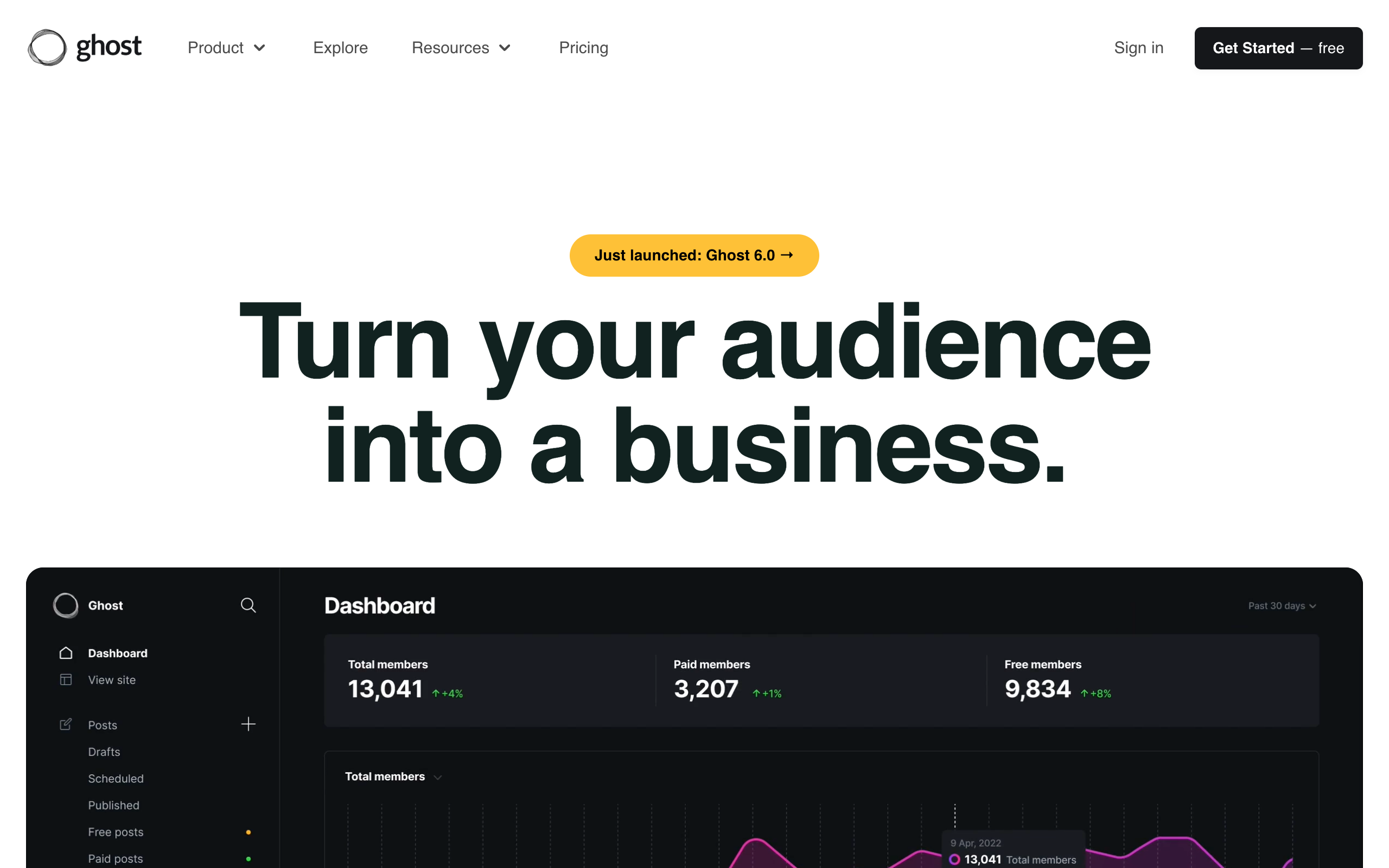
Ghost is an open-source publishing platform launched in 2013 by John O’Nolan, originally conceived as a simpler, faster alternative to WordPress for writers who just wanted to publish without wrestling with a plugin-bloated CMS. It has since evolved into a full membership and newsletter platform, run by the Ghost Foundation, a UK-registered non-profit. That non-profit structure is not a footnote. It is the reason Ghost’s pricing model looks the way it does: Ghost does not answer to investors chasing growth-at-all-costs metrics, and its 0% fee on membership revenue is a structural choice tied to its mission, not a promotional rate that will quietly change when a board wants better unit economics.
You can self-host Ghost for free on your own server, which real technical teams do, but most writers and small publishers use Ghost(Pro), the official managed hosting service, which is what this review evaluates. Ghost(Pro) handles hosting, updates, backups, deliverability infrastructure, and support, and is the version with the pricing tiers you see on ghost.org/pricing.
Who is Ghost actually for?
The clearest way to know if you are Ghost’s customer: you write, and readers pay to read what you write, or you want the option to charge someday. That covers independent journalists, niche analysts, fiction serial writers, and small media operations running a subscription model. It also covers non-monetized publishers who simply want a fast, clean, ownable website with a newsletter attached and do not want their content locked inside a platform’s proprietary format.
If your actual goal is “grow a large free list as fast as possible and monetize through sponsorships and ads,” Ghost is not built for that motion, and you will spend real effort bolting on tools (a separate referral system, manual sponsor outreach) that a growth-first platform gives you natively. I go through that specific tradeoff in beehiiv vs Ghost if that is the fork you are standing at.
Where Ghost genuinely wins
0% platform fee on membership revenue, permanently
This is Ghost’s headline feature and it holds up under scrutiny. Whatever you charge for paid membership, Ghost takes none of it. You pay Stripe’s standard processing fee (2.9% + $0.30 in the US, per Stripe’s published rates) and Ghost’s flat subscription cost, and that is the entire cost stack. Compare that with Substack’s 10% cut of paid revenue on top of processing, or Patreon’s tiered fees running from roughly 8% to 12% depending on plan, and the math is not close once your membership revenue is meaningful. A publication earning $3,000 a month in paid memberships keeps everything above Ghost’s flat monthly fee; the same publication on Substack hands over roughly $300 a month, every month, forever, regardless of list size.
Real design and content ownership
Ghost ships with a professional theme marketplace and a genuinely capable theme templating system built on Handlebars, so a publication with development resources can build a site that looks nothing like every other newsletter’s default template. In my test publication, even without touching custom code, the built-in themes felt considerably more like an actual branded publication than the templated feel I got testing beehiiv and Kit’s website builders. If pixel-level brand control matters to you, this is the difference that shows up the moment a reader lands on your homepage.
Content ownership matters too. Ghost content lives in a standard, exportable format, and because Ghost is open-source, you are never structurally locked into Ghost(Pro) specifically. You can export and self-host if you outgrow the hosted plan or want more control, a genuine exit ramp that proprietary SaaS newsletter tools do not offer in the same way.
The editor is fast and writing-focused
Ghost’s editor uses the same card-based, slash-command writing experience that Notion popularized, and it is quick. Loading a new post, dropping in images, embedding a tweet, and formatting a long-form piece all felt closer to writing in a dedicated writing app than filling out a marketing email template, which is exactly Ghost’s original pitch as a WordPress alternative and still its strongest day-to-day feeling. For anyone who publishes long, structured essays rather than short broadcast-style updates, this editor is a genuine pleasure compared with most email-tool editors, which are still optimized around campaign layout rather than long-form writing.
Built-in SEO tools that actually matter
Every Ghost post gets editable meta titles, meta descriptions, canonical URLs, and clean semantic markup out of the box, and Ghost’s own documentation emphasizes structured data and sitemap generation as first-class features rather than plugin add-ons. Because Ghost publications are real websites with fast page loads (Ghost has consistently prioritized performance benchmarks in its own engineering blog), the technical SEO foundation is solid without extra configuration. That will not replace an actual content and backlink strategy, but it removes the technical excuses that slow down a lot of newsletter-platform websites.
Multiple newsletters and membership tiers from one account
Depending on plan, Ghost lets you run multiple newsletters and multiple paid membership tiers from a single publication. That is useful for a publisher running a free flagship newsletter alongside a premium tier, or a media operation running several distinct verticals under one team. Publisher and Business plans expand this meaningfully, letting you segment audiences by newsletter and by tier without needing separate accounts or separate billing relationships.
Ghost’s strength is what happens after someone subscribes. If the harder problem for you right now is getting people to subscribe in the first place, that is worth testing directly. Set up a free beehiiv publication and see the referral and Boosts tools in action; the free plan runs to 2,500 subscribers with no card needed.
Where Ghost falls short
Almost no built-in growth tooling
This is the biggest gap, and it is a deliberate design choice, not an oversight. Ghost has no native referral program, no paid-recommendation marketplace comparable to beehiiv’s Boosts or Kit’s Paid Recommendations, and no built-in ad network. If you want a referral incentive system, you are integrating a third-party tool like SparkLoop yourself. Ghost’s philosophy is that you bring the audience and it publishes and monetizes for you exceptionally well; it simply does not try to help you find that audience the way beehiiv or even Substack’s discovery network does.
Setup has a real technical floor
Even on Ghost(Pro), where hosting is managed, meaningfully customizing your site (a fully custom theme, non-standard layouts, deep integration work) requires comfort with code or a budget to hire someone who has it. The default themes are good enough that you do not need this for a solid-looking publication, but the ceiling on “make this look exactly like my brand” is much higher than the floor on “get something decent live today.” Compared with beehiiv or Kit’s drag-and-drop website builders, Ghost asks more of you if you want to push past the defaults.
Member limits step up fast relative to price
Ghost(Pro)’s Starter plan caps out at 1,000 members, and the jump to the next tier for more headroom comes with a real price increase, not a gentle step. If your list grows quickly, you will feel the tier boundaries more abruptly than on a platform with finer-grained subscriber bands. I cover the exact numbers in the next section and in the dedicated Ghost pricing breakdown.
Analytics are useful but not deep
Ghost’s built-in analytics cover opens, clicks, member growth, and basic attribution, described on higher plans as “advanced analytics.” In my testing this was enough to understand overall newsletter health, but it does not go as deep as beehiiv’s per-subscriber engagement histories and acquisition-source cohorting, or Kit Creator Pro’s Subscriber Signals. If granular subscriber-level behavior data drives your content and growth decisions, Ghost gives you less to work with than the tools built specifically around that.
Staff seats are limited on lower tiers
The Starter plan includes just one staff user. For a solo writer that is fine, but if you run even a small two-person operation (a writer and an editor, say), you are pushed to the Publisher plan sooner than the member count alone would suggest. Team-based publications should budget for the seat requirement, not just the member cap, when picking a tier.
What does Ghost cost in 2026?
Numbers from Ghost’s live pricing page, annual billing, captured July 2026.
| Plan | Price (annual billing) | What you actually get |
|---|---|---|
| Starter | Around $18/mo | 1,000 members, 1 staff user, 5MB file uploads, website and email newsletter, simple design settings, free custom domain |
| Publisher | Around $29/mo | 1,000 members, 3 staff users, 100MB file uploads, custom themes, 8,000+ integrations, paid subscriptions, advanced analytics, 3 newsletters, custom sending domain |
| Business | Around $199/mo | 10,000 members, 15 staff users, 250MB file uploads, priority support, higher usage limits, early feature access, 10 newsletters, 10 premium tiers, custom SSL available |
| Custom (Enterprise) | Custom pricing | Unlimited members and staff, 1GB file uploads, advanced configurations, dedicated IP address, 99.9% uptime SLA, SSO support |
The naming is worth reading closely: Starter and Publisher both cap out at 1,000 members, and the real difference between them is staff seats, upload limits, custom themes, and paid subscriptions, not headcount. That means most solo writers planning to charge for content should budget for Publisher, not Starter, since paid subscriptions are gated there. Business is a large jump in price for a 10x member ceiling and team-scale features; unless you are running a genuine multi-person publication or need more than 3 newsletters, it is more plan than most writers need. All tiers, including Custom, share the same core: 0% fee on membership revenue, whitelabel branding, free custom domain, and managed deliverability.
How does Ghost compare with beehiiv, Substack, and WordPress?
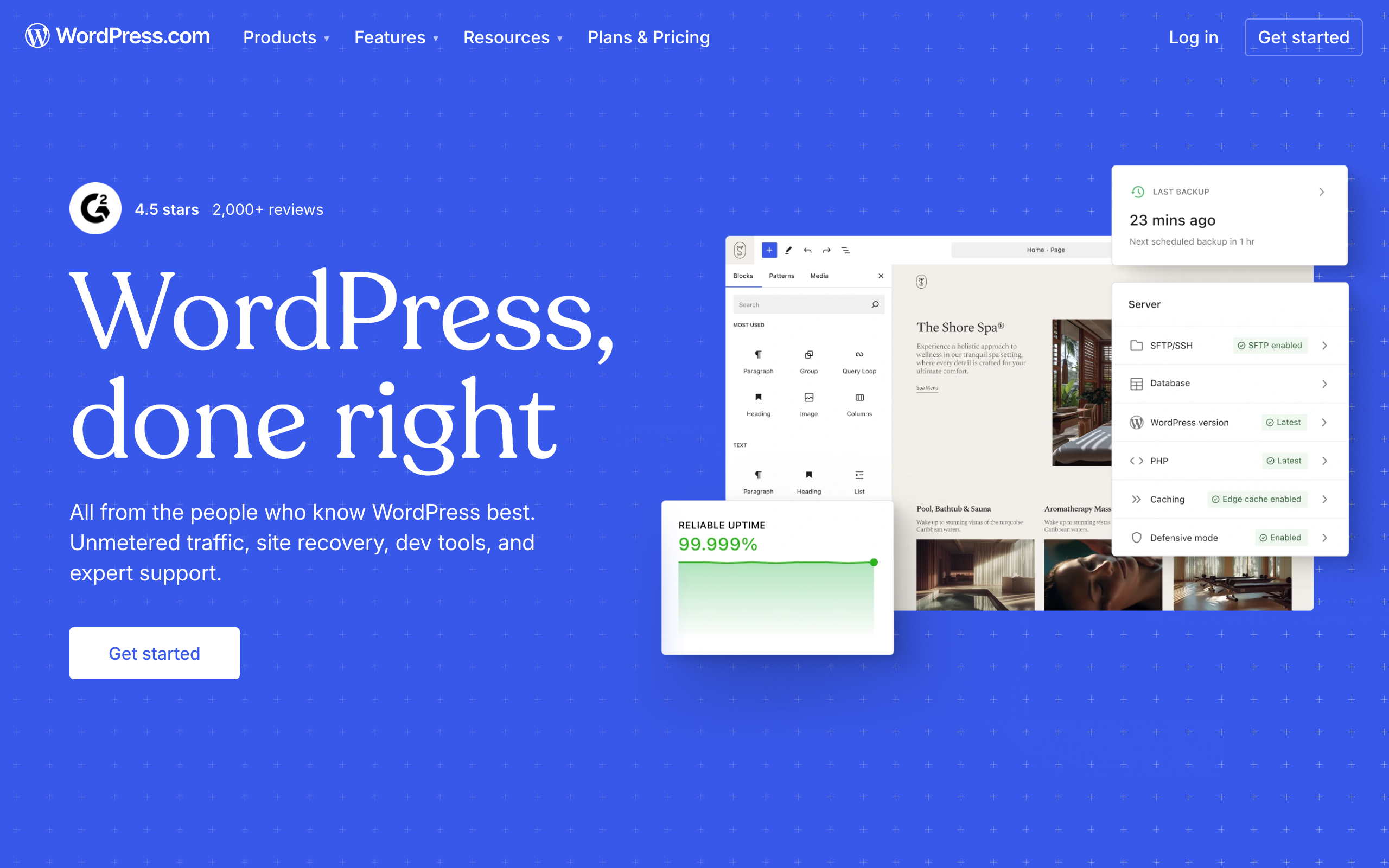
Three fights come up constantly when writers are picking between Ghost and something else.
Ghost vs beehiiv is publishing-and-ownership versus growth-and-convenience. Ghost gives you deeper design control, real content ownership, and 0% fees at a lower entry price. beehiiv gives you a native referral program, the Boosts marketplace, and an ad network, also at 0% fees on paid subscriptions but at a higher entry price band, which I walk through tier by tier in the beehiiv pricing breakdown. If you already have an audience and want to monetize and publish beautifully, Ghost. If growing the audience is still the open problem, beehiiv, and I go deeper on that verdict after actually running a publication on it in my full beehiiv review. The full head-to-head comparison, feature by feature, is in beehiiv vs Ghost.
Ghost vs Substack is really a fee argument dressed up as a platform comparison. Substack is free to start and takes 10% of paid revenue forever, plus it owns the discovery layer (Notes, recommendations, the Substack app) in exchange. Ghost charges a flat fee and takes 0%, but you do not get Substack’s built-in social discovery network. For a writer already leaning on Substack’s Notes for real subscriber growth, migrating away means giving up something that has genuine value. For a writer whose growth comes from their own channels regardless of platform, the 10% is money left on the table with nothing to show for it. I detail this exact tradeoff in my guide to Ghost alternatives, which also covers Substack’s specific migration path.
Ghost vs WordPress is a build-versus-buy question. WordPress with the right plugin stack (membership plugin, email plugin, SEO plugin, caching plugin) can theoretically replicate much of what Ghost does natively, but you are assembling and maintaining that stack yourself, and plugin conflicts are a real, recurring headache. Ghost ships membership, newsletter, and publishing as one coherent system designed to work together from day one. If you already run WordPress for other reasons and know it well, sticking with it can make sense. If you are starting fresh and publishing plus membership is the whole point, Ghost gets you there with less assembly required. The full breakdown is in Ghost vs WordPress.
Who should NOT use Ghost?
- Newsletter operators focused on rapid list growth. No referral program, no recommendation marketplace, no ad network. Everything you would use to acquire new readers, you are building or buying separately.
- Ecommerce or promotional email senders. Ghost is built around long-form publishing and membership, not campaign-style marketing email with product blocks and abandoned-cart triggers. Mailchimp or Klaviyo do that job.
- Anyone who wants a fully managed, zero-configuration experience. Ghost’s defaults are good, but getting the most out of it (custom themes, deeper integrations) benefits from technical comfort or budget to hire it out.
- Small teams needing more than one seat on a budget. The Starter plan’s single staff seat pushes any multi-person team to Publisher immediately, which changes the effective price comparison against tools with more generous seat allowances at the entry tier.
If you recognized yourself above, start with my ranking of the best newsletter platforms to see where each alternative actually wins.
Frequently asked questions
Is Ghost worth it in 2026? For writers and publishers monetizing through paid memberships, yes. The 0% fee on membership revenue and genuine content ownership pay for themselves quickly once you have real paid subscribers, and the writing and publishing experience is stronger than most email-first tools. It is a weaker fit if audience growth, not publishing quality, is your main bottleneck.
How much does Ghost cost? Ghost(Pro)’s Starter plan runs around $18/month on annual billing for 1,000 members and 1 staff user. Publisher is around $29/month for the same member cap plus paid subscriptions, custom themes, and more staff seats. Business runs around $199/month for 10,000 members and team-scale features. Confirm the current rate on Ghost’s pricing page, since these figures shift over time.
Does Ghost really take 0% of my revenue? Yes, on membership and subscription revenue. Ghost takes no cut; you pay Stripe’s standard processing fee and your flat Ghost(Pro) subscription. This is a structural feature of Ghost’s non-profit foundation model, not a promotional rate.
Is Ghost better than Substack? For a writer serious about monetizing and owning their publication long-term, generally yes: no revenue cut, deeper design control, real content ownership, and stronger technical SEO. Substack remains the better pick if its built-in discovery network (Notes, recommendations, the app) is genuinely bringing you new readers, since that network has no Ghost equivalent.
Can I self-host Ghost for free? Yes. Ghost is open-source and you can self-host on your own server infrastructure at no software cost, though you take on hosting, updates, backups, and deliverability yourself. Most writers use Ghost(Pro), the official managed hosting, to avoid that operational overhead.
Does Ghost have a free plan? No. Unlike beehiiv, Kit, or MailerLite, Ghost(Pro) has no permanently free tier; Starter is the entry paid plan. The closest free option is self-hosting Ghost’s open-source software yourself, which has real infrastructure costs even without a software fee.
The bottom line: my verdict after running it
Ghost is not trying to be everything to every newsletter operator, and that focus is exactly why it works so well for the specific person it is built for. If you write, and people pay to read what you write, Ghost gives you the cleanest, most ownable, most fairly-priced path to running that as a real business. The editor is a pleasure, the SEO foundation is solid without extra work, and the 0% fee stops being an abstract number the moment your paid membership revenue crosses a few thousand dollars a month.
The missing star is honest: Ghost will not help you find readers. It will publish to and monetize the readers you already have, exceptionally well, and leave growth entirely in your hands. For a writer who already has an audience or a clear acquisition channel, that trade is a good one. For someone starting from zero who needs growth infrastructure more than publishing polish, look at a platform built around that problem instead.
Want to see what growth-first tooling looks like before you pick a lane? Start a free beehiiv publication and send one real issue. Free to 2,500 subscribers, no card required, so the comparison costs you an evening, not a commitment.
Pricing captured from vendor pricing pages, July 2026. Plans change, so confirm current details before you buy.


