

Best AI Agents for Business in 2026
Written by Nam Nguyen, founder of saas.com.ai, where I curate and track AI tools by real traffic and growth data. Published July 11, 2026.
Key takeaways
- The best AI agent for business depends on the job: pick per function, not one “do everything” agent.
- Narrow agents (support, SDR) show ROI fastest; support agents like Intercom Fin bill $0.99 per resolution.
- Viktor is the strongest all-rounder for non-technical teams: it lives in Slack and Teams from $50/month.
- The real bottleneck in 2026 is integration and data access, not model quality.
- Start with one function, one clear metric, and a 30-day pilot before you scale.
The best AI agent for business in 2026 is not a single product, it is a shortlist chosen by function. For an SMB or ops leader, the highest-ROI moves are a customer-support agent (Intercom Fin at $0.99 per resolution), an SDR agent (Artisan’s Ava from $280/month), and a general all-rounder that sits inside Slack or Teams (Viktor from $50/month per workspace). Coding gets Devin. The catch most buyers miss: model quality is not what makes or breaks these agents. Whether the agent can reach your data and act inside your existing tools is.
Which AI agent should each business function use?
Here is the shortlist by function, with 2026 starting prices and how hard each is to actually get running. If you read nothing else, read this table.
| Business function | Top pick | Starting price (2026) | Adoption difficulty |
|---|---|---|---|
| All-rounder (Slack/Teams) | Viktor | $50/mo per workspace | Easy |
| Sales / SDR outbound | Artisan (Ava) | $280/mo | Medium |
| Customer support (SMB) | Intercom Fin | $0.99 per resolution | Easy |
| Customer support (enterprise) | Sierra | Custom, ~$150k+/yr | Hard |
| Marketing content | Jasper | $59/mo | Easy |
| Ops / back-office | Lindy | $49.99/mo | Medium |
| Software engineering | Devin | $20/mo + usage | Hard |
A note on the word “agent.” In 2026 vendors slap it on everything. I use it narrowly here: software that takes a goal, plans steps, and acts across your tools with limited supervision, not a chatbot that only talks back.
Why do narrow agents beat a “do everything” agent for most businesses?
Because a narrow agent has a number attached to it, and a general one usually does not.
An SDR agent books meetings. A support agent closes tickets. You can put those on a spreadsheet next to a cost and know within a month whether you are ahead. A “does anything” agent is harder to hold accountable, which is exactly why it tends to drift into the pile of tools nobody renews.
There is a second reason, and it is the one people learn the expensive way. The hard part of deploying an agent is almost never the model. It is plumbing. Can the agent read your Zendesk history, write to your CRM, and see the fields that matter? When Sierra deployments take three to six months and carry $50,000 to $200,000 in setup fees (Featurebase, 2026), that time is not spent tuning a language model. It is spent connecting systems and teaching the agent your rules. Narrow agents win partly because they ship with the integrations for their one job already built.
Honestly, if you take one idea from this article, take that one. The teams that get burned are the ones who buy the smartest agent and discover it cannot see half their data.
What is the best all-rounder AI agent for business?
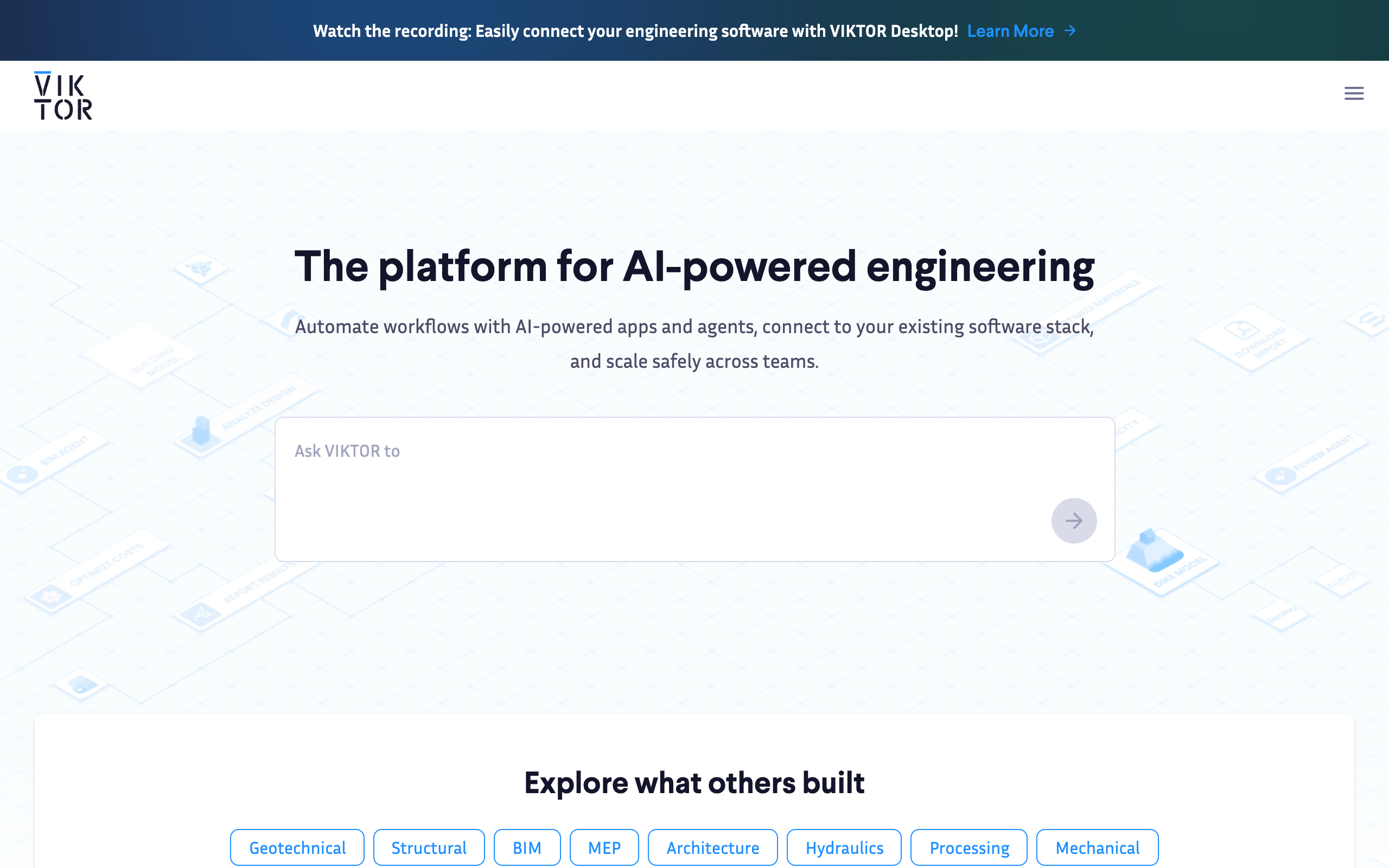
Viktor is the best general-purpose AI agent for non-technical teams in 2026 because it works where your team already talks: inside Slack and Microsoft Teams. You message it like a coworker, and it connects to more than 3,200 business tools out of the box, from Stripe and HubSpot to Google Ads and Linear (Viktor, 2026).
What makes Viktor different from a chat assistant is that it does not just summarize. It logs into your tools, pulls live data, runs the analysis, and hands back the actual artifact: a spreadsheet, a PDF, a deployed web app, a code commit. That is the line between a copilot and an employee, and Viktor sits on the employee side.
Pricing is refreshingly un-enterprise. Plans start at $50 per month per Slack or Teams workspace with 20,000 monthly credits and no per-seat charge, and there is a $100 free-credit tier to test with (Viktor pricing, 2026). No per-seat billing matters more than it sounds: it means you can let the whole team poke at it without finance flinching.
The market is voting. Viktor crossed $20 million in ARR within four months of launch with zero salespeople, and raised a $75 million Series A led by Accel in May 2026 (The Next Web, 2026). Growth that fast, sales-led by nobody, usually means the product is doing something real inside the workflow.
One disambiguation, because it trips people up: viktor.com is the AI employee described here. viktor.ai is a completely separate low-code Python platform for engineers doing CAD and simulation. Different company, different product. If you land on the engineering one looking for a Slack coworker, you are in the wrong place.
The honest limit: because Viktor does so many things, it is worth pointing it at a few repeatable jobs first (weekly reporting, ad-spend pulls, ops questions) rather than expecting it to run a department on day one.
Or read our full Viktor AI review, the Viktor listing, and our best AI employees roundup.
What is the best AI agent for sales and SDR work?
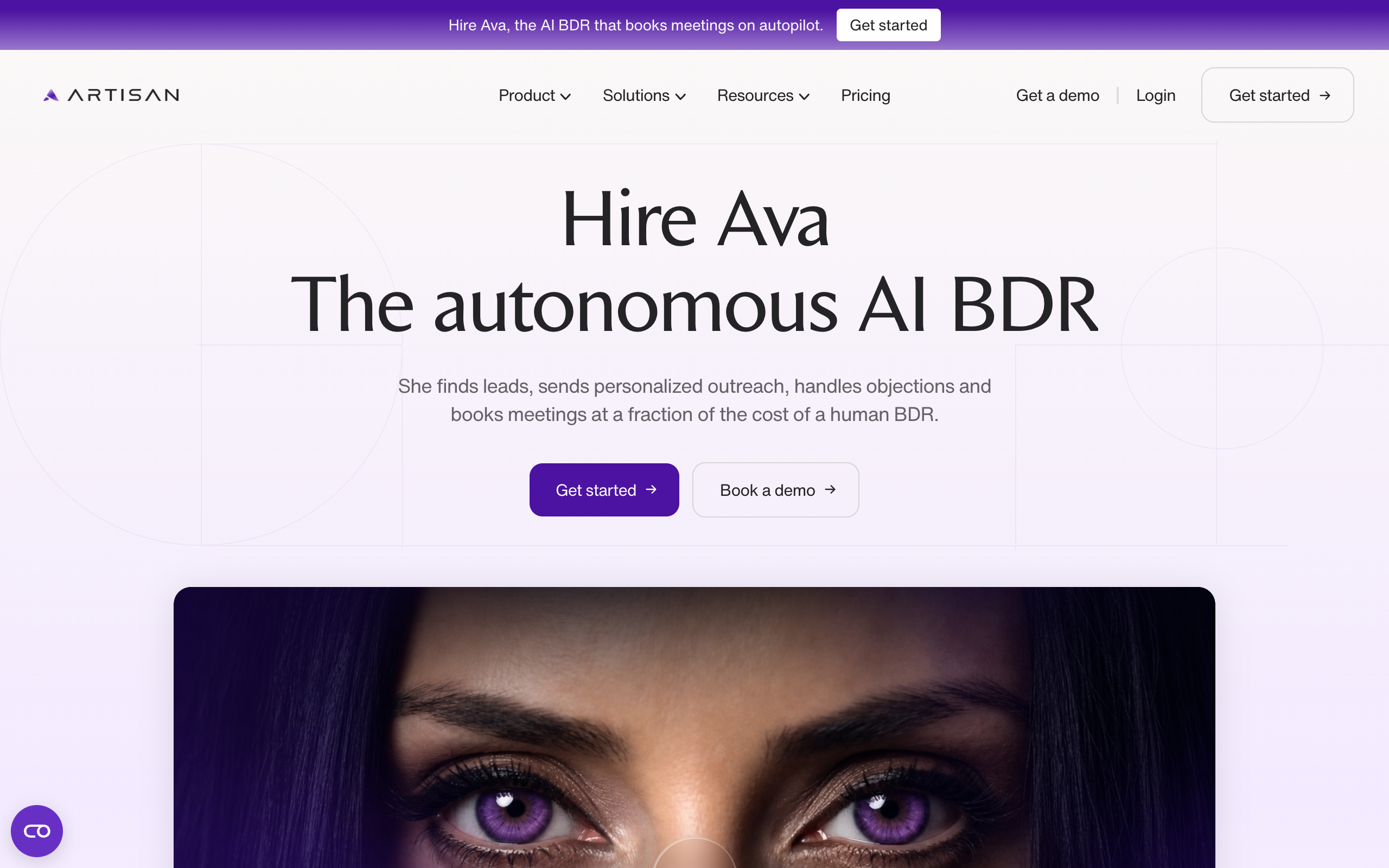
Artisan’s Ava is the leading AI SDR agent in 2026, automating outbound prospecting end to end: finding leads, writing sequences, and sending across email. Artisan publishes real self-serve pricing, which is still rare in this category. The Intern plan starts at $280/month, the Employee plan runs around $600 to $660/month with 30,000 credits, and higher tiers reach $2,000/month and up as your contact volume grows (Landbase, 2026; SalesRobot, 2026). There is a free plan with 300 credits a month to kick the tires.
Do the arithmetic against a human. A junior SDR in the US costs well north of $60,000 a year loaded. Ava at $7,200 a year on the Employee plan is not a close comparison on paper. But paper lies here, and this is the insider part.
The catch with every AI SDR is deliverability and list quality, not the writing. Ava can draft a thousand clean emails. If the domain warms wrong or the data is stale, you are automating your way into spam folders at scale. The vendors quietly acknowledge this: expect a 12-month annual commitment as standard, because the first two months are mostly setup and inbox warmup, not booked meetings (MarketBetter, 2026).
So my take: an AI SDR is a strong buy if you already know your outbound motion works with humans and you want to scale it cheaper. It is a weak buy if you are hoping the agent will invent a motion you do not have. Automation multiplies what exists. It does not create a market.
If your outbound has never converted with a real rep, do not expect a robot to fix the offer. That is a product problem wearing a sales costume.
What is the best AI agent for customer support?
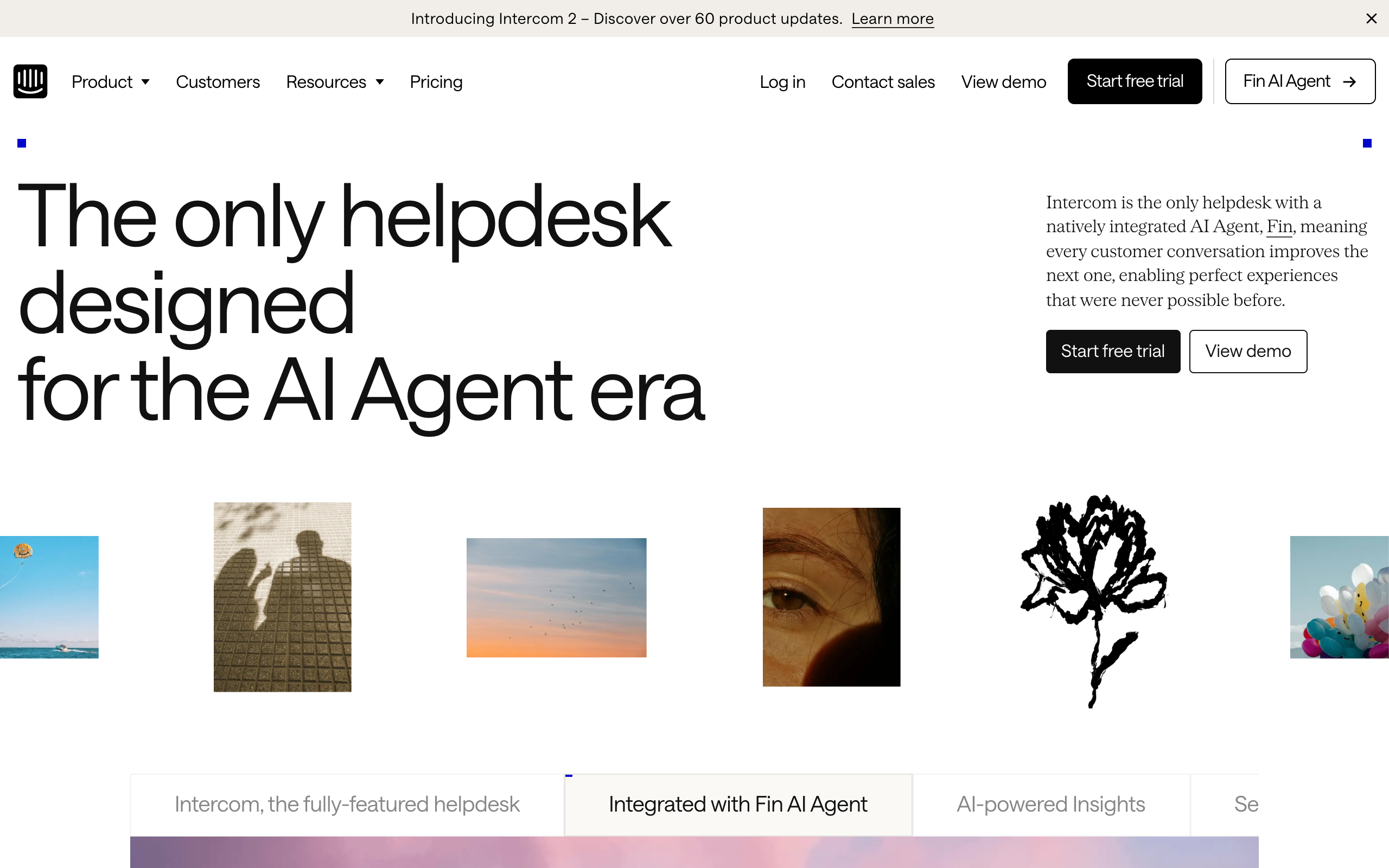
Intercom Fin is the most adoptable customer-support agent for SMBs in 2026, priced at $0.99 per outcome instead of per seat. An outcome means a resolution, a procedure handoff, or a disqualification; a qualified lead costs $9.99 (Gleap, 2026). You are billed once per conversation even when Fin takes several actions, with a 50-outcome monthly minimum and a 14-day trial (Fin.ai, 2026).
Per-resolution pricing is the honest structure for support, and it is spreading across the category for a reason. You pay when the agent actually deflects a ticket. If Fin resolves 1,000 conversations in a month, that is $990 against what would otherwise be human agent hours. The moment it stops resolving, the bill stops too. That is a very different risk profile from a $150,000 annual contract.
For large, regulated, or highly custom operations, the enterprise pick is Sierra, the outcome-based platform from Bret Taylor’s team. Sierra does not publish pricing; engagements run through enterprise sales, typically landing in a $200,000 to $350,000 first-year envelope with three-to-six-month deployments (Fin.ai analysis, 2026). Sierra is genuinely powerful and genuinely heavy. If you are a 40-person company, it is not your tool this year.
One thing worth flagging for buyers watching the chessboard: in June 2026, Salesforce signed an agreement to acquire Fin (the company formerly known as Intercom) for roughly $3.6 billion, and as of July 2026 the deal is signed but not closed, with pricing unchanged (Featurebase, 2026). Acquisitions do not usually raise prices overnight, but they do shift roadmaps. If you buy Fin, buy it for what it does today, not for a promised integration.
What is the best AI agent for marketing?
Jasper is the best marketing agent for content-heavy teams in 2026, having grown from an AI writer into a workflow agent that repurposes and manages brand content at scale. In 2026 Jasper does more than draft: it can take a whitepaper and turn it into a blog post, a LinkedIn thread, and an email, all inside your brand voice and guidelines (Tofu, 2026).
Pricing is SMB-friendly. The Pro plan is $59/month billed yearly or $69 monthly, with a 7-day trial and no free tier anymore. The Business plan is custom and typically starts around $900/month for small teams that need brand controls, security, and support (eesel, 2026).
Here is where I break from the marketing hype. The autonomous “AI runs your whole campaign” pitch is running ahead of what most SMBs should trust it with. A marketing agent is excellent at production, drafting, repurposing, variant-testing at volume. It is much weaker at judgment: which angle, which audience, which offer. Buy Jasper to make one strategist five times as productive. Do not buy it to replace the strategist. The businesses that hand the strategy to the agent tend to produce a lot of on-brand content that says nothing.
What is the best AI agent for operations and back-office work?
Lindy is the best ops and back-office agent for teams that want automation with judgment, handling email triage, meeting prep, and research compilation rather than rigid if-this-then-that rules. Unlike a classic automation tool, Lindy’s agents make decisions and hold context across multi-step tasks (Zapier, 2026). Pricing runs from a free 400-credit tier to $49.99/month Pro (5,000 credits) and $299.99/month Business (30,000 credits) (CloudTalk, 2026).
The gotcha with Lindy is baked into that credit model, and it is the most common complaint in reviews: credits burn faster than teams expect, especially during setup when an agent misfires a few times before it gets a task right. Dozens of G2 reviewers flag it. Research tasks and transcriptions eat credits hardest (CloudTalk, 2026). Budget for a messy first month.
If your back-office needs are simpler, the honest answer is you may not need an agent at all. For pure “when X happens, do Y” plumbing, Zapier remains cheaper and more predictable, with a permanent free tier and task-based pricing (Zapier, 2026). Reach for Lindy when the task genuinely requires a decision. Reach for Zapier when it requires a trigger. Paying agent prices for a job a $20 automation could do is one of the quieter ways companies overspend on AI in 2026.
What is the best AI agent for coding?
Devin, from Cognition, is the leading autonomous software-engineering agent in 2026, and its 2026 repricing finally put it within reach of small teams. The Core plan is $20/month plus $2.25 per ACU, where one ACU (Agentic Compute Unit) is roughly 15 minutes of active autonomous work. The Team plan is $500/month with 250 ACUs at $2.00 each (Devin pricing, 2026; Costbench, 2026). That $20 entry is a dramatic cut from the original $500 launch price.
Devin is the one pick on this list I would tag “Hard” on adoption, and it earns it. It shines at well-scoped, self-contained tasks: migrations, bug fixes, test coverage, boilerplate. Hand it a vague feature in a large messy codebase and you will spend more time reviewing than you saved. The usage-based ACU meter also means cost is a moving target; a task that spirals can quietly rack up ACUs while it retries.
My rule for Devin: give it work a competent junior could finish in an afternoon with clear instructions, and review every commit. Used that way it is genuinely additive. Used as a “replace the dev team” fantasy, it disappoints, which is roughly the story of every autonomous coding tool this cycle.
How do you pilot an AI agent without wasting money?
Most wasted AI budget in 2026 comes from buying broad and measuring nothing. A pilot fixes both. Run it like this.
- Pick one function and one metric. Support gets “tickets resolved.” SDR gets “meetings booked.” If you cannot name the number before you start, you are not ready to buy.
- Prefer per-outcome or usage pricing for the pilot. Fin’s $0.99 per resolution and Devin’s ACU meter mean you pay for results, not for a seat you might not use. Save the annual commitment for after the agent has proven itself.
- Give it real data access on day one. The agent that can only see a sandbox will look worse than it is. Integration is the whole game, so test the real integration.
- Run 30 days, then compare against the human baseline. Not against the vendor’s demo. Against what your team does today, at your cost today.
- Keep a human in the loop on anything customer-facing or irreversible. Review commits, review outbound copy, review resolutions for the first month. Autonomy is a dial, not a switch.
The teams that win with agents in 2026 are not the ones with the biggest budget. They are the ones who picked a narrow job, wired up the data, and watched one number.
Verdict: which AI agent should you actually buy?
If I had to spend a small company’s money today, I would not buy a general agent first. I would buy the narrow one that maps to my most expensive repetitive job.
High-volume support tickets? Start with Intercom Fin, because per-resolution pricing means the ROI is legible from week one. A proven outbound motion you want to scale? Artisan’s Ava. A team drowning in Slack requests and reporting? Viktor, precisely because it is easy and lives where people already work. A backlog of small engineering tasks? Devin on the Core plan, reviewed closely.
The general all-rounder, the kind ranked in our best autonomous AI agents guide, is where you go second, once a narrow win has bought you the confidence and the political capital. And whatever you buy, remember the line that decides everything: the agent is only as good as the data and tools it can reach. Model quality is table stakes now. Integration is the moat, and the trap.
Frequently asked questions
What is the best AI agent for a small business in 2026?
For most small businesses, the best first AI agent is a customer-support agent like Intercom Fin, priced at $0.99 per resolution with no per-seat fee. It has the clearest ROI because you pay only when it deflects a ticket. Viktor is the best all-rounder if you want one agent across many tasks, starting at $50/month per workspace.
How much do AI agents for business cost in 2026?
AI agent pricing in 2026 ranges widely by function. Support agents like Intercom Fin bill $0.99 per resolution. General agents like Viktor start at $50/month per workspace. Marketing agents like Jasper start at $59/month. AI SDR agents like Artisan start at $280/month. Enterprise support platforms like Sierra run custom pricing, often $150,000 or more per year.
Are AI agents worth it for non-technical teams?
Yes, for non-technical teams the easiest wins are agents that live inside existing tools and use per-outcome pricing. Viktor works inside Slack and Teams with no coding, and Intercom Fin charges only for resolved conversations. Coding agents like Devin and some ops agents need more technical setup, so they are better as a second step.
What is the difference between an AI agent and an AI assistant?
An AI assistant responds to prompts and generates text or answers. An AI agent takes a goal, plans the steps, and acts across your tools with limited supervision, logging into systems, pulling live data, and delivering finished output like reports, code, or resolved tickets. In 2026 the practical test is whether the software can complete a task, not just talk about it.
Is Viktor the same as viktor.ai?
No. Viktor at viktor.com is an AI employee that works inside Slack and Microsoft Teams and connects to 3,200+ business tools. Viktor.ai is a separate low-code Python platform for engineers building CAD, BIM, and simulation apps. They share a name but are different companies and products.
About the author
Nam Nguyen is the founder of saas.com.ai, where he curates and tracks AI tools by real traffic and growth data to help readers find the right tool for any task. He writes about AI agents, automation, and the software buying decisions facing small and mid-sized businesses.
Sources
- Viktor, product and homepage (2026): https://viktor.com/
- Viktor pricing (2026): https://viktor.com/pricing
- The Next Web, Viktor $75M Series A (2026): https://thenextweb.com/news/viktor-75-million-series-a-accel-ai-coworker-slack-teams
- Landbase, Artisan AI pricing (2026): https://www.landbase.com/blog/artisan-ai-pricing
- SalesRobot, Artisan AI review (2026): https://www.salesrobot.co/blogs/artisan-ai-review
- MarketBetter, Artisan AI review (2026): https://marketbetter.ai/blog/artisan-ai-review-2026/
- Gleap, Intercom Fin AI pricing (2026): https://www.gleap.io/blog/intercom-fin-ai-pricing-2026
- Fin.ai pricing (2026): https://fin.ai/pricing
- Featurebase, Fin AI pricing and Salesforce acquisition (2026): https://www.featurebase.app/blog/fin-ai-pricing
- Featurebase, Sierra AI pricing (2026): https://www.featurebase.app/blog/sierra-ai-pricing
- Fin.ai, Sierra AI pricing analysis (2026): https://fin.ai/learn/sierra-ai-pricing
- eesel, Jasper AI pricing (2026): https://www.eesel.ai/blog/jasper-ai-pricing
- Tofu, best AI agents for marketing (2026): https://www.tofuhq.com/post/best-ai-agents-for-marketing
- Zapier, Lindy vs Zapier (2026): https://zapier.com/blog/lindy-vs-zapier/
- CloudTalk, Lindy AI pricing (2026): https://www.cloudtalk.io/blog/lindy-ai-pricing/
- Devin pricing (2026): https://devin.ai/pricing/
- Costbench, Devin AI pricing (2026): https://costbench.com/software/ai-coding-assistants/devin-ai/