
Nobody googles “Substack alternatives” because they hate Substack. You google it the day you do the math. Ten percent of everything, forever, plus Stripe fees on top. At $500 a month in paid subscriptions that feels like a fair tip. At $5,000 a month it is a $6,000-a-year tax for software with no automations, no A/B testing, and analytics that stop at opens and clicks.
The short answer: for most writers running a serious newsletter, beehiiv is the best Substack alternative in 2026. It charges a flat monthly fee instead of a revenue cut, keeps 0% of your paid subscriptions, and ships the growth tools Substack never built. Ghost is the pick if you want open-source and full ownership, Kit if automation is your whole business, and Patreon if what you really sell is membership, not a newsletter. The rest of this guide is the evidence, with live 2026 pricing for all seven.
Disclosure: some links in this post are affiliate links. If you sign up through them, we may earn a commission at no extra cost to you. That never changes our verdict.
I run newsletters for a living, across multiple niches, and I have set up test publications on every platform in this list within the last year. Actual imports, actual sends, actual afternoons spent cleaning up what a Google Docs paste did to a draft. So this is the guide I wish someone had handed me before my first migration.
If you already know you are leaving and just want the exit ramp: I would start with a free beehiiv account. It is free up to 2,500 subscribers with unlimited sends, so you can import your Substack CSV and see your list living somewhere with real tools before you commit to anything.
Why are so many writers leaving Substack in 2026?
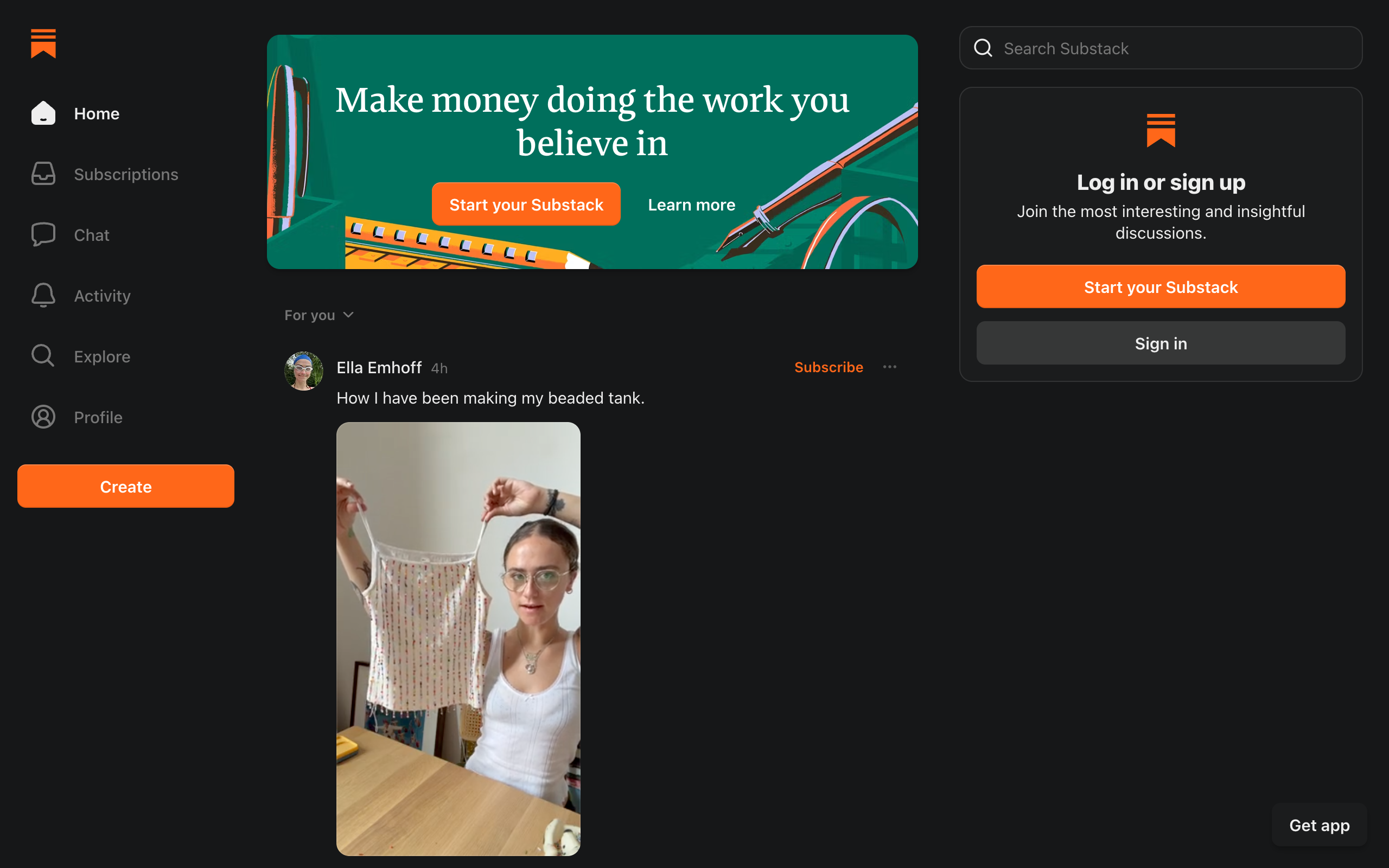
Substack is a genuinely great on-ramp. Free to start, dead simple, and the network can hand you your first thousand readers. I still recommend it to complete beginners. But four specific costs show up as you grow, and they are the four reasons this article exists. Spend ten minutes in r/Substack and you will see the same arc on a loop: the fee felt fine at launch and starts to sting the month the revenue gets real.
1. The 10% never ends. Substack takes 10% of your paid subscription revenue, and Stripe processing adds roughly 2.9% + $0.30 per transaction on top, per Substack’s own support documentation. That is not a startup fee that phases out. It scales with your success. Here is what it looks like against beehiiv’s flat pricing, using a $10/month newsletter:
| Paid subscribers | Gross revenue/year | Substack’s 10% cut/year | beehiiv Scale cost/year |
|---|---|---|---|
| 100 | $12,000 | $1,200 | $517 |
| 500 | $60,000 | $6,000 | $517 |
| 1,000 | $120,000 | $12,000 | $517 and up, stepped by list size |
Stripe’s processing fee applies in both worlds, so it cancels out of the comparison. The 10% does not. Run the numbers against that table: at $10 a month per reader, Substack’s cut passes beehiiv’s $517-a-year Scale plan at roughly 45 paid subscribers. Past 100, you are handing over four figures a year to a platform that still will not A/B test a subject line for you. To be fair to both sides: beehiiv’s price steps up with your total list size, so a huge free list costs more than the entry $43/month. But it steps with your list, not your revenue, and that distinction is worth thousands once readers start paying. I walk through the full fee math line by line in our beehiiv vs Substack comparison.
2. There is no marketing engine. No real automation sequences, no A/B testing on subject lines, no behavioral segmentation. On Substack you cannot even build a proper welcome series that drips over a week based on what a subscriber clicked. In 2026 that is table stakes everywhere else.
3. Analytics stop at the surface. You get opens, clicks, and a subscriber graph. You do not get cohort retention, per-subscriber engagement history you can act on, or acquisition reporting deep enough to tell you which channel produces paying readers rather than free ones.
4. The growth is rented. Substack’s recommendation network and Notes feed are real growth channels; for some publications they are the single biggest source of new free subscribers. But they only work inside Substack. The day you leave, that engine stays behind. Growth that depends on a platform’s internal feed is growth you do not own, and writers who built entirely on recommendations discover this at the worst possible moment.
(One thing almost nobody tells you, and it changes the whole calculus: Substack runs paid subscriptions through your own connected Stripe account. Your paying subscribers are Stripe customers that belong to you. That means platforms like beehiiv and Ghost can import those active subscriptions so billing continues without anyone re-entering a card. Leaving Substack does not mean starting your paid list from zero. Half the fear of migrating dies right there.)
How I judged these 7 Substack alternatives
Every platform below got scored on the same five questions: What does it cost at 1,000 and 10,000 subscribers? Does it take a cut of paid subscriptions? How painful is the migration from Substack, really? What can it do that Substack cannot? And who specifically should pick it? Every price in this article was pulled from the vendor’s live pricing page in July 2026, not from memory, and the capture date is noted once more in the footer so you know exactly how fresh the numbers are.
| Platform | Free plan | Paid from | Cut of paid subs | Best for |
|---|---|---|---|---|
| beehiiv | Up to 2,500 subs, unlimited sends | $43/mo (Scale) | 0% | Writers treating the newsletter as a business |
| Ghost | No (trial only) | $18/mo billed yearly | 0% | Ownership purists, publication builders |
| Kit | Up to 10,000 subs, 1 automation | $33/mo (Creator) | 0% on subs; fee on commerce sales | Creators selling digital products |
| MailerLite | 250 subs, 2,500 emails/mo | ~$12/mo | 0% | Budget-first writers who still want automation |
| Brevo | 300 emails/day, unlimited contacts | $9/mo | No native paid subs | Big lists, infrequent sends, CRM needs |
| Buttondown | Up to 100 subs | $9/mo à la carte | 0% | Indie writers who want quiet software |
| Patreon | Free to start | 10% of earnings | 10% + processing | Membership businesses, not newsletters |
1. beehiiv: the best Substack alternative for most writers
beehiiv was built in 2021 by early Morning Brew growth team members, and it shows. Morning Brew grew to millions of readers on referrals, cross-promotions, and ad revenue, and beehiiv is essentially that internal playbook productized. Where Substack gives you a text box and a network, beehiiv gives you a text box and a growth department.
The headline for anyone doing the 10% math: beehiiv takes 0% of your paid subscription revenue on every plan. You pay a flat software fee, keep everything minus standard Stripe processing, and that single difference is worth thousands a year to a mid-sized paid newsletter, as the table above shows.
But the revenue you keep is only half the argument. The other half is revenue Substack never offered you at all. beehiiv has a built-in referral program (the Morning Brew milestone-rewards engine, no third-party tool needed), Boosts (other newsletters pay you per subscriber you send them, and you can pay to be boosted), and an ad network that connects sponsors to your sends. On Substack, sponsorships mean cold-emailing brands yourself. On beehiiv, there is a marketplace doing introductions. Add real automations, A/B testing, surveys, segmentation, and analytics that break down acquisition sources, and you are looking at a different category of tool.
The pricing: Launch is free up to 2,500 subscribers with unlimited sends and a custom domain, which is the most generous free tier of any newsletter-first platform in this list. Scale runs $43/month ($517/year billed annually) and unlocks automations, the referral program, Boosts, the ad network, and surveys. Max at $96/month ($1,151/year) removes beehiiv branding and adds white-label features and up to 10 publications. Prices step up with subscriber count. Full tier-by-tier breakdown in our beehiiv pricing guide.
Migration effort: low. Substack’s export lives in your settings under Exports: a couple of clicks produce a subscriber CSV plus a zip of every post you have written. beehiiv ingests both; during the subscriber import it asks how the list was collected before it accepts the file, which felt bureaucratic until I realized it is one reason its shared sending infrastructure stays clean. Paid subscriptions migrate via Stripe so billing continues uninterrupted, and larger lists get white-glove help from beehiiv’s team. Posts published on beehiiv become SEO-indexable pages on your own domain, which Substack only half-delivers.
Where beehiiv falls short, because a list of pros is an ad: the editor is less serene than Substack’s beautifully minimal writing surface, and in my testing, long drafts pasted in from Google Docs needed formatting cleanup before they were sendable. Automations are real but shallower than Kit’s; if your business runs on ten-branch conditional funnels, Kit wins that fight. Deliverability on the free plan rides shared sending infrastructure, so warm up gradually. And the subscriber-tier pricing means your bill jumps when your list crosses a threshold, which surprises people who did not read the slider. My full hands-on breakdown, warts included, is in the beehiiv review.
Pick beehiiv if your newsletter is a business or you intend it to become one. It is the only platform here where growth, monetization, and email all live in one place without a percentage of your income leaving with them.
The free plan is the whole test drive: open a free beehiiv account, import your Substack CSV, and send one issue. You will know within a week whether the extra tooling matters for your newsletter, and up to 2,500 subscribers it costs exactly nothing to find out.
2. Ghost: the 0% cut, own-everything option
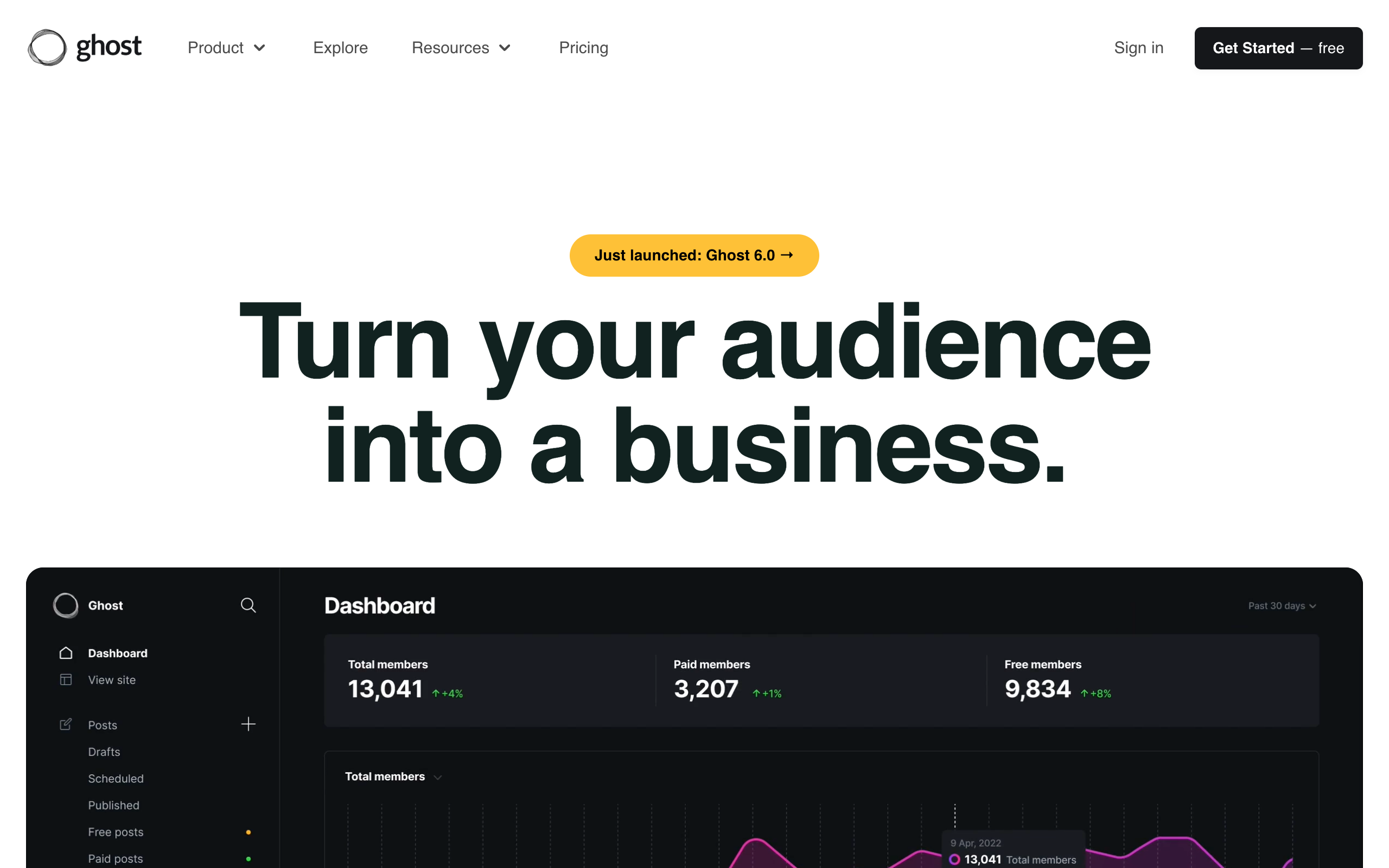
Ghost is what you choose when the word that matters most to you is “mine.” It is open-source publishing software: memberships, paid subscriptions, a full website, and a newsletter, with a 0% transaction fee on membership revenue. You can self-host it for the cost of a small server, or pay Ghost(Pro) to host it for you. Either way, the code, the content, and the reader relationships are yours in a way no closed platform can match.
As a writing and publishing experience, Ghost is arguably the best in this article. The editor is clean, the themes are beautiful, and the end result reads like a real publication rather than a feed entry. Publications like 404 Media run on it for a reason.
The pricing: Ghost(Pro) Starter is $18/month billed yearly for up to 1,000 members. Publisher at $29/month billed yearly adds paid subscriptions, custom themes, integrations, and three staff users. Business at $199/month scales limits, staff seats, and support, and prices climb with member count. No free plan, only a trial. And here is the gotcha that catches Substack refugees on the current lineup: Starter locks out both custom themes and paid subscriptions. If you are moving a paid newsletter, you are shopping for Publisher, not the advertised entry price.
Migration effort: low to medium. Ghost has an official Substack importer that ingests your exported archive and subscriber list, and its documentation covers migrating active Stripe subscriptions so paid readers keep billing without interruption. The medium part is everything after: you are now choosing themes, configuring a site, and, if you self-host, doing your own updates. Ghost hands you the keys and the maintenance schedule.
The trade-off: Ghost has almost no growth tooling. No referral engine, no recommendation marketplace beyond basic cross-recommendations, no ad network, and automations are thin. Ghost gives you a beautiful house; finding people to visit it is entirely your job. That is the core of the Ghost-or-beehiiv decision, which I unpack across the whole market in our best newsletter platforms guide.
Pick Ghost if you are building a publication with its own website at the center, you have your own traffic sources, and platform independence is a principle you are willing to pay a little operational overhead for.
3. Kit: the automation heavyweight
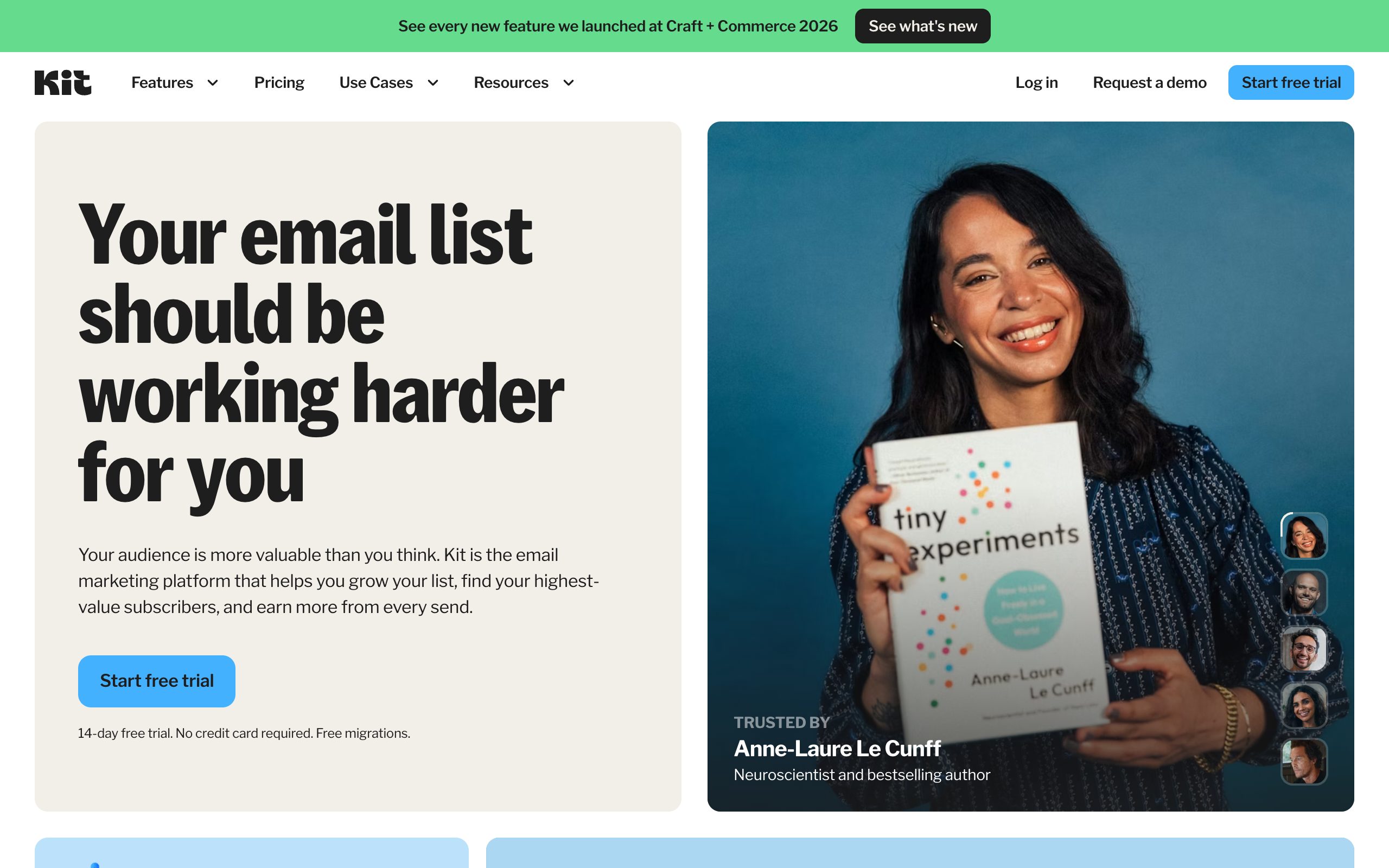
Kit (ConvertKit until its 2024 rebrand) runs the cleverest tollbooth in email marketing, and understanding it tells you everything about the product. The free Newsletter plan covers a staggering 10,000 subscribers, the biggest free ceiling on this list by a mile. It also includes exactly one basic automation. And automation is the entire reason anyone chooses Kit. The free plan is not a plan; it is a demo with a very long runway, engineered so that the day you need a second sequence, you are already home.
Pay the toll, though, and you get the strongest marketing machine here. Kit’s visual automation builder lets you send a subscriber who clicked your pricing link down a different five-day sequence than one who ignored it, with tagging and behavioral triggers deep enough to run a real business on. Substack has nothing within a mile of this, and even beehiiv’s automations feel introductory next to it. That is why Kit is the pick for a specific person: the creator whose newsletter is the marketing channel and whose revenue is products, courses, templates, ebooks, paid workshops.
Creator starts at $33/month ($390/year) at 1,000 subscribers and scales with list size, unlocking unlimited automations and sequences. Creator Pro from $66/month adds a referral system, subscriber scoring, and deeper deliverability reporting. Selling through Kit’s commerce tools costs a transaction fee on top of card processing, and while paid recurring newsletters are possible, they are clearly not the product’s center of gravity. Migration is the same trade-off in miniature: your subscriber CSV imports in minutes, but Kit is not a publishing platform, so your Substack archive has no real home there and the writing itself needs a separate site.
If the newsletter itself is the product, beehiiv or Ghost fit better. We compare Kit against its own crowd in the Kit alternatives roundup.
4. MailerLite: the budget pick that does not feel budget
MailerLite is what I point writers to when they look at every price above and wince. It is a proper email marketing platform, automation builder, landing pages, segmentation, A/B testing, for roughly the price of two coffees a month, and its editor is friendlier than tools costing four times more.
One thing to know before you quote its famous free plan to anyone: it no longer exists in its famous form. For years MailerLite’s free tier (1,000 subscribers, 12,000 emails a month) was the default answer to “cheapest way to start a newsletter.” It has since been cut twice, dropping to 500 subscribers in late 2025 and then to 250 subscribers and 2,500 monthly emails in June 2026. Today the free plan is an interface test drive, nothing more. The real value moved down a shelf: the entry paid plan starts around $12/month at the lowest subscriber tier and includes 50 active automations, which quietly embarrasses some platforms charging four times as much, and an advanced tier around $25/month adds unlimited automations and 24/7 live chat.
Moving from Substack is a painless CSV import, and that is where the honeymoon ends. MailerLite has no native paid-subscription engine comparable to Substack’s, no post archive in the publication sense, and zero discovery or growth network. You would pair it with Stripe or a separate storefront for paid content, and at that point you are assembling plumbing that beehiiv ships assembled.
So the pick is narrow but real: your newsletter is free, you monetize elsewhere or not yet, and your priority is genuine marketing features at the lowest sane price. On that brief, MailerLite is the best pure value in this list. It is just not trying to be a publishing platform, and it does not pretend to.
5. Brevo: for big lists that send rarely
Brevo is the odd one in this lineup, and for a specific slice of readers it is secretly the cheapest serious option. Every other platform here charges by how many subscribers you store. Brevo charges by how many emails you send, and lets you store unlimited contacts for free.
Do the math on what that inverts. A 40,000-contact list that gets one email a week is expensive everywhere else, because you are paying rent on stored subscribers all month. On Brevo you are paying for roughly 160,000 sends a month and the storage costs nothing. Flip it around, a small list you email daily, and Brevo becomes the wrong tool. Send volume is the whole question.
The numbers: the free plan allows 300 emails per day with unlimited contact storage, the Starter plan begins at $9/month for 5,000 emails a month, and the Business tier from around $18/month adds A/B testing, unlimited automation, and advanced reporting, with prices scaling by send volume. Brevo is also a full CRM with SMS, WhatsApp campaigns, and transactional email, which matters if your newsletter sits inside a larger business. Importing your Substack contacts is trivial; just know that Brevo has no newsletter archive, no paid subscriptions, and no writer-facing anything. It is marketing infrastructure, and your publication would live on your own website while Brevo delivers the email.
Pick Brevo if you have a large list, moderate sending frequency, and business needs beyond the newsletter itself. For that profile, Brevo’s free plan with unlimited contacts is the cheapest way to test-drive a big-list setup, since you can import everything without paying storage rent while you evaluate. If any part of you still wants an actual publication with an archive and paid readers, though, you are describing beehiiv, not Brevo.
6. Buttondown: the quiet indie option
Buttondown deserves a different kind of section, because it is a different kind of company. It is a small, largely one-developer operation, and using it feels less like operating software and more like writing with a good fountain pen. Markdown-first writing, custom domain sending, hosted archives, a privacy-first stance with no tracking bloat, and support emails that get answered by the person who wrote the code. The Substack-to-Buttondown pipeline is real in the indie-hacker and academic corners of the internet, and there is a dedicated Substack importer that pulls your archive and subscribers in one pass, with paid subscriptions running through Stripe and no platform cut beyond your subscription.
The pricing is unusual: free up to 100 subscribers, then à la carte. Features come in bundles at $9/month (tagging, paid subscriptions, analytics, RSS-to-email, surveys), $29/month (automations, multiple newsletters, custom archive domains), and $79/month (white-labeling, teams), with subscriber volume priced on top. You assemble the plan you need instead of buying a tier full of features you will never touch. I find this model refreshing and mildly confusing in equal measure, so budget ten minutes with their calculator.
Pick Buttondown if you are an indie writer who wants calm, ownable software and finds growth dashboards vaguely stressful. Skip it if you want referral programs, ad marketplaces, or aggressive growth tooling, because none of that exists here, on purpose.
7. Patreon: when what you really sell is membership
Half the people typing “substack vs patreon” into a search bar are asking the wrong question, so let me reframe it. Substack sells access to your writing. Patreon sells access to you. If your supporters pay for bonus podcast feeds, Discord access, early videos, community, and the general feeling of backing your work, that is a membership business, and Patreon is built for exactly that in a way no newsletter tool is.
The cost: Patreon is free to start and takes 10% of the income you earn on the platform, plus payment processing, currency conversion, and payout fees on top. Yes, that is the same 10% you are trying to escape at Substack, and I want to be straight about it: nobody leaves Substack for Patreon to save on fees. You choose Patreon because membership infrastructure, tiers, gated media hosting, community spaces, and the mobile app are the product, and email is the afterthought. On Substack it is precisely the reverse.
Which is why this is not a migration; it is a restructure. Patreon is not an email platform in any serious sense; its email tools exist to notify patrons, not to run a publication. The pattern that works, and the one I would set up, is a pairing: your free newsletter lives on beehiiv or Ghost as the top of the funnel, and Patreon handles the membership tier for superfans who want more than writing.
Pick Patreon if your paid offering is a bundle of perks rather than a paywalled newsletter. If subscribers pay purely to read you, a 0% platform with native paid subscriptions keeps more of your money and owns the whole reader relationship.
When should you stay on Substack?
A listicle that says “everyone must leave immediately” is lying to you, so here is the other side. Substack remains the right call in three situations, and in all three I would tell you to stay put.
You are under roughly 1,000 subscribers and still finding your voice. At this stage your bottleneck is writing consistency and audience discovery, not automation depth. Substack’s network can still hand you readers for free, the 10% of a small paid list is beer money, and switching costs attention you should be spending on the work.
The recommendation network is genuinely feeding you. For some publications, recommendations and Notes are the single biggest source of new free subscribers. If that is you, leaving means unplugging a working growth channel. Do it only when your other channels (SEO, social, referrals, paid) can absorb the loss, and build them before you move, not after.
You write for the love of it and money is not the point. No fee percentage matters on revenue you are not earning. Substack free is a perfectly lovely blog with an email button. Stay. Enjoy it.
Everyone else, meaning anyone whose paid revenue is real and growing, or who keeps bumping into the missing automation, testing, and analytics: the math and the tooling both point out the door.
How hard is it actually to leave Substack?
Shorter than your fears, longer than a marketing page admits. The real version, from having run these imports: Substack lets you export a subscriber CSV and a zip of your full post archive from your settings in a couple of clicks, and every serious platform in this list ingests both. Free-list migration is an afternoon. Paid subscribers move via Stripe, as covered above, so recurring billing continues without cards being re-entered; beehiiv and Ghost both document and assist with this.
The part nobody warns you about is deliverability. Your new platform sends from new infrastructure, and inbox providers treat unfamiliar sending patterns cautiously, so expect your open rates to wobble for a couple of weeks while the reputation warms. Send to your most engaged segment first, ask readers to reply to your first issue (replies are the strongest positive signal you can generate), and resist judging the new platform on week-one numbers. Then set up the redirect for your old Substack URL, because your archive will keep collecting search traffic for years.
Frequently asked questions
Does Substack cost money? Publishing on Substack is free with unlimited subscribers and sends. Substack earns by taking 10% of paid subscription revenue, with Stripe processing fees of roughly 2.9% + $0.30 per transaction on top, per Substack’s support documentation. A free newsletter costs nothing; a successful paid one effectively pays 13% or more of gross.
What is the best Substack alternative for a paid newsletter? beehiiv for most writers, because it takes 0% of paid subscription revenue, migrates active Stripe subscriptions so billing continues, and adds the growth and automation tools Substack lacks. Ghost is the strongest alternative if you want open-source software and a publication-style website, also with a 0% cut.
Substack vs Patreon: which should I choose? Choose by what people pay for. If they pay to read your writing, Substack or a 0%-cut newsletter platform fits. If they pay for perks, community, bonus media, and supporting you as a creator, Patreon’s membership infrastructure is purpose-built for it. Both take 10%, so fees will not settle this decision; the product shape does.
Can I move my paid subscribers off Substack without losing them? Yes. Substack processes payments through your own connected Stripe account, so your paid subscribers’ billing relationships belong to you. Platforms like beehiiv and Ghost import those active Stripe subscriptions, and readers keep getting charged as normal without re-entering payment details. Coordinate the switchover carefully and tell readers what is happening.
Is beehiiv actually free? The Launch plan is free up to 2,500 subscribers with unlimited sends and custom domain support, as of July 2026. Monetization and growth features like automations, the referral program, Boosts, and the ad network require Scale, from $43/month.
Will my open rates drop if I leave Substack? Often, temporarily. New sending infrastructure needs to build reputation with inbox providers, so expect two or three soft weeks. Warm up by mailing your most engaged readers first and asking for replies. Rates typically recover, and platforms with better segmentation usually leave you with healthier engagement than you started with.
The bottom line
Substack’s 10% is a fair price for distribution when you are small and unknown. It becomes an unfair price for software the moment your revenue is real, because the fee grows with you while the product mostly does not. That is the entire case in two sentences.
So match the tool to what you are building. Newsletter as a business: beehiiv, and it is not a close call. Publication you want to own outright: Ghost. Email-driven product funnel: Kit. Tight budget, free newsletter: MailerLite. Huge list, rare sends: Brevo. Quiet indie craft: Buttondown. Membership with perks: Patreon, ideally paired with one of the above for the newsletter itself.
And remember the fact that reframes the whole decision: your paid subscribers live in your Stripe account, not Substack’s. The door has been unlocked this whole time.
My suggestion, having tested this exact play: start a free beehiiv publication tonight, import your Substack export, and send your next issue from there. Up to 2,500 subscribers it costs nothing, your Substack stays live while you test, and in one send you will feel the difference between a platform that takes 10% and one that helps you grow the 100%.
Pricing captured from beehiiv, Substack, Ghost, Kit, MailerLite, Brevo, Buttondown, and Patreon live pricing pages and official documentation, July 2026. Plans and prices change; confirm current details before you buy.


