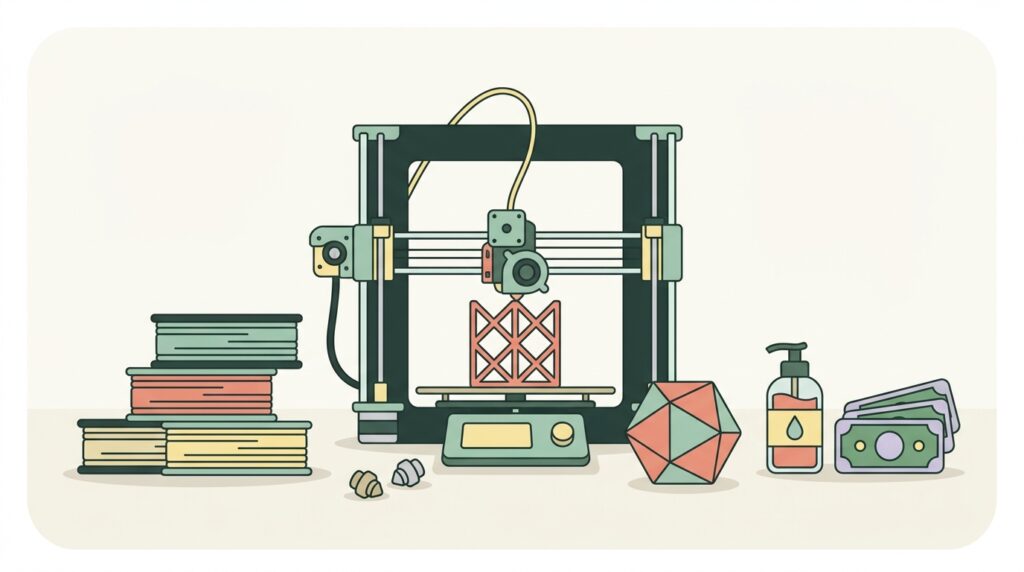
Quick answer: A good beginner FDM printer costs $169 to $299 (Anycubic Kobra 2, Elegoo Neptune 4, or Flashforge Adventurer 5M), but budget $400 to $500 total for year one once you add filament, spare nozzles, and a build plate. Resin printers cost less upfront, $165 to $255, but add $200 to $350 in resin, isopropyl alcohol, and ventilation gear before you factor in the extra safety steps resin requires.
Disclosure: this article contains affiliate links. If you buy through them, we may earn a commission at no extra cost to you. Prices were checked in September 2026.
What Does a Beginner 3D Printer Actually Cost?
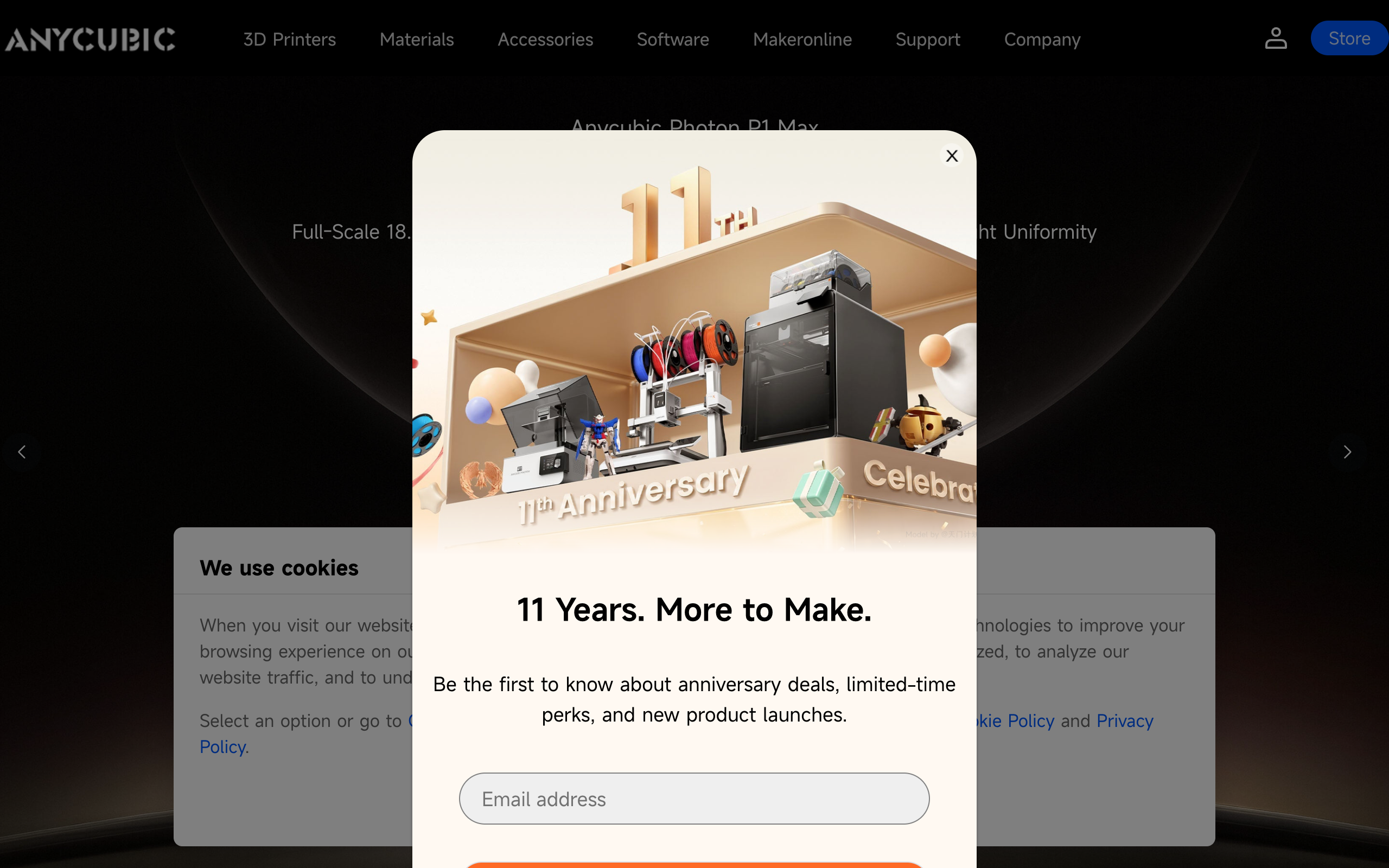
The printer’s sticker price is the smallest number in this hobby. Here is what the three most common beginner FDM printers cost from their makers right now, alongside two respected step-up brands for comparison.
| Printer | Type | Build volume | Auto bed leveling | Enclosed | Price |
|---|---|---|---|---|---|
| Anycubic Kobra 2 | FDM | 250 x 220 x 220mm | Yes, LeviQ 2.0 | No | $169-$279 |
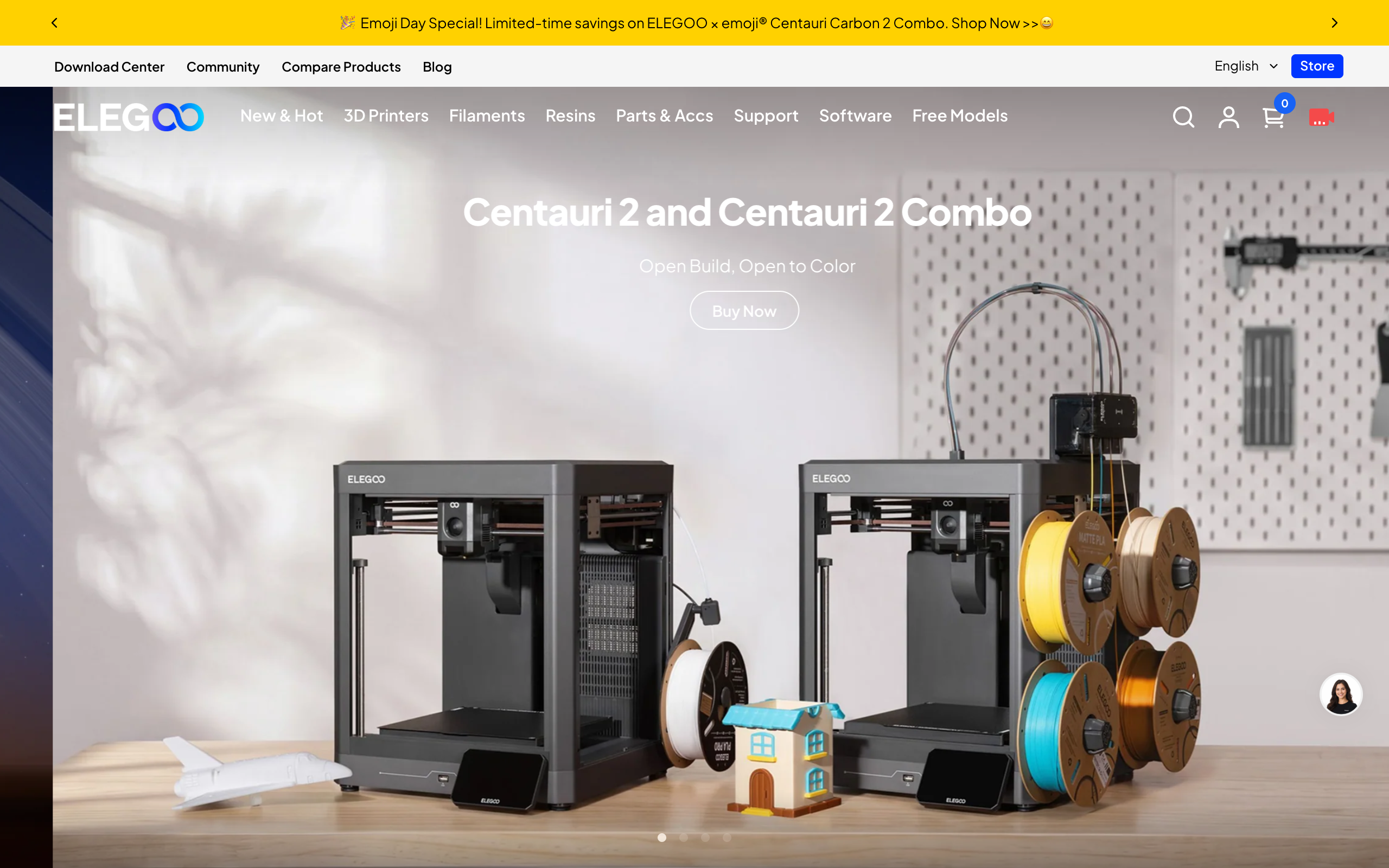
| Elegoo Neptune 4 | FDM | 225 x 225 x 265mm | Yes, 121-point | No | $219-$230 |
| Flashforge Adventurer 5M | FDM | 220 x 220 x 220mm | Yes, one-click | No (kit add-on) | $249-$399 |
| Bambu Lab A1 mini | FDM | 180 x 180 x 180mm | Yes, full auto | No, by design | $199-$299 |
| Prusa MINI+ | FDM | 180 x 180 x 180mm | Yes, SuperPINDA | Optional bundle | $409-$459 |
Every printer on that list levels its own bed automatically, which matters more than any other spec for a first machine. A printer that needs manual bed leveling with a sheet of paper under the nozzle is where most beginners quit before they ever finish a print. If you are choosing between these five, the Bambu Lab A1 mini and the Anycubic Kobra 2 get you printing for under $200, while the Prusa MINI+ costs twice as much for the same 180mm build volume because you are paying for Prusa’s documentation, community support, and repairability.
FDM or Resin: Which Should a Beginner Buy?
Buy FDM if you want functional parts, brackets, phone stands, tool organizers, or anything that needs to be strong and larger than a few inches. Buy resin only if you specifically want highly detailed miniatures, jewelry patterns, or dental and hobby-scale models where surface detail matters more than strength. FDM melts plastic filament through a nozzle layer by layer; resin cures liquid photopolymer with UV light through a screen, which is why resin prints show far finer detail but come out more brittle and need extensive post-processing that FDM prints do not.
For a first printer, FDM is the safer recommendation for most people. It has no toxic liquid to handle, cleanup is a plastic scraper and maybe a vacuum, and PLA filament fails safely if something goes wrong. Resin printing is a real chemistry hobby with real safety requirements, covered below, and it is not something to hand a kid or run in a bedroom with poor airflow.
Resin Printers: Real Options and Real Prices
| Printer | Screen/Resolution | Build volume | Price |
|---|---|---|---|
| Elegoo Mars 5 (4K) | 6.6″ mono LCD, 4K | ~143 x 90 x 150mm | $165-$200 |
| Elegoo Mars 5 Ultra (9K) | 7″ mono LCD, 9K | ~150 x 94 x 165mm | $255-$265 |
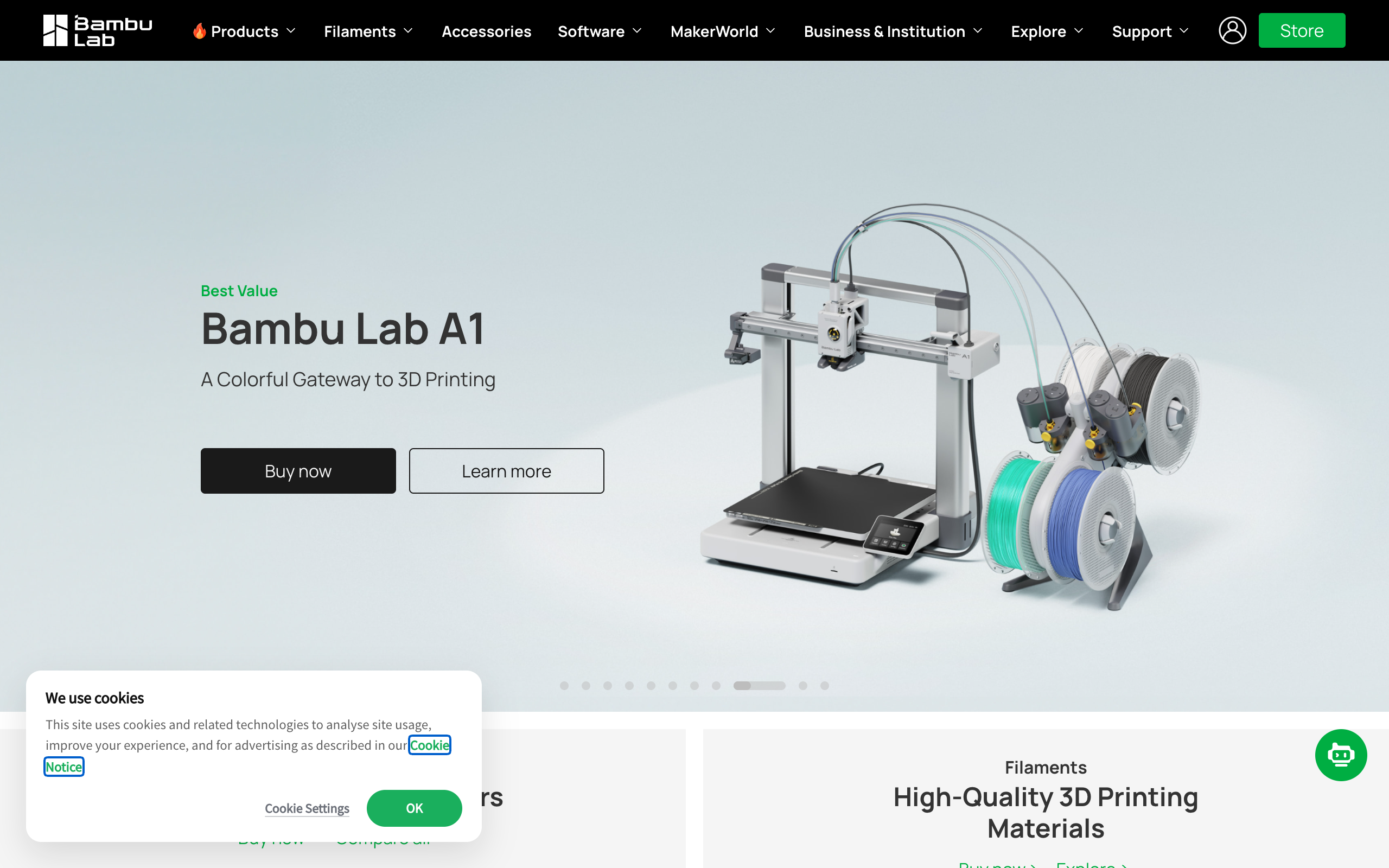
| Anycubic Photon Mono 4 | 7″ mono LCD, 10K | 153.4 x 87 x 165mm (2.2L) | $240 |
| Elegoo Saturn 4 | 10″ mono LCD | Larger format | $299-$359 |
Resin printer prices swing with promotions more than FDM prices do, so treat these as a starting range and check the current listing before you buy. The pattern holds either way: a capable resin printer costs less than a capable FDM printer, which is exactly why so many beginners get pulled toward resin without budgeting for what comes next.
The Real First-Year Cost: FDM
A $199-$299 FDM printer is not what you actually spend in year one. Budget for this on top of the machine:
- Filament: PLA runs roughly $20-$25 per kilogram. A beginner who is learning, failing prints, and printing a reasonable amount will go through 3 to 5kg in the first year, so $60-$125.
- Spare nozzles: Brass nozzles wear down and clog. Budget one 2-pack replacement in year one, $8-$15.
- Replacement build plate: A PEI sheet gets scratched or loses grip eventually. Not always needed year one, but budget $15-$25 for when it happens.
- Basic tools: A glue stick or adhesion spray, a set of side cutters, and digital calipers run about $15-$20 combined and you will use all three constantly.
- Electricity: at the 2026 US average residential rate of roughly 18 cents per kWh, even 150 hours of printing a year at 150W adds up to under $5. This is the one line item you can ignore.
Total realistic first year for FDM: roughly $400 to $500 all-in for a $199-$299 printer, most of it in filament and small consumables, not the machine.
The Real First-Year Cost: Resin (and the Safety Gear You Cannot Skip)
Resin’s lower sticker price hides higher running costs and mandatory safety spending:
- Resin: standard photopolymer resin runs $30-$50 per liter. A beginner doing miniatures and small parts will use 2-4 liters in year one, so $80-$160.
- Isopropyl alcohol (IPA): needed to wash every print before curing. Budget $50-$100 a year, or $70-$150 once for a wash-and-cure station that recirculates IPA.
- FEP film: the clear film at the bottom of the resin vat wears out and needs replacing every 1-3 liters of resin used, at $10-$20 per replacement, so $15-$45 in year one.
- Nitrile gloves, 5-mil or thicker: uncured resin will permeate thin 3-mil food-service gloves within 30 to 60 minutes of contact, so buy the thicker kind. A box runs about $15, and you will go through several boxes, $20-$30 a year.
- Splash-rated safety glasses: $10-$15 one-time. Uncured resin in your eye is a trip to urgent care, not a minor annoyance.
- Ventilation: resin off-gasses acrylate and methacrylate vapors while printing and while curing, both recognized skin and respiratory irritants. You need airflow, a window fan, a carbon-filter enclosure, or a dedicated well-ventilated space, budget $30-$100 depending on what you already have. A half-face respirator with organic vapor cartridges ($40-$70) is worth adding if you will be in the room during long prints or heavy post-processing.
- Disposal: leftover liquid resin cannot go down a drain or in the regular trash while still liquid. Cure it fully in sunlight or a UV chamber first, then dispose of the solid; check your municipality’s hazardous waste rules for liquid resin and used IPA, since many treat them as household hazardous waste.
Total realistic first year for resin: roughly $400 to $600 all-in for a $165-$255 printer, once you count the consumables and the PPE you should not skip. The printer is cheaper than FDM; the year is not.
One cost people forget is the design side. If you are not modelling your own parts, you will be downloading them, and the free model libraries fill up fast with prints that need repair before they slice cleanly. Anyone who wants to generate their own geometry rather than hunt for it should look at the free architecture and interior design AI tools we tested, several of which export usable mesh files. And if you are building out a maker desk around the printer, our review of the XTEINK X4 Pro covers what a low-cost e-ink screen can and cannot do when you are reading long build documentation.
Who Should NOT Buy a 3D Printer
Skip the purchase entirely if you print only a handful of times a year. Once you factor in the machine, consumables, the learning curve, and the hours spent troubleshooting failed prints, a print-on-demand service is cheaper and faster for occasional needs. Services like Craftcloud or Xometry, or a local library or makerspace with a print-on-demand counter, will quote you a per-part price with no hardware to store, maintain, or eventually replace. Buy a printer only when you expect to print regularly enough that the per-part cost drops below what a service would charge, which for most hobbyists means printing at least a few times a month.
Also skip resin specifically, even if you keep an FDM printer, if you do not have a garage, a workshop, or a genuinely well-ventilated room to run it in. A bedroom or a shared apartment with no separate airflow is not the place for a resin printer, full stop, regardless of how good the detail looks in review photos.
Frequently Asked Questions
What is the cheapest good 3D printer for a total beginner?
The Bambu Lab A1 mini at $199 and the Anycubic Kobra 2 at $169-$279 are the two cheapest printers with automatic bed leveling, which is the feature that actually determines whether a beginner keeps using the printer.
Do I need an enclosure for my first printer?
Not for PLA. PLA prints fine in an open-frame printer like the Kobra 2, Neptune 4, or A1 mini. You only need an enclosure for ABS, ASA, or other high-temperature filaments that warp in open air, and the Flashforge Adventurer 5M Pro or an add-on enclosure kit covers that case.
Is resin printing more dangerous than FDM?
Yes, meaningfully so. Uncured resin is a recognized skin and respiratory irritant that can cause contact dermatitis with repeated exposure, and both the wash step (isopropyl alcohol) and the printing itself release VOCs that need ventilation. FDM’s main hazards are a hot nozzle and a hot bed, both far easier to manage safely.
How much filament does a beginner actually use in a year?
Plan on 3 to 5kg of PLA in your first year between practice prints, calibration objects, and failed attempts, at $20-$25 per kilogram, so roughly $60-$125 just in material.
Can I print functional parts on a resin printer?
Not well. Standard resin prints are more brittle than FDM plastic and most resins are not rated for mechanical stress or outdoor UV exposure. Resin is the right tool for detail, not durability; use FDM for brackets, mounts, and anything load-bearing.
Should I buy Prusa or one of the cheaper brands as my first printer?
Only if budget is not the deciding factor. The Prusa MINI+ costs $409-$459 for the same 180mm build volume the $199 Bambu Lab A1 mini offers, and the extra money buys documentation, repairability, and community support rather than better prints out of the box. Most beginners get more value starting cheaper and upgrading once they know what they actually print.
Bottom Line
Buy an FDM printer with automatic bed leveling, the Elegoo Neptune 4, the Anycubic Kobra 2, or the Flashforge Adventurer 5M all qualify, and budget $400 to $500 for the whole first year, not just the machine. Only move to resin once you have a specific reason to want the extra detail and a real, ventilated space to run it safely, and budget for the safety gear alongside the resin itself. If you print only occasionally, skip hardware ownership altogether and use a print-on-demand service instead.