

8 Best AI Coding Agents in 2026 (Ranked, Priced, and Road-Tested)
By Nam Nguyen, founder of saas.com.ai. I curate and track AI tools by real traffic and growth data to help you find the right tool for any task. Last updated July 11, 2026.
The best AI coding agent in 2026 is not one tool, it is two categories: in-editor pair programmers you keep on a short leash (Cursor, Claude Code, GitHub Copilot), and fire-and-forget autonomous agents that go off and open a pull request while you do something else (Devin, OpenAI Codex, Replit Agent). Cursor and Claude Code lead for daily hands-on coding at $20/month. Devin leads for delegated background work, now starting at $20 after a 96% price cut. Below, all eight are compared on autonomy, environment, price, and the one weakness each vendor buries in the FAQ.
Key takeaways
- In-IDE copilots win for most pros. Cursor, Claude Code, and GitHub Copilot keep you in the loop on every edit. That is still what senior engineers actually want in 2026.
- Autonomous agents win for delegated grunt work. Devin, Codex, and Replit Agent turn a ticket into a PR, but you review, you do not trust.
- Price collapsed. Devin dropped from $500 to $20/month in late 2025. Codex now ships free inside a $20 ChatGPT Plus seat.
- Windsurf is effectively gone. Cognition rebranded it to Devin Desktop on June 2, 2026, and Cascade hits end-of-life July 1, 2026.
- Ignore the SWE-bench leaderboard. OpenAI itself stopped reporting SWE-bench Verified in 2026 because scaffolding, not model skill, was setting the scores.
The 8 best AI coding agents at a glance
Here is the whole field in one table. “Autonomy” is how much rope the tool gives itself before it needs you. “Environment” is where it runs.
| Tool | Autonomy | Environment | Pricing (from) | Best for |
|---|---|---|---|---|
| Cursor | Semi (Agent mode, you approve) | AI-native IDE (desktop) | Free; Pro $20/mo | Daily hands-on coding with a leash |
| Claude Code | Semi to high (terminal agent) | CLI + IDE extensions | Pro $20/mo; Max $100 to $200 | Complex multi-file refactors, terminal lovers |
| GitHub Copilot | Low to high (chat, agent mode, coding agent) | VS Code, JetBrains, GitHub cloud | Free; Pro $10/mo | Teams already living inside GitHub |
| Devin | High (fully autonomous) | Cloud engineer + Slack | Core $20/mo + ACU usage | Delegating whole tickets to a background worker |
| OpenAI Codex | Semi to high (local + cloud) | Terminal + ChatGPT cloud | In ChatGPT: Plus $20/mo | People already paying for ChatGPT |
| Replit Agent | High (builds and deploys) | Cloud IDE (browser) | Free; Core $20/mo | Non-devs and founders shipping a whole app |
| Aider | Semi (you pick files) | Terminal (open source) | Free + your LLM tokens | Privacy-minded devs who want zero lock-in |
| Viktor | High (AI employee) | Slack + Teams | $100 free credits; from $50/mo | Non-engineering teams who need code-adjacent work |
Now the detail. I have written each tool up from the angle that actually matters for it, not from an identical grid, because these products are not the same shape.
Cursor: the default answer for hands-on coders
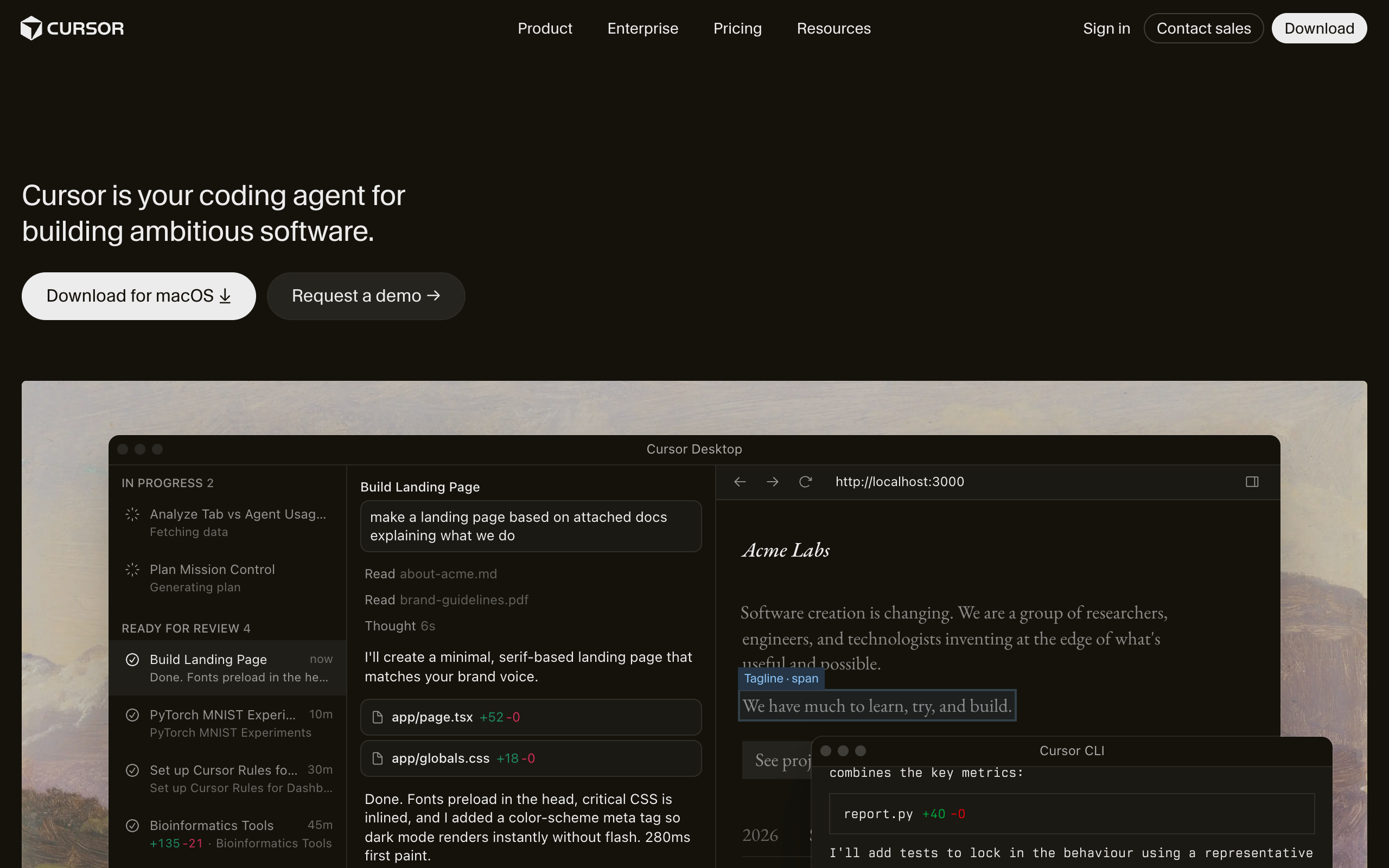
Cursor is an AI-native fork of VS Code where the Agent mode (formerly Composer) plans and executes multi-file changes while you watch and approve each diff. It is the tool most working developers reach for first in 2026, and the reason is boring: it feels like your editor, only faster.
Pricing runs Free (Hobby), Pro at $20/month, Pro+ at $60, and Ultra at $200 with a 20x usage multiplier (Cursor pricing). Teams cost $40/seat (Standard) or $120/seat (Premium), and Cursor changed the team tiers in June 2026 to push heavy agent users onto Premium.
Here is the part nobody markets: since mid-2025 Cursor bills on a credit pool equal to your plan price, and Auto mode is unlimited, but the moment you hand-pick a frontier model like Claude Sonnet or GPT-5, your $20 pool drains. I have watched a Pro seat burn through its monthly credit in under two weeks of heavy agent work. The fix is unglamorous: leave it on Auto for routine edits and only spend on a named model when the task is genuinely hard.
One honest weakness: the pricing has been rewritten so many times in eighteen months that budgeting for a team is a moving target. Read the current terms before you roll it out to twenty seats.
Cursor is the safest first pick for daily coding.
Claude Code: the terminal agent that senior engineers quietly prefer
Claude Code is Anthropic’s command-line coding agent that reads your repo, edits across files, runs commands, and iterates, all from the terminal. It comes bundled with a Claude Pro plan at $20/month, with heavier Max tiers at $100 (5x) and $200 (20x), or pay-per-token through the API (Claude pricing).
The insider read on Claude Code is that it wins on hard, sprawling refactors where you need the agent to hold a lot of context and reason through consequences. On the most-cited coding benchmark, Anthropic’s Opus 4.8 sits at 88.6% on SWE-bench Verified, basically tied with GPT-5.5 at 88.7% as of June 2026 (digitalapplied.com). Read that gap as a rounding error, not a reason to switch.
Aside: the reason terminal-first agents like Claude Code and Aider have a cult following is that a terminal composes. You can pipe it, script it, cron it, and drop it into CI. An IDE cannot do that, and power users know it.
One honest weakness: there is no GUI hand-holding. If your team is not comfortable in a shell, the learning curve is real, and the token meter on API mode can surprise you on a big job.
GitHub Copilot: three products wearing one brand

GitHub Copilot in 2026 is not one feature, it is three levels of autonomy sold together. Inline chat suggests code. Agent mode, generally available on VS Code and JetBrains since March 2026, plans and runs multi-step tasks and iterates on errors. The coding agent goes furthest: assign it a GitHub issue and it branches the repo, writes the code on Actions runners, runs tests, and opens a pull request while you are asleep (GitHub Copilot plans).
Pricing is the friendliest entry point in this whole list: Free, Pro at $10/month, Pro+ at $39, and Max at $100, with Business at $19/seat and Enterprise at $39/seat. The autonomous coding agent unlocks on Pro+ and up.
The catch arrived on June 1, 2026, when Copilot moved to usage-based billing on GitHub AI Credits. Chat, agent mode, code review, and the CLI now consume credits by actual compute, so the “cheapest option” can quietly stop being cheap once your team leans on the agent all day.
One honest weakness: the three-tier autonomy model confuses people. Half the teams I talk to think “agent mode” and “coding agent” are the same thing. They are not, and only one of them opens PRs unsupervised.
Devin: the fire-and-forget agent that finally got affordable
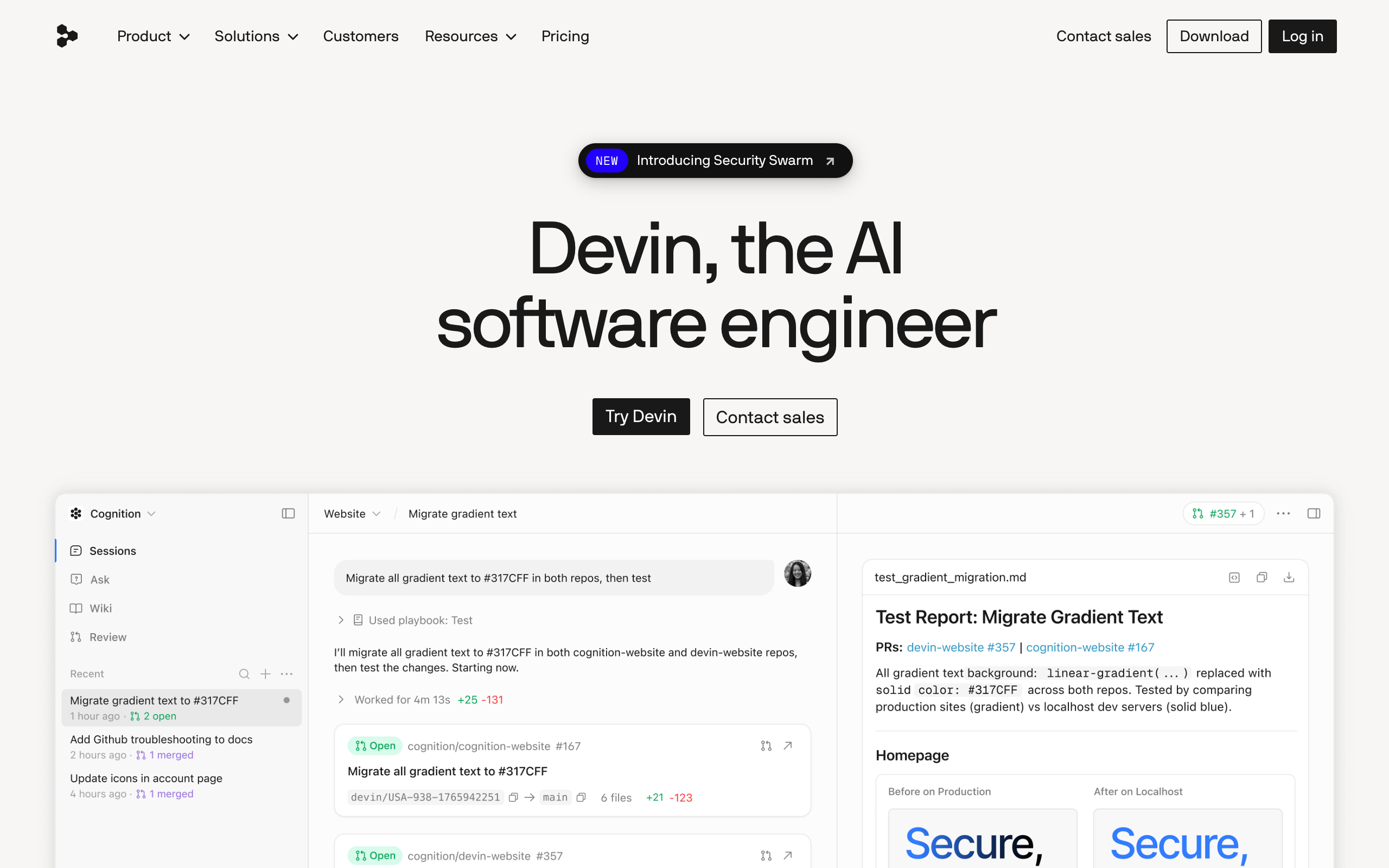
Devin, from Cognition, is the original fully autonomous AI software engineer: you give it a task in Slack or its web app, and it spins up its own cloud environment, plans, codes, tests, and returns a PR. In 2025 it cost $500/month and became a punchline for the gap between demo and reality. Then Cognition cut the entry price 96% to a $20 Core plan in late 2025, and the conversation changed (Devin pricing).
Core is $20/month plus pay-as-you-go usage at $2.25 per ACU, where one ACU (Agentic Compute Unit) is roughly 15 minutes of active autonomous work. The Team plan is $500/month with 250 included ACUs at a slightly cheaper $2.00 rate. Cognition has also been busy: it acquired Windsurf and, on June 2, 2026, rebranded that editor to Devin Desktop, folding a leash-style IDE into its autonomous stack.
Nobody says this plainly, so I will: the honest use case for Devin is not “replace an engineer.” It is “delegate the tickets your engineers hate.” Scoped, well-described, low-ambiguity work is where fire-and-forget pays off. Hand it a vague epic and you will spend more time reviewing its wrong turns than you saved.
Want the deep dive before you delegate a ticket?
One honest weakness: ACU billing is hard to forecast. A task that looks small can chew compute if Devin gets stuck exploring, and you pay for the exploration.
OpenAI Codex: already in your ChatGPT subscription
OpenAI Codex is the coding agent that lives in both your terminal and the ChatGPT cloud, running on GPT-5-Codex. Give it a task in plain English and it reads the whole repo, edits across files, runs tests in a sandbox, and opens a pull request (Codex pricing).
The pricing angle is what makes it interesting: Codex is included in every ChatGPT plan. Free gets a taste, Go is $8/month, Plus is $20 with 10 to 60 cloud tasks per 5-hour window, and Pro is $100 (5x) or $200 (20x). If you already pay for ChatGPT Plus, you already have a capable cloud coding agent and may not know it.
On benchmarks, GPT-5-Codex scores above 70% on SWE-bench Verified, and GPT-5.5 tops the leaderboard at 88.7% (valueaddvc.com). But see the SWE-bench section below before you weight that number too heavily.
One honest weakness: the 5-hour task windows on Plus are a real ceiling. Lean on Codex for a full workday and you will hit the wall right when you are in flow.
Windsurf (now Devin Desktop): the cautionary tale
Windsurf, formerly Codeium, built Cascade, an agent that reads your codebase, plans multi-step changes, and executes them across files. It was a genuine Cursor rival. Then the ground moved. Cognition acquired Windsurf, rebranded it to Devin Desktop on June 2, 2026, and set Cascade’s end-of-life for July 1, 2026, with Devin Local taking over as the default agent (funDesk).
I am including it because the lesson matters more than the tool. In 2026, the coding-agent market is consolidating fast, and betting a whole team’s workflow on a standalone challenger carries platform risk. If you onboarded Windsurf in early 2026, you are now migrating whether you wanted to or not.
Current Windsurf/Devin Desktop pricing sits at Pro $20/month and Max $200, with Teams at $40/seat, but treat that as a snapshot on a product mid-transition.
One honest weakness: it is a moving target. Anything I write about it may be renamed or retired by the time you read it, which is precisely the point.
Replit Agent: the one non-developers actually ship with
Replit Agent is the cloud agent for people who do not want to touch a file. Describe an app in plain English and Agent 3, released September 2025, writes the code, sets up the database schema, configures auth, wires third-party services, and deploys, running autonomously for up to 200 minutes per session across 160-plus integrations (espressio.ai).
Pricing is Starter (free with daily Agent credits), Core at $20/month with $20 in credits, and Pro at $100/month flat, launched February 2026 for up to 15 builders. Since mid-2025 Replit charges effort-based: each tool call, file write, or code execution costs credits individually, so “add a button” is a few credits and “scaffold the whole auth flow” can run 50 to 200.
The real Replit user is not the senior engineer, it is the founder, PM, or ops person who needs a working internal tool by Friday and has no dev to spare. For that person, Replit Agent is the best tool on this list, full stop.
One honest weakness: effort-based credits make cost genuinely unpredictable. A debugging spiral where the agent keeps retrying can drain credits with nothing to show for it.
Aider: free, open source, and yours forever
Aider is the open-source AI pair programmer that runs in your terminal, treats git as the source of truth, and auto-commits every successful edit with an AI-written message (aider.chat). The CLI is $0. You only pay your LLM provider, typically $0.01 to $0.10 per change (GitHub).
Two things make Aider quietly excellent. First, it is model-agnostic: Claude, GPT-5, DeepSeek, Gemini, and local models via Ollama all work, so you are never locked to one vendor’s pricing whims. Second, it only streams the relevant code snippets to the model, so the rest of your source never leaves your machine, a real privacy property for teams handling sensitive code.
Aside: if you have ever been burned by a subscription tool changing its billing three times in a year, Aider is the antidote. It cannot rug-pull you, because there is nothing to rug-pull.
One honest weakness: there is no polish and no support desk. You configure your own API keys, pick your own models, and read the docs. That is the trade for total control and near-zero cost.
Bonus for non-engineering teams: Viktor
Two products share the Viktor name, so pin the right one first. viktor.com is an “AI employee” that lives in Slack and Teams, connects to 3,200-plus tools, and does real work including writing and running code. viktor.ai is a totally different low-code Python platform for engineers building CAD, BIM, and FEM apps. This section is about viktor.com.
viktor.com gives you $100 in credits with no card, then starts at $50/month per workspace for 20,000 monthly credits, with no per-seat charge (Viktor pricing). It is not a coding agent for a software team. It is for the ops, marketing, or founder who needs code-adjacent tasks (a quick web build, a data pull, an automation) done inside the chat tool they already use, without hiring a developer. See the Viktor listing on saas.com.ai or our full Viktor AI review for the non-coding angle.
In-IDE copilot or autonomous agent: which should you pick?
The genuine 2026 divide is not brand, it is leash length.
Pick an in-IDE copilot (Cursor, Claude Code, GitHub Copilot) if you are a working developer who wants speed without losing control. You see every diff, you approve every change, and you catch the hallucination before it ships. This is what most professionals still prefer, and it is not nostalgia. It is that a wrong line caught in the editor costs seconds, and a wrong line caught in a merged PR costs an afternoon.
Pick a fire-and-forget agent (Devin, OpenAI Codex, Replit Agent) if you have well-scoped, low-ambiguity work you would rather delegate than do: the boilerplate ticket, the dependency bump, the CRUD endpoint, the internal tool. Assign it, walk away, review the PR when it lands.
My actual recommendation for a working engineer in 2026: run Cursor or Claude Code as your daily driver at $20/month, and keep Devin or Codex on standby for the tickets you do not want to touch. Do not try to make one tool be both. The teams that struggle are the ones expecting a background agent to also be their careful pair programmer. It is not, and it should not be.
Why you should ignore the SWE-bench leaderboard
Every vendor on this list will wave a SWE-bench Verified score at you. Discount it. In 2026, OpenAI’s own Frontier Evals team announced it would stop reporting SWE-bench Verified because the score had stopped meaning anything (codesota.com).
Two problems broke the benchmark. First, contamination: the fixed dataset has been public long enough to leak into training data, and SWE-rebench found a nearly 20-percentage-point gap between SWE-bench Verified and temporally-filtered tasks (buildmvpfast.com). Second, scaffold inflation: the same model can score 69% standalone or 81% wrapped in a sophisticated agent harness that retries and explores files (digitalapplied.com). You are often benchmarking the wrapper, not the brain.
So when a landing page shouts “88% on SWE-bench,” read it as marketing, not measurement. Run a two-week trial on your own repo instead. Your codebase is the only benchmark that pays your bills.
Frequently asked questions
What is the best AI coding agent in 2026?
For daily hands-on coding, Cursor and Claude Code lead at $20/month because they keep you in control of every edit. For delegating whole tickets to a background worker, Devin leads, now starting at $20/month after a 96% price cut. There is no single winner; the right pick depends on whether you want a leash or a delegate.
Are AI coding agents free?
Some are. Aider is fully open source and free, and you only pay your LLM token costs (roughly $0.01 to $0.10 per change). GitHub Copilot, Cursor, and Replit all have free tiers, and OpenAI Codex is included in the free tier of ChatGPT. Most serious use lands on a $20/month paid plan.
What is the difference between an AI coding agent and autocomplete?
Autocomplete (like classic Copilot suggestions) finishes the line you are typing. An AI coding agent plans and executes multi-step tasks: it decides which files to change, edits across the codebase, runs terminal commands, tests its own work, and iterates on errors. Agents act; autocomplete only suggests.
Can AI coding agents replace developers in 2026?
No. In 2026 the honest use case is delegation of well-scoped, low-ambiguity work, not replacement. Autonomous agents like Devin and Codex still require a human to review every pull request, and most professionals deliberately keep in-IDE agents on a short leash to catch errors before they ship.
Is Devin worth it now that it costs $20?
For delegating scoped, well-described tickets, yes. Devin’s Core plan is $20/month plus $2.25 per ACU (about 15 minutes of work), a 96% drop from its original $500. The catch is that usage billing is hard to forecast, and vague tasks burn compute. Use it for clear, boxed work, not open-ended epics.
The bottom line
The best AI coding agent in 2026 is the one that matches your leash tolerance. Keep a $20 in-IDE copilot (Cursor or Claude Code) as your daily hands-on tool, and keep an autonomous agent (Devin or Codex) on standby for the tickets you would rather delegate than do. Ignore the benchmark theater, trial two tools on your own repo for two weeks, and let your actual codebase decide.
Author: Nam Nguyen is the founder of saas.com.ai, where he curates and tracks AI tools by real traffic and growth data to help readers find the right tool for any task. He tests coding agents against live repositories rather than vendor benchmarks.
Sources
- Devin (Cognition), Plans and Pricing: https://devin.ai/pricing/
- Cursor, Pricing: https://cursor.com/pricing
- Claude by Anthropic, Plans and Pricing: https://claude.com/pricing
- GitHub Copilot, Plans and pricing: https://github.com/features/copilot/plans
- OpenAI Codex, Pricing: https://developers.openai.com/codex/pricing
- Replit, Guide 2026 (Agent 3): https://espressio.ai/blog/replit-guide-2026/
- Aider, AI Pair Programming in Your Terminal: https://aider.chat/ and https://github.com/aider-ai/aider
- Viktor, Pricing: https://viktor.com/pricing
- Windsurf to Devin Desktop rebrand: https://www.fundesk.io/windsurf-ide-review-codeium-ai-editor-2026
- SWE-bench contamination and scaffold inflation: https://www.codesota.com/news/swe-bench-contamination-debate and https://www.digitalapplied.com/blog/swe-bench-verified-june-2026-benchmark-vs-scaffolding-analysis
Related on saas.com.ai: Devin AI review · Best autonomous AI agents · Devin listing