
Moosend is the cheapest paid newsletter platform in 2026 at $7 a month on annual billing for 500 contacts, with Brevo close behind at $9 a month for 5,000 emails. But “cheapest” changes completely once you look at what a real list actually costs to run: at 10,000 subscribers, beehiiv’s flat $43-a-month Scale plan beats several “budget” tools that price per contact and quietly climb past it. And if you never plan to charge readers, the cheapest platform of all is a free one: beehiiv, Substack, or Brevo, at $0. This guide prices out every major newsletter platform at three real list sizes (1,000, 5,000, and 10,000 subscribers) so you can see the actual monthly bill, not just the advertised starting price. It is the cost-focused cut of my broader ranking of the best newsletter platforms, and if $0 is genuinely on the table for your list size, my roundup of the best free newsletter platforms goes deeper on exactly what each free tier includes.
Disclosure: some links in this post are affiliate links. If you sign up through them, we may earn a commission at no extra cost to you. That never changes our verdict.
Key takeaways
- The lowest advertised starting price is Moosend at $7/month (annual billing, 500 contacts), followed by Brevo at $9/month for 5,000 emails. Both are real, usable prices, not teaser rates.
- Starting price and price-at-scale are different questions. A platform that is cheapest at 500 subscribers is not necessarily cheapest at 10,000, because pricing models differ: some bill by total contacts, some by active subscribers, some by email sends.
- beehiiv and Ghost both charge a flat platform fee rather than a steep per-contact climb, which makes them comparatively cheaper than budget tools once your list crosses about 5,000 to 10,000 subscribers.
- Free is cheaper than cheap, if you qualify. beehiiv (2,500 subscribers), Brevo (100,000 contacts stored, 300 sends/day), and Substack (unlimited, 10% fee only on paid subscriptions) all let you run a real newsletter at $0.
- List hygiene is the biggest hidden cost lever on every platform here. Every pricing model in this guide bills by contacts or sends in some form, so a list full of dead, non-opening subscribers inflates your bill regardless of which “cheap” platform you pick.
Cheapest newsletter platforms, entry price versus cost at scale
| Platform | Cheapest paid entry price | Approx. cost at 5,000 subscribers | Approx. cost at 10,000 subscribers | Pricing model |
|---|---|---|---|---|
| Moosend | $7/mo (annual, 500 contacts) | Scales per contact tier; check current calculator | Scales per contact tier; check current calculator | Per-contact tier |
| Brevo | $9/mo (5,000 emails/mo) | Priced by email volume, not contacts; a 5,000-subscriber list sending weekly fits well within Starter | Likely still on Starter or low Standard tier depending on send frequency | Per-email-send volume |
| MailerLite | $12/mo (Comfort) | Around $35-45/mo (Comfort scales with subscriber count) | Around $55-75/mo | Per-subscriber tier |
| Ghost (Pro) | $18/mo (Starter, up to 1,000 members) | $29/mo (Publisher, still under 1,000 members cap; larger lists need Business) | $199/mo (Business, up to 10,000 members) | Flat tier, not per-contact |
| Kit | $33/mo (Creator, 1,000 subscribers) | Around $66-79/mo | Around $100-119/mo | Per-subscriber tier |
| beehiiv | $43/mo (Scale, annual billing) | $43/mo (Scale covers up to 100,000 on the same base tier structure) | $43-60/mo range depending on subscriber tier step-up | Subscriber-tiered, but flat-feeling up to 100k |
| Mailchimp | $13/mo (Essentials, low contacts) | Around $75-100/mo | Around $150-190/mo | Per-contact tier, counts unsubscribed contacts too |
The subscriber-tier ranges above are directional, since every platform recalculates its exact tier pricing by contact count and each has its own live calculator; treat them as the shape of the cost curve, not a quote, and confirm your exact tier on the vendor’s pricing page before you commit. Tier pricing for MailerLite, Kit, and Mailchimp at the 5,000 and 10,000 subscriber marks varies by vendor calculator, so confirm your exact rate on each vendor pricing page before you commit.
The cheapest number on a pricing page is not always the cheapest number on your actual invoice. Start with beehiiv’s free plan, which costs nothing up to 2,500 subscribers, and you can compare real costs at scale later once your list is big enough for the difference to matter.
How did I calculate the cost at scale?
Sticker prices are easy to find and almost useless on their own, because nearly every newsletter platform in this category prices by list size, not a flat fee. I pulled each platform’s live pricing page in July 2026 and worked through three things for each one.
- What exactly are you billed on? Contacts stored, active subscribers, or emails sent are three different meters, and they produce very different bills for the same newsletter. Brevo bills by email volume, which rewards a smaller, engaged list; Mailchimp bills by total contacts, including unsubscribed ones, which punishes a messy list.
- Does the price scale smoothly or in steps? Subscriber-tiered pricing (MailerLite, Kit, beehiiv, Mailchimp) jumps at specific thresholds rather than rising gradually, so a list of 5,001 subscribers can cost meaningfully more than a list of 4,999 on the same platform.
- What does annual billing actually save? Every platform in this guide discounts annual billing, typically 10 to 20%, and I priced the annual-equivalent monthly rate wherever a vendor published one, since that is the realistic cost for anyone committing for a year.
- What is excluded from the advertised starting price? Branding removal, dedicated support, and automations are common upsells bundled into a higher tier than the advertised “starting at” number, which quietly changes the real price for anyone who needs those basics.
1. Moosend: the lowest advertised starting price

Moosend’s Pro plan starts at $7 a month on annual billing (or $9 monthly) for 500 contacts, with unlimited email sends, automation workflows, landing pages, and forms all included at that entry price, verified on Moosend’s pricing page in July 2026. That is the lowest paid entry point of any platform in this comparison, and it is not a stripped-down teaser: the automation and landing page tools are the same ones on higher tiers, just applied to a smaller contact count.
Moosend also runs a 30-day free trial with no credit card required, which is longer than most competitors’ trial windows, and it offers verified nonprofits a 25% discount on top of the standard annual-billing savings. The tradeoff for the low price: Moosend is built around ecommerce triggers (cart abandonment, product recommendations, purchase tracking), so a pure content newsletter is paying for automation machinery it may never use.
- Pricing (verified July 2026): Pro from $7/month (annual billing, 500 contacts), scaling up per contact tier. No permanent free plan; 30-day trial.
- Verdict: the cheapest paid entry point in this comparison, best suited to a small list that also sells products.
2. Brevo: cheapest by email volume, not contact count
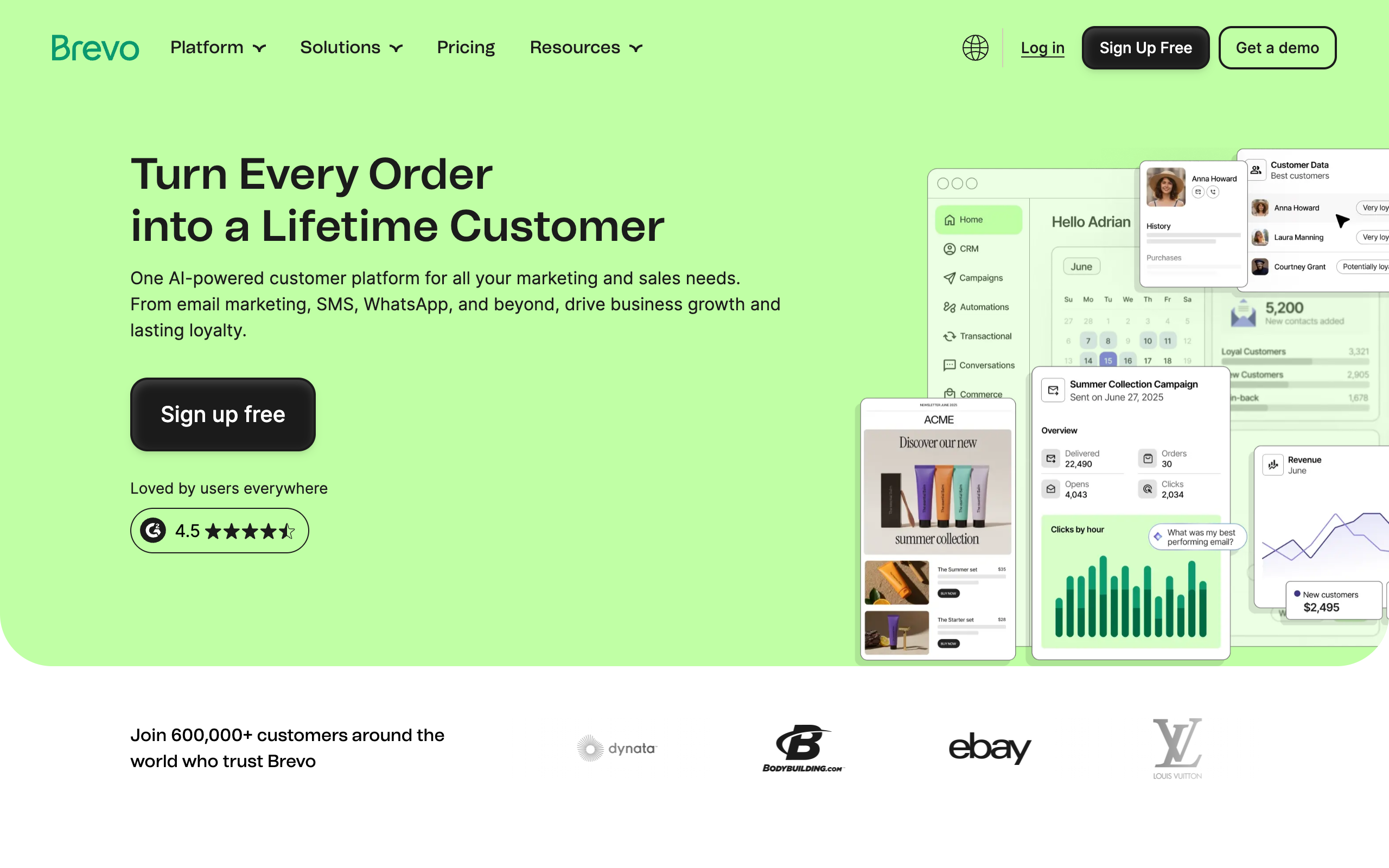
Brevo prices differently from almost everyone else on this list: by email sending volume rather than contacts stored. The free plan alone stores up to 100,000 contacts at $0, sending up to 300 emails a day. The paid Starter plan begins at $9 a month for 5,000 emails a month, verified on Brevo’s pricing page in July 2026, which means a newsletter with 5,000 subscribers sending one issue a week (roughly 20,000 sends a month) would need to check its exact send volume against the plan, but a smaller or less frequent list can run a genuinely large contact base for very little money.
This pricing model rewards exactly the newsletter that most budget-conscious operators actually run: a modest send frequency to a list that has not yet exploded. It punishes high-frequency senders faster than a per-contact model would, so daily newsletter writers should model their actual monthly send volume, not just their subscriber count, before assuming Brevo stays cheap.
- Pricing (verified July 2026): Free forever up to 300 emails/day and 100,000 stored contacts. Starter from $9/month for 5,000 emails/month.
- Verdict: the cheapest option for a large contact list with moderate sending frequency. Try Brevo’s free plan before committing to a paid tier.
3. MailerLite: cheap and predictable at small-to-mid list sizes
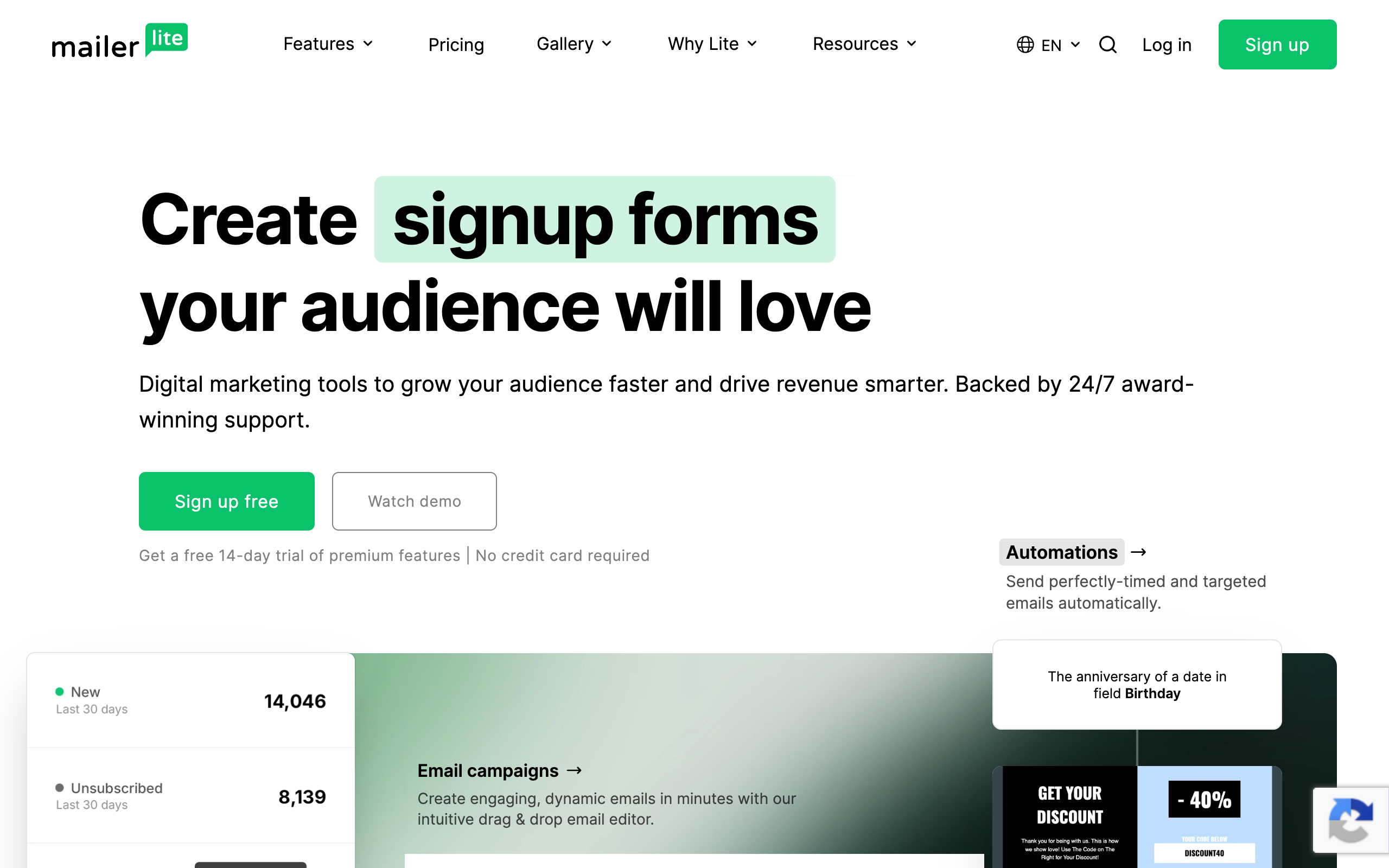
MailerLite‘s Comfort plan starts at $12 a month, verified on MailerLite’s pricing page in July 2026, and scales by subscriber tier from there, with a 10% discount for annual billing. It is not the single cheapest entry price in this comparison, but it is one of the more predictable ones: the pricing tiers are published clearly, and the jump between tiers is gentler than Mailchimp’s.
The full breakdown of every MailerLite tier and where the price steps up is in my dedicated MailerLite pricing guide, which is worth checking against your exact subscriber count before you commit, since published tier boundaries shift over time.
- Pricing (verified July 2026): Free to 250 subscribers. Comfort from $12/month, Power from $25/month unlimited sends.
- Verdict: a cheap, predictable middle ground for a subscriber list under about 10,000.
4. Ghost: the cheapest flat-fee option once your list is large
Ghost prices differently from every subscriber-tiered platform on this list: flat membership tiers rather than a per-contact climb. Ghost(Pro) Starter begins at $18 a month ($216 a year) for up to 1,000 members, Publisher at $29 a month for the same 1,000-member cap with paid subscriptions unlocked, and Business at $199 a month covering up to 10,000 members, verified on ghost.org in July 2026. The full pricing table and where each tier’s ceiling sits is in my Ghost pricing breakdown.
That Business tier is the detail worth noticing: $199 a month for 10,000 members works out cheaper than several per-contact platforms at the same list size, because Ghost does not step the price up gradually, it jumps once at a high ceiling. For a newsletter or publication planning to scale past 5,000 subscribers, Ghost’s flat-tier model can end up meaningfully cheaper than a platform that recalculates your bill every time you cross a small threshold. Ghost also takes 0% of membership revenue at every tier, and self-hosting it is free if you are willing to manage your own server.
- Pricing (verified July 2026): Starter $18/mo (1,000 members), Publisher $29/mo (1,000 members, paid subscriptions), Business $199/mo (10,000 members). Self-hosting is free.
- Verdict: the cheapest option at real scale (5,000 to 10,000+ subscribers) among platforms with flat, non-per-contact pricing.
5. beehiiv: not the cheapest entry price, often the cheapest at scale
beehiiv’s Scale plan starts at $43 a month ($517 a year on annual billing), which is higher than Moosend, Brevo, or MailerLite’s entry prices, so it will not win a pure “cheapest starting price” comparison. What changes the math is what that $43 includes and how the price behaves as your list grows: the referral program, Boosts marketplace, ad network, automations, and 0% fee on paid subscriptions are all included at that single price point, rather than gated behind successive upsells the way budget tools structure their tiers.
At 10,000 subscribers, several per-contact platforms in this comparison have already climbed well past $43 a month, while beehiiv’s pricing structure keeps you on largely the same tier up to 100,000 subscribers before stepping up. If your list is growing and you plan to monetize with paid subscriptions eventually, beehiiv’s 0% fee also means the platform never gets more expensive just because your revenue grew, which is the opposite of how Substack’s 10% cut behaves. Every tier and the exact subscriber thresholds where the price steps up are broken down in my full beehiiv pricing guide, and my hands-on beehiiv review covers whether the extra features are actually worth using once you have paid for them.
- Pricing (verified July 2026): Free to 2,500 subscribers. Scale from $43/month, covering up to 100,000 subscribers on the same tier structure with all growth features included.
- Verdict: not the cheapest sticker price, frequently the cheapest real cost once your list and feature needs grow past what budget tools include at the entry tier.
Run the numbers on your own list size before assuming the platform with the lowest sticker price is actually the cheapest for you. beehiiv’s free plan costs nothing up to 2,500 subscribers, which is the easiest way to test the product before the cost-at-scale question even applies to you.
6. Substack: free to run, expensive to monetize
Substack belongs in a cheapest-platform conversation with an asterisk. There is no monthly subscription fee at any list size, so as a pure sending cost, it is free, permanently. Where it stops being cheap is the moment you charge readers: Substack takes 10% of paid subscription revenue plus Stripe processing fees, per Substack’s own creator documentation, forever, with no ceiling and no volume discount.
Run the numbers at real revenue and the “free” framing falls apart quickly. A newsletter earning $3,000 a month in paid subscriptions pays Substack $300 a month, more than six times what beehiiv’s Scale plan costs at $43 a month with 0% taken. Substack is the cheapest platform for a newsletter that will never charge readers, and one of the more expensive platforms for one that succeeds at monetizing. The exact crossover point is worked out in beehiiv vs Substack.
- Pricing (verified July 2026): free with unlimited subscribers, no monthly fee. 10% of paid subscription revenue plus Stripe fees if you monetize.
- Verdict: the cheapest option imaginable for a free newsletter, an expensive one for a growing paid newsletter.
How much should a newsletter actually cost you per month?
Collapsing the numbers above into three real scenarios makes the tradeoffs clearer than a table alone.
- A brand-new newsletter under 1,000 subscribers: should be paying $0 to $9 a month. beehiiv, Brevo, and Substack are all free at this size; Moosend’s $7/month entry tier is the cheapest paid option if you specifically need ecommerce automations from day one.
- A growing newsletter around 5,000 subscribers: expect somewhere between $12 and $45 a month on most platforms, with Brevo staying cheapest if your send frequency is moderate, and beehiiv’s flat $43 becoming competitive once you factor in growth tools you would otherwise pay extra for elsewhere.
- An established newsletter at 10,000 subscribers: this is where per-contact platforms (Mailchimp, Kit, MailerLite) start looking expensive relative to flat-tier options like beehiiv (still around $43-60/month) and Ghost Business ($199/month, but with a 10,000-member ceiling and no per-contact creep).
Three ways to lower your bill on any platform, before you switch
Before assuming a platform migration is the answer, three habits lower the actual bill on almost every pricing model in this guide, regardless of which one you are on.
Prune non-openers on a schedule
Every per-contact pricing model in this article, including Mailchimp, Kit, and MailerLite, bills you for subscribers who never open your emails just as much as your most engaged readers. Removing subscribers who have not opened anything in six to twelve months routinely drops a list into a cheaper pricing tier without losing any real audience, since those contacts were not seeing your content anyway.
Match your platform’s pricing model to your actual sending habits
A newsletter that sends once a month to a large list should be on a volume-based platform like Brevo, not a per-contact platform. A newsletter that sends daily to a smaller, highly engaged list benefits more from a flat-tier platform like beehiiv or Ghost. Picking a platform whose pricing model fights your sending pattern is the single most common way people overpay without realizing it.
Confirm annual billing before you compare prices
Every platform in this guide discounts annual billing, typically 10% to 20%, and several of the “cheapest” prices quoted throughout this article (Moosend’s $7, beehiiv’s $43) are the annual rate, not the monthly one. Comparing a monthly price on one platform against an annual price on another produces a misleading verdict, so always check both numbers before deciding.
Frequently asked questions
What is the cheapest newsletter platform? Moosend has the lowest advertised paid entry price at $7 a month on annual billing for 500 contacts. Brevo is close behind at $9 a month for 5,000 emails. For a list under 2,500 to 100,000 subscribers with no immediate need to monetize, beehiiv, Brevo, and Substack all offer free tiers that cost less than any paid plan.
Is the cheapest newsletter platform the same at every list size? No. Entry-price rankings and cost-at-scale rankings frequently disagree, because pricing models differ (per contact, per email send, or flat tier). A platform that is cheapest at 500 subscribers can be more expensive than a flat-tier platform like beehiiv or Ghost once your list passes 5,000 to 10,000 subscribers.
Does Substack really cost nothing? There is no monthly fee, but Substack takes 10% of any paid subscription revenue plus Stripe processing fees. For a newsletter that never charges readers, Substack is genuinely free. For one that monetizes successfully, the 10% cut usually becomes more expensive than a flat-fee competitor like beehiiv, which takes 0%.
What is the cheapest way to run a paid newsletter? beehiiv and Ghost both take 0% of paid subscription or membership revenue, versus Substack’s 10%. Between the two, beehiiv’s flat $43-a-month Scale plan is generally cheaper for a smaller paid list, while Ghost’s Business tier can be cheaper at 10,000-plus members due to its flat pricing ceiling.
Do cheap newsletter platforms have hidden costs? The most common hidden cost is per-contact or per-tier pricing that climbs faster than expected as your list grows, plus paid add-ons for removing branding, adding automations, or extra team seats. Always check a platform’s pricing at your expected list size in a year, not just its advertised starting price.
Should I switch platforms just to save money? Only if the savings are large and durable at your actual list size, since migration costs deliverability warm-up time and usually breaks existing automations for a few weeks. Model your cost at both your current and expected future list size before switching purely for price.
The bottom line
The cheapest newsletter platform depends entirely on which number you are optimizing: the price on day one, or the price once your list is actually worth something. Moosend and Brevo win on day one. beehiiv and Ghost tend to win once a list is large enough that per-contact pricing starts compounding against you. Substack is free right up until it is not.
Do the math at your real list size, including where you expect to be in a year, not just where you are today. That single habit saves more money over the life of a newsletter than picking the platform with the lowest number on its homepage.
Start with beehiiv’s free plan, which costs nothing up to 2,500 subscribers, and revisit the cost-at-scale math in this guide once your list is big enough for the difference between platforms to actually matter.
Pricing captured from vendor pricing pages, July 2026. Plans change, so confirm current details before you buy.


