
I almost wrote this comparison the easy way: Claude is a chatbot, Viktor is an agent, done. Then I actually dug into what Anthropic shipped this year and found Claude Tag, an “always-on” version of Claude that lives in Slack, breaks tasks into stages, works through them using connected tools, and posts results back into the channel asynchronously. That is a real agentic product, not a chatbot with a Slack wrapper, and it is close enough to what Viktor does that it deserves an honest comparison instead of a lazy one. So here is the real version: where Claude, including Claude Tag, genuinely competes, and where Viktor still pulls ahead.
Disclosure: some links in this post are affiliate links. If you sign up through them, we may earn a commission at no extra cost to you. That never changes our verdict.
Short answer
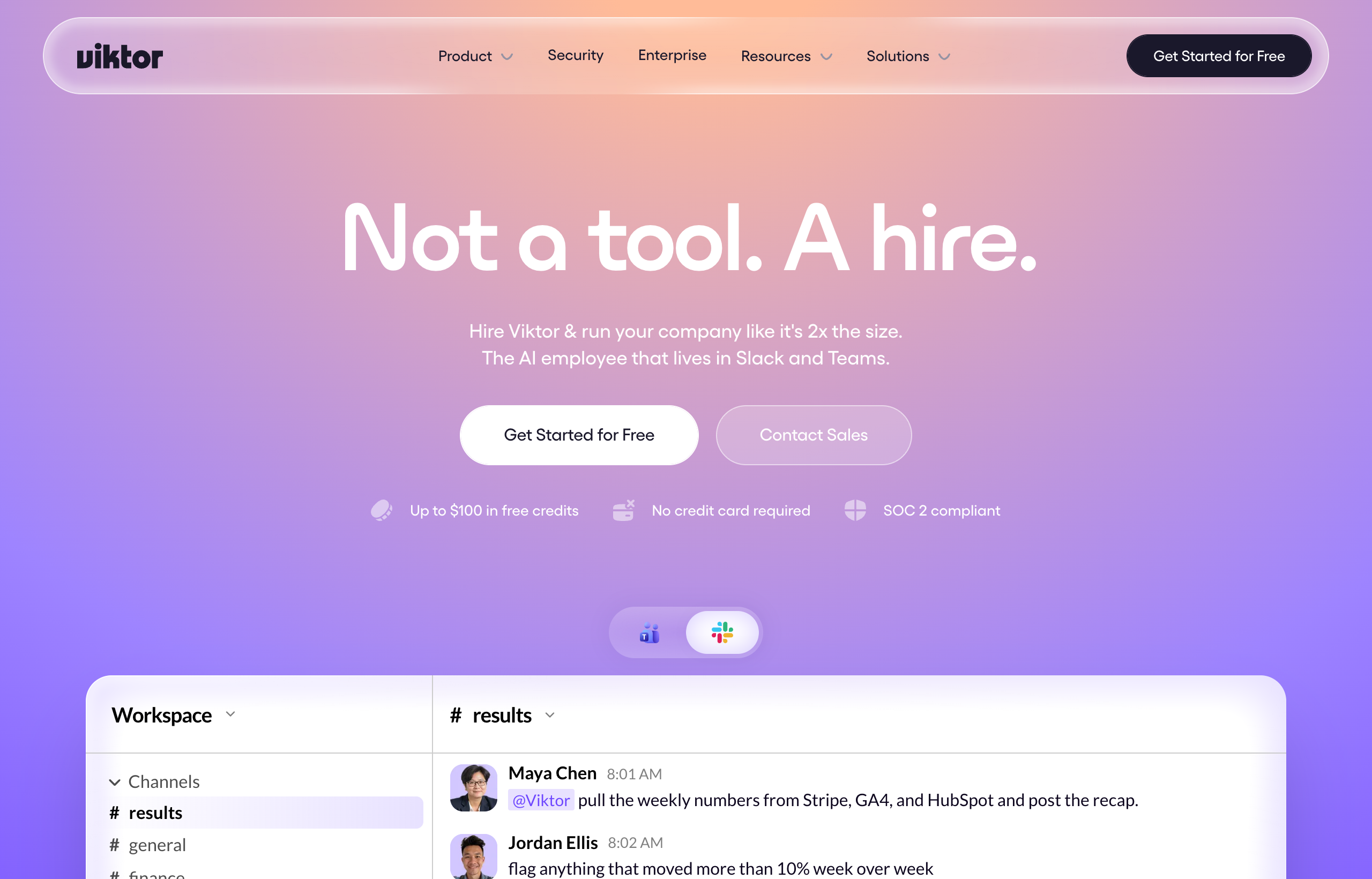
Claude the assistant is, by a lot of accounts including mine, one of the best writing and reasoning models available, and Claude Tag, its newer Slack-native “always-on” teammate feature, genuinely moves Anthropic into agentic territory, tagging @Claude with a task lets it break the work into stages and execute using connected tools, asynchronously, visible to the whole channel. That is closer to Viktor’s model than ChatGPT’s is. But it is currently in beta, restricted to Claude Enterprise and Claude Team Slack customers, and its integration breadth is nowhere near Viktor’s 3,200+ connected tools. Viktor is a mature, purpose-built AI employee with a much wider reach into business systems, from Stripe to Salesforce to GitHub, available broadly rather than as a beta feature gated to top-tier plans. If you want the best model to think and write with, Claude wins outright. If you want an agent that is generally available today, integrates broadly, and executes across your whole stack, Viktor is still the more complete product.
| Claude / Claude Tag | Viktor | |
|---|---|---|
| Core identity | Chatbot and reasoning assistant; Claude Tag adds an agentic Slack teammate | AI employee, agentic by design from the ground up |
| Where it lives | claude.ai, desktop/mobile app, Slack (Claude Tag, beta) | Slack and Microsoft Teams, natively |
| Availability of agentic mode | Claude Tag is in beta, Enterprise/Team Slack customers only | Generally available across plans |
| Integration breadth | Growing tool connections; narrower than Viktor’s | 3,200+ integrations including Stripe, HubSpot, Salesforce, GitHub, Google Ads |
| Builds/deploys deliverables | Generates code, documents, artifacts; deployment is manual | Deploys live web apps with database/auth, opens real PRs |
| Writing and reasoning quality | Best-in-class | Good enough to execute; not positioned as a writing partner |
| Pricing | Free, Pro ~$20/mo, Max from ~$100/mo, Team ~$25/seat/mo | Free $100 trial credit, plans from around $50/mo, workspace-wide |
What Claude actually is, and why the writing quality matters
Claude is Anthropic’s model family and chat assistant, and if your work is heavy on writing, editing, long-document reasoning, or careful analysis, it is genuinely excellent, often the one I reach for over ChatGPT when the task is nuanced writing or working through a long, messy document. That quality is not marketing, it shows up in daily use: longer context handling, a more careful and less hedging writing voice, and strong performance on coding tasks when you are working interactively rather than asking it to go execute unsupervised.
Pricing on the individual side is straightforward: a free tier, Pro at around $20 a month billed monthly (or roughly $17 a month if you pay annually), and Max plans starting around $100 a month with higher usage tiers available. On the team side, Claude Team runs about $25 a seat per month billed monthly (or around $20 a seat annually), with Premium seats around $100 to $125 a month, and Enterprise priced as a seat fee plus API-rate usage, custom per account. Check claude.com/pricing directly since Anthropic has adjusted these tiers before and likely will again.
Claude Tag: the part most comparisons miss
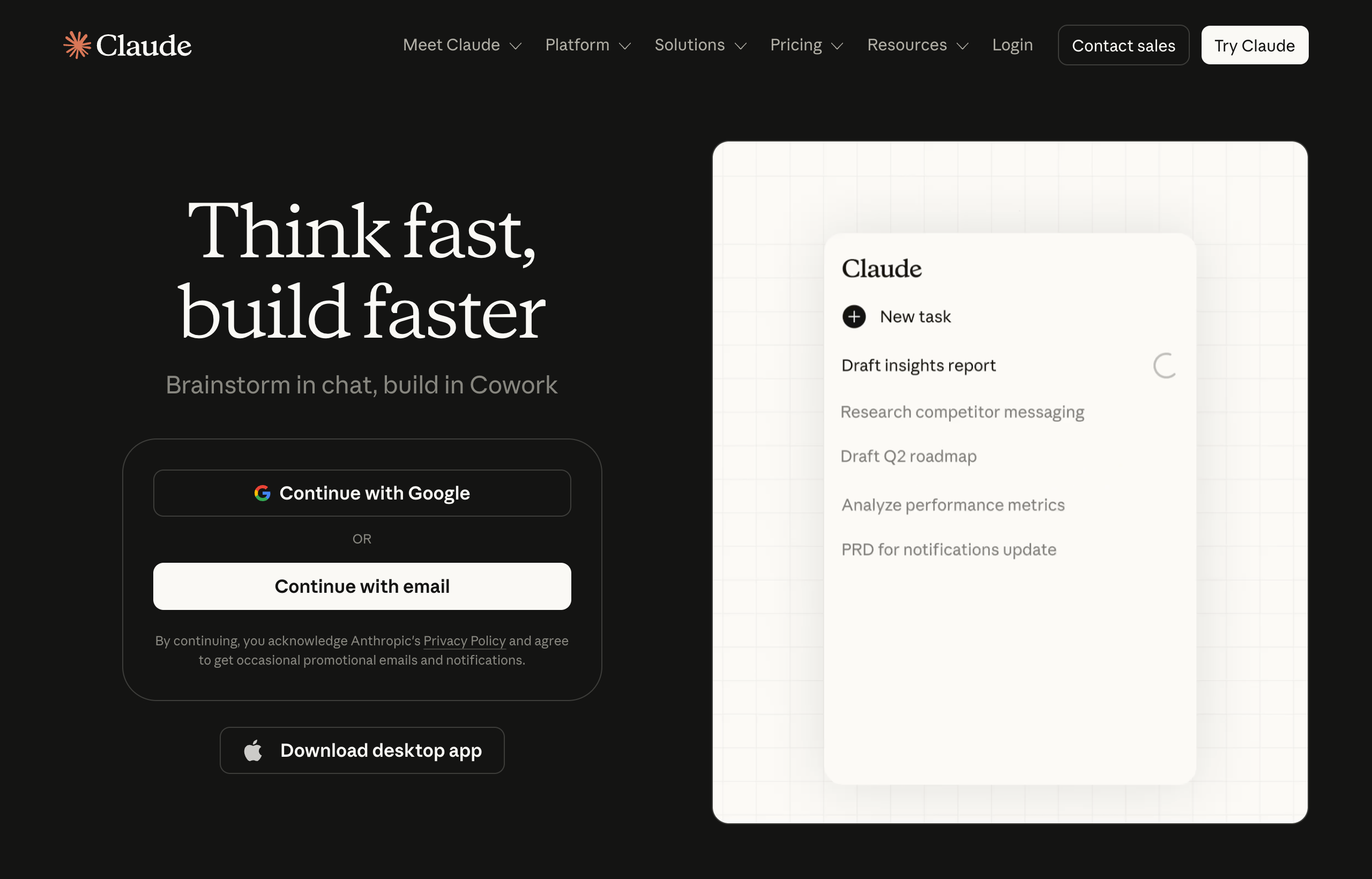
This is worth slowing down on because it is genuinely new and changes the shape of this comparison. Anthropic’s Claude Tag lets a Slack team tag @Claude with a request in plain language, and Claude breaks it into stages and works through them using whatever tools it has been connected to, then responds in the thread once it is done. It is “multiplayer” within a channel, meaning there is one shared Claude that everyone in that channel interacts with, so anyone can see what it is working on and pick up where the last person left off. It also builds contextual memory over time, so you are not re-explaining your business from scratch in every thread, and it can behave proactively, flagging relevant updates or following up on stalled threads if you enable that ambient behavior.
Internally, Anthropic has said a large share of their own product team’s code is generated through this kind of tagged, agentic workflow, and the same pattern is reportedly spreading to support tickets, metrics chasing, and bug root-causing inside their own company. That is a legitimate signal that this is not a demo feature, people are actually working this way.
Here is the honest caveat, and it is the whole reason Viktor still leads this comparison: as of this writing, Claude Tag is in beta and available specifically to Claude Enterprise and Claude Team Slack customers, not the broader Pro or Max individual tiers. Its tool-connection breadth, while growing, has not been marketed with anything close to Viktor’s named figure of 3,200+ integrations spanning ad platforms, CRMs, project trackers, and code repos out of the box. If you are on an Enterprise Slack plan and want to pilot it, it is worth trying. If you are a smaller team or an individual, it is not yet available to you the way Viktor’s full agentic feature set is available from day one on any plan.
What Viktor does that Claude, including Claude Tag, does not yet match
Viktor’s advantage right now is maturity and breadth, not a fundamentally different idea. It lives in Slack and Microsoft Teams the same way Claude Tag aims to, but it ships with more than 3,200 integrations already connected, named ones including Stripe, Notion, Google Ads, Meta Ads, HubSpot, Salesforce, Linear, Jira, GitHub, and Google Drive, available broadly rather than gated to a beta on the top-tier plan. It also goes further on the output side: building and deploying full web apps with a real database and authentication, opening actual pull requests against your codebase, and assembling finished reports and dashboards, not just working through a task and reporting back in text.
The other difference is intent. Claude, even with Claude Tag layered on top, is still fundamentally an assistant brand built around being a great model to talk to and reason with, agentic behavior is a feature added to that core. Viktor was built the other way around: execution is the product, and the conversational interface in Slack is just how you hand it the work.
If you already use Claude for writing and want to see what a purpose-built execution layer feels like on top of that, I would keep Claude for drafting and thinking, and give Viktor one task this week that needs to touch your actual tools, like pulling live metrics into a report. The free trial includes $100 in credits with no card required. Try Viktor free.
Pricing reflects the different center of gravity too. Viktor is credit-based and workspace-wide rather than per seat: team plans start around 20,000 credits for roughly $50 a month, moving through 30k/$75, 40k/$100, 80k/$200, and small-company tiers from 125,000 to 2 million credits running approximately $300 to $5,000 a month, with 300k credits at about $750/month being the most commonly picked tier. A quick task tends to burn somewhere around 50 to 100 credits, a full project 2,000 to 5,000, so cost tracks actual work done rather than the number of people with a login, which is a meaningfully different model from Claude’s flat per-seat pricing.
Honest weaknesses on both sides
Claude’s limitation here is availability and breadth, not capability. Claude Tag is a real agentic feature but it is in beta, restricted to Enterprise and Team Slack customers, and its integration ecosystem, while expanding, has not matched Viktor’s scale or the specificity of named connections into ad platforms, CRMs, and dev tools. If you are not on an Enterprise plan, the base Claude experience is still fundamentally a chatbot you have to operate manually, copying data in and instructions out.
Viktor’s honest weakness is billing predictability, the same issue that shows up across this whole agent category. Credit-based pricing means costs scale with usage, and real users have reported the bill climbing well past the $50 entry point once a team relies on it heavily, sometimes into the $200-plus range monthly. Viktor is also not positioned as a writing or reasoning partner, if you need careful long-form drafting or nuanced analysis of a document, Claude is still the better tool for that specific job, and Viktor is not trying to compete there.
A real task run through both
To make this concrete, I tried the same request in Claude and in Viktor: “Pull this month’s revenue from Stripe, compare it to last month, and flag any subscription plans with rising churn.” In plain Claude, without Claude Tag access, this played out the way any chatbot session does: I had to export the Stripe data myself, paste it in, and ask Claude to analyze it, which it did well, its explanation of the churn trend and the reasoning behind which plans looked concerning was genuinely sharp. But I did the data-gathering, not Claude.
In Viktor, the same request went straight into the Slack channel and came back with the Stripe numbers pulled live, the month-over-month comparison already run, and the churn flags already identified, no export or paste step on my end. If I had access to Claude Tag on an Enterprise Slack plan, I would expect a closer result to Viktor’s, since that is precisely the gap Claude Tag is designed to close. But for the overwhelming majority of Claude users on Pro or Max plans without Enterprise Slack access, the manual data-gathering step is still part of the workflow, and that step is exactly what Viktor removes by default.
The “multiplayer” idea both tools are chasing
One detail worth calling out because it is easy to miss: both Claude Tag and Viktor are built around the idea that the AI should live in a shared channel rather than a private chat window, so a whole team can see what it is working on, add context, and pick up a thread someone else started. That is a genuinely good design instinct and a sign both companies are converging on the same insight, that agentic AI is more useful as a shared coworker than a personal tool. Where they currently differ is maturity and reach: Viktor has been running this model broadly across its customer base with a large integration catalog already built out, while Claude Tag is still proving itself in beta with a smaller set of Enterprise pilot customers. That gap will likely narrow over time, but it is real today, and it is the main reason this comparison currently favors Viktor for teams that want broad execution capability right now rather than a promising beta.
Who should stick with Claude
If your daily work is writing, editing, research synthesis, or working through complex documents and decisions, Claude remains an excellent, arguably best-in-class choice, and that is true whether or not you ever touch Claude Tag. If you are on a Claude Enterprise or Team Slack plan and curious about agentic workflows, Claude Tag is worth piloting on internal tasks like code review or support ticket triage before you look elsewhere. Individuals and small teams without access to Claude Tag should think of Claude as a superb assistant, not yet a full AI employee.
Who should add Viktor
If you want an AI employee that executes broadly across your actual business tools today, without waiting on a beta rollout or an Enterprise Slack contract, Viktor is the more complete and more available option right now. Founders needing investor updates from live metrics, marketers running recurring ad account audits, and ops teams assembling board packs from multiple systems are the clearest fits, and none of that requires an Enterprise-tier commitment to access the full feature set.
The comparison I would actually run: use Claude for the thinking and drafting you already trust it for, and hand Viktor the parts of your week that involve pulling data from multiple tools and turning it into something finished. Start your Viktor trial.
Verdict
This is a closer comparison than Viktor vs ChatGPT, because Claude Tag shows Anthropic is genuinely building toward the same “AI teammate in Slack” idea Viktor has already shipped at scale. Credit where it is due: Claude Tag’s shared, multiplayer, memory-building design inside a channel is a smart approach. But today it is a beta feature on the top pricing tier with a narrower integration footprint, while Viktor is a mature, broadly available product with 3,200-plus connections and a track record of shipping finished deliverables, not just working through a task and reporting back. For pure writing and reasoning, pick Claude. For an AI employee you can actually deploy across your stack this week, Viktor is still ahead.
For more detail, read our full Viktor review, or see how it stacks up against OpenAI’s product in Viktor vs ChatGPT and Viktor vs ChatGPT Agent. If you want to see how it compares against Google’s model, check Viktor vs Gemini. For the wider shortlist, see the best AI agents of 2026 and the best AI agents for Slack.
FAQ
Is Claude Tag the same thing as Viktor?
They are conceptually similar, both live in Slack and execute multi-step tasks, but Claude Tag is currently in beta and limited to Claude Enterprise and Team Slack customers, with a narrower integration footprint than Viktor’s 3,200-plus connections, which are broadly available across plans.
Is Claude better than Viktor at writing?
Yes. Claude is widely regarded as one of the strongest models for writing, editing, and nuanced reasoning, and it is not trying to be an execution-focused AI employee the way Viktor is. Many teams use both for their respective strengths.
Can I use Claude Tag if I am not on Claude Enterprise?
Not currently. Claude Tag is in beta and restricted to Claude Enterprise and Claude Team Slack customers as of this writing. Availability may expand over time, so check claude.com for the latest rollout status.
How does Viktor’s pricing compare to Claude’s?
Claude uses flat per-seat pricing (Pro around $20/month, Team around $25/seat/month). Viktor uses credit-based, workspace-wide pricing starting around $50/month, so cost depends on how much execution work you actually run rather than seat count.
Should I replace Claude with Viktor?
Not for writing and reasoning tasks, Claude remains excellent at those. Viktor is better thought of as an addition for the execution work Claude cannot natively do across your business tools, unless you already have access to Claude Tag, in which case the two products overlap more than most comparisons admit.


