Best AI Note Taker for Microsoft Teams in 2026
By Nam Nguyen, founder of saas.com.ai, where I curate and track AI tools by real traffic and growth data. · Published July 11, 2026 · Last updated July 11, 2026
The best AI note taker for Microsoft Teams in 2026 depends on one thing most reviews skip: whether your IT admin allows a third-party bot into the meeting at all. If bots are blocked, Microsoft 365 Copilot (native, no bot) wins. If you have freedom, Granola (bot-free) and Fireflies (bot, generous free tier) are the strongest picks. Everything else is a trade-off between price, free minutes, and how visible the note taker is to everyone else on the call.
Key takeaways
- Native Microsoft Teams AI notes (intelligent recap) need either Teams Premium (~10/user/month)orMicrosoft365Copilot(30/user/month).
- Third-party bots (Otter, Fireflies, Fathom, tl;dv) join as a guest and show up in the participant list.
- Microsoft is restricting external meeting bots at the tenant level starting Q3 2026, which changes the whole decision.
- Granola is bot-free: it captures system audio locally, so nothing joins the meeting and nothing appears in the roster.
- Free tiers range from 300 minutes/month (Otter) to unlimited transcripts (tl;dv, Fathom), but the real limits hide in storage and AI-summary caps.
The 6 best AI note takers for Microsoft Teams, compared
Here is the shortlist first, so you can pull the one number you care about and move on.
| Tool | How it works with Teams | License / cost (2026) | Free tier | Best for |
|---|---|---|---|---|
| Microsoft 365 Copilot | Native, no bot, real-time in-meeting Copilot | $30/user/mo add-on (Business promo $18 through Sep 30, 2026) + eligible M365 base | None (paid add-on) | Enterprises on M365 that block external bots |
| Teams Premium (recap only) | Native, no bot, intelligent recap after the call | ~$10/user/mo add-on + eligible M365 base | None (paid add-on) | Cheapest native AI notes without full Copilot |
| Granola | Bot-free, captures system audio on your device | Individual $18/mo; Business $14/user/mo; Enterprise $35+ | 25 meetings lifetime (trial) | Dodging IT bot bans while staying private |
| Fireflies.ai | Bot joins the meeting, native Teams | Pro from $10/user/mo; Business from $19/user/mo | 800 min/mo, 3-month storage | Sales teams that push notes to a CRM |
| Otter.ai | Otter Assistant bot joins the meeting | Pro $16.99/mo; Business $30/user/mo | 300 min/mo | Solo users who want live transcript and chat |
| tl;dv | Bot records Teams, Zoom, Meet | Pro $18/user/mo; Business $59/user/mo | Unlimited recordings (auto-delete after 3 months) | Free multilingual recording at volume |
| Fathom | Bot; Teams support on paid plans only | $24/user/mo (adds Teams + Meet) | Unlimited on Zoom; AI summaries capped at 5/mo | Zoom-first teams testing the waters |
(That is technically seven rows for six tools, because “Microsoft native” is really two price points: recap-only Teams Premium, and the full Copilot experience. Most buyers confuse the two and overpay.)
See how every tool in this list ranks by real traffic and growth data.
How do AI note takers work inside Microsoft Teams?
AI note takers for Teams work in one of three ways, and the method decides everything else: cost, privacy, and whether IT can shut it down.
Native (no bot). Microsoft’s own intelligent recap and Copilot generate notes from inside the Teams service. There is no guest in the roster, no join announcement, nothing leaves your Microsoft 365 tenant. This is the only method Microsoft itself controls end to end, and it is the only one that survives a strict security review without a fight.
Bot (external guest). Otter, Fireflies, tl;dv, and Fathom send a bot account into the call. It appears as a participant, records the audio, and ships the transcript to the vendor’s cloud to summarize. Every attendee sees “Otter Notetaker” in the list, and the meeting data leaves your tenant. That last part is exactly what security teams object to.
Bot-free (local capture). Granola takes a third path: it runs as a desktop app and captures the system audio playing on your own machine, then sends only that audio for processing. No bot joins, so the roster stays clean and there is no recording banner to change how people talk. Granola works with any platform that produces sound, Teams included, according to Granola’s own documentation.
One catch worth saying out loud: bot-free does not mean invisible to IT. Granola still needs a desktop install, and a locked-down enterprise laptop can block that too. It sidesteps the meeting bot policy, not the app install policy.
Will your IT admin even let a third-party bot into the meeting?
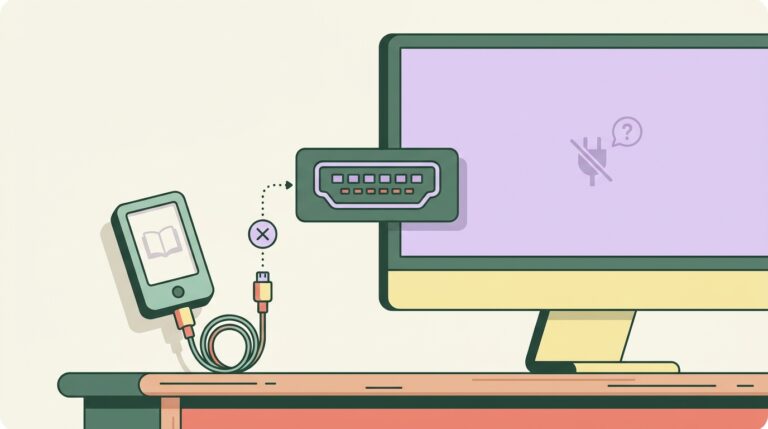
This is the question that should drive your choice, and almost no listicle mentions it. Starting in Q3 2026, Microsoft is tightening restrictions on third-party bot accounts joining Teams meetings, with new lobby warnings, admin block lists, and tenant-level enforcement, according to UC Today.
The control lives in the Teams meeting policy under “Meeting join and lobby,” in a setting called Manage external bots and their access to meetings, per CallScrib’s admin guide. When an admin sets it to block, detected external bots never even reach the lobby. Otter, Fireflies, Fathom, and Read.ai are named directly in the crackdown coverage because they all join as guests.
Here is the nuance that separates informed buyers from the rest: tools that read the transcript through the Microsoft Graph API instead of sending a bot are not affected, according to Practical365. The defining question is not “does it take notes,” it is “does it push a bot account into my meeting, or does it read the transcript Microsoft already generated?”
So before you fall in love with any tool’s feature list, ask your Teams admin one thing: is the external-bot policy set to block? In a lot of enterprises the answer is already yes, and that single setting eliminates four of the six tools on this page. (If you are the admin, you already know which way the wind is blowing on this. If you are an employee, do not find out the hard way in front of a client.)
Microsoft 365 Copilot in Teams: is the native option worth the price?
Microsoft 365 Copilot is the most powerful Teams note taker and the most expensive, and for enterprises that block bots it is often the only option left standing. It runs natively, adds a real-time Copilot pane you can query during the call, and produces customizable recap templates after it.
The pricing is where people get burned. Microsoft 365 Copilot is a $30/user/month add-on that sits on top of an eligible base license like E3, E5, or Business Premium, according to Microsoft’s pricing page. Stack it on E3 and you are near $66/user/month all in. Microsoft 365 Copilot Business is running a promo at $18/user/month through September 30, 2026, before returning to a $21 standard rate, which softens the blow for smaller teams.
You do not always need the full Copilot license, though, and this is the money-saving detail Microsoft is not eager to headline. Basic intelligent recap, the AI meeting notes, speaker timeline, and auto-generated chapters, is available with Teams Premium at roughly $10/user/month, per Microsoft’s Teams Premium page. What Teams Premium does not give you is the live in-meeting Copilot and custom summary templates, which are Copilot-only, according to Microsoft Learn.
My take: if you just want reliable AI notes after every call and you are already on Microsoft 365, buy Teams Premium first and see if the recap alone is enough. Most teams never touch the live-Copilot features they paid triple for.
Not on Microsoft 365 yet, or want the bot-free route?
Otter.ai: still the default, but is the bot a liability?
Otter.ai is the name most people reach for first, and in 2026 that familiarity is starting to work against it in Teams-heavy shops. The Otter Assistant bot joins the meeting, transcribes in real time, and gives you Otter AI Chat to ask questions afterward.
The free tier is 300 minutes/month, the tightest of the well-known tools, with Pro at $16.99/month and Business at $30/user/month. That 300-minute cap sounds fine until you realize a few hour-long standups a week eats it before mid-month.
The bigger issue is not price, it is the bot itself. Otter is named in the Q3 2026 external-bot crackdown, so in a locked-down tenant the Otter Assistant may never make it past the lobby. Otter is a fine pick for a freelancer or a small team on an open tenant. In a regulated enterprise, treat it as a coin flip until you confirm the bot policy.
Compare pricing and features on the Otter.ai listing at saas.com.ai.
Fireflies.ai: best for sales teams on Teams?
Fireflies.ai is the strongest bot-based pick for Teams when the notes need to end up somewhere other than a doc, usually a CRM. It joins natively, transcribes, creates searchable soundbites, and pushes structured data into tools like Salesforce and HubSpot.
The free tier is genuinely useful at 800 minutes/month with 3-month storage, and paid plans start at $10/user/month for Pro and $19/user/month for Business. That 800-minute free allowance is more than double Otter’s, which is why a lot of small sales teams quietly run Fireflies for free far longer than they should be able to.
The catch is the same one that hangs over every bot: Fireflies is on the external-bot restriction list, so its future in strict Teams tenants depends on admin policy, not on how good the CRM sync is. If your organization is not locking bots down, Fireflies is the one I would test first for revenue teams.
See the full breakdown on the Fireflies.ai listing at saas.com.ai.
Fathom: why is Teams support locked behind the paid plan?
Fathom has the most generous-looking free tier and the biggest asterisk for Teams users. Its free plan gives unlimited recordings and transcripts, but that generosity is built around Zoom. Teams and Google Meet support arrive only on the paid plan at $24/user/month, and even the free AI summaries are capped at five meetings per month.
So the honest read is this: if your meetings live in Teams, Fathom is not a free tool, it is a $24/user/month tool. The unlimited-everything headline you saw is a Zoom story. For a Zoom-first team dipping a toe into AI notes, Fathom is excellent. For a Teams shop, the value proposition shrinks fast once you cross the paywall you did not know was there.
Details are on the Fathom listing at saas.com.ai.
tl;dv: the most generous free tier for Teams?
tl;dv wins the free-tier argument outright if raw volume is what you need. It records Teams, Zoom, and Meet, and the free plan covers unlimited recordings and transcripts in 30-plus languages. Paid plans run $18/user/month for Pro and $59/user/month for Business.
The trade-off is buried in retention: on the free plan, recordings auto-delete after three months. That is fine for disposable standups and brutal if you needed the recording of a kickoff call from last quarter. tl;dv is the tool I would hand to someone who records constantly, works across languages, and does not need a permanent archive.
Like the others here, tl;dv drives a bot into the meeting, so the Q3 2026 policy applies to it too.
Granola: the bot-free answer to the Teams crackdown?
Granola is the tool built for exactly the moment Microsoft is creating. It is bot-free: instead of sending a guest into the call, it captures the audio playing on your own device, so nothing shows up in the participant list and no recording banner changes the tone of the room. It also works as a hybrid notepad, you jot sparse notes during the call, and Granola uses the transcript to expand them into a full summary you can then chat with.
Granola works with Teams, Zoom, Meet, Slack Huddles, and WebEx, on Mac and Windows desktop, per Granola’s pricing page. Pricing: the free tier is 25 meetings lifetime, effectively a trial, with Individual at $18/month, Business at $14/user/month, and Enterprise from $35/user/month with SSO.
Two limits people miss. First, there is no web or mobile app, you need the desktop client running on the machine where the audio plays, so a phone call on the go is out. Second, the 25-meeting free cap is a lifetime number, not monthly, so you evaluate fast or you pay.
Still, if your Teams tenant blocks bots and you do not want the full Copilot bill, Granola is the cleanest path I have found. Read the deeper writeup in our Granola AI review.
How do you turn on AI notes in Teams without a third-party tool?
You can get native Microsoft Teams AI notes in five steps, no external app required, if your admin has assigned the right license.
- Confirm your license. Ask IT whether you have Teams Premium or Microsoft 365 Copilot assigned. Without one, the intelligent recap tab stays empty.
- Turn on recording and transcription when the meeting starts. Intelligent recap is built from the transcript, so no transcript means no AI notes.
- Open the Copilot pane during the call (Copilot license only) to ask live questions like “what did we decide about the budget?”
- Open the Recap tab after the meeting from your Teams calendar event to see AI notes, the speaker timeline, and auto-generated chapters.
- Use custom summary templates only if you hold the Copilot license, since Teams Premium does not include them.
This native route is the one that never trips the external-bot policy, because there is no external bot. That is the whole point.
Verdict: which AI note taker for Microsoft Teams wins in 2026?
There is no single winner, but there is a clear decision tree, and it starts with your admin, not your feature wishlist.
If your enterprise blocks external bots, stop comparing free tiers. Buy Teams Premium for recap-only needs, or Microsoft 365 Copilot if you want live in-meeting AI, and move on. Anything with a bot is a support ticket waiting to happen.
If you have freedom to install what you want, I would run Granola for its bot-free privacy and clean roster, or Fireflies if the notes have to land in a CRM and 800 free minutes a month is enough to prove the value. Use tl;dv if you record constantly and multilingually, and skip Fathom for Teams unless you are ready to pay $24/user/month for a tool whose free story is really about Zoom.
The uncomfortable truth for 2026: the most important spec on this page is not accuracy or price. It is whether a bot can get into the room. Microsoft just made that a setting, and that setting will decide more Teams note-taking purchases this year than any feature comparison will.
Frequently asked questions
Does Microsoft Teams have built-in AI notes?
Yes. Microsoft Teams offers native AI notes through intelligent recap, which requires a Teams Premium (~10/user/month)orMicrosoft365Copilot(30/user/month) license on top of an eligible Microsoft 365 base plan. No third-party app is needed.
Will Microsoft block Otter and Fireflies in Teams?
Microsoft is not deleting these tools, but starting in Q3 2026 it lets admins block external meeting bots at the tenant level. Because Otter, Fireflies, Fathom, and tl;dv all join as bots, an admin who enables the block policy can stop them from entering Teams meetings.
What is the cheapest way to get AI meeting notes in Teams?
For native notes, Teams Premium at roughly $10/user/month is the cheapest Microsoft option and avoids third-party bots entirely. For a free third-party route, tl;dv offers unlimited recordings and Fireflies offers 800 minutes per month, though both send a bot into the meeting.
How is Granola different from Otter for Teams?
Granola is bot-free: it captures your device’s system audio locally, so it never appears in the Teams participant list. Otter sends the Otter Assistant bot into the meeting as a visible guest and ships audio to its cloud. Granola sidesteps the external-bot policy that Otter is subject to.
Do I need Microsoft 365 Copilot for basic Teams meeting summaries?
No. Basic intelligent recap, including AI notes, speaker timelines, and chapters, comes with Teams Premium. You only need the pricier Microsoft 365 Copilot license for real-time in-meeting Copilot and custom recap templates.
About the author
Nam Nguyen is the founder of saas.com.ai, an AI tools directory that curates and tracks software by real traffic and growth data to help readers find the right tool for any task. He writes buyer-focused comparisons based on hands-on testing and live usage data rather than vendor marketing.
Sources
- Microsoft, “Intelligent recap for Teams calls, meetings, and events,” Microsoft Learn (2026). https://learn.microsoft.com/en-us/microsoftteams/intelligent-recap-calls-meetings
- Microsoft, “Microsoft 365 Copilot Plans and Pricing” (2026). https://www.microsoft.com/en-us/microsoft-365-copilot/pricing
- Microsoft, “Microsoft Teams Premium” (2026). https://www.microsoft.com/en-us/microsoft-teams/premium
- UC Today, “Microsoft Teams to Block External Bots Automatically as AI Notetaker Crackdown Hardens” (2026). https://www.uctoday.com/unified-communications/microsoft-teams-to-block-external-bots-automatically-as-ai-notetaker-crackdown-hardens/
- CallScrib, “Microsoft Teams 2026 Bot Ban: Complete Admin Guide for IT Teams” (2026). https://www.callscrib.com/blog/microsoft-teams-2026-bot-ban-admin-guide
- Practical365, “Using Third-Party AI Notetaking Apps with Teams Meetings” (2026). https://practical365.com/ai-notetaking-apps-teams/
- Granola, “Granola pricing: Plans, features, and ROI” (2026). https://www.granola.ai/blog/granola-pricing-plans-features-roi
- tl;dv, “Fireflies.ai Pricing & Alternatives” (2026). https://tldv.io/blog/fireflies-ai-alternatives/
- Granola, “Meeting note tool pricing: Granola vs. Fireflies vs. Fathom vs. Otter” (2026). https://www.granola.ai/blog/meeting-note-tool-pricing-granola-vs-fireflies-fathom-otter