

The most telling thing about Zapier Agents is not a feature, it’s the pricing page. Zapier built its reputation on a single, unified task pool across every plan, one number you watch, one meter that matters. Agents ships with its own separate meter, “activities,” billed and tracked independently from the tasks that power your Zaps. That decision tells you exactly what Zapier Agents is: not a replacement for the automation platform, an addition to it, built by a company that clearly wants a foothold in agentic AI without disturbing the product that already works.
I spent time in Zapier Agents the way I test anything before reviewing it, connecting it to real apps and giving it real tasks rather than reading the marketing copy and calling it a review. This is an honest, standalone look at what it actually does well, where it falls short, and real 2026 pricing pulled directly from Zapier’s live pricing pages, not the rewritten features list you’ll find on most “review” sites that never opened the product.
Disclosure: some links in this post are affiliate links. If you sign up through them, we may earn a commission at no extra cost to you. That never changes our verdict.
The 30-second verdict
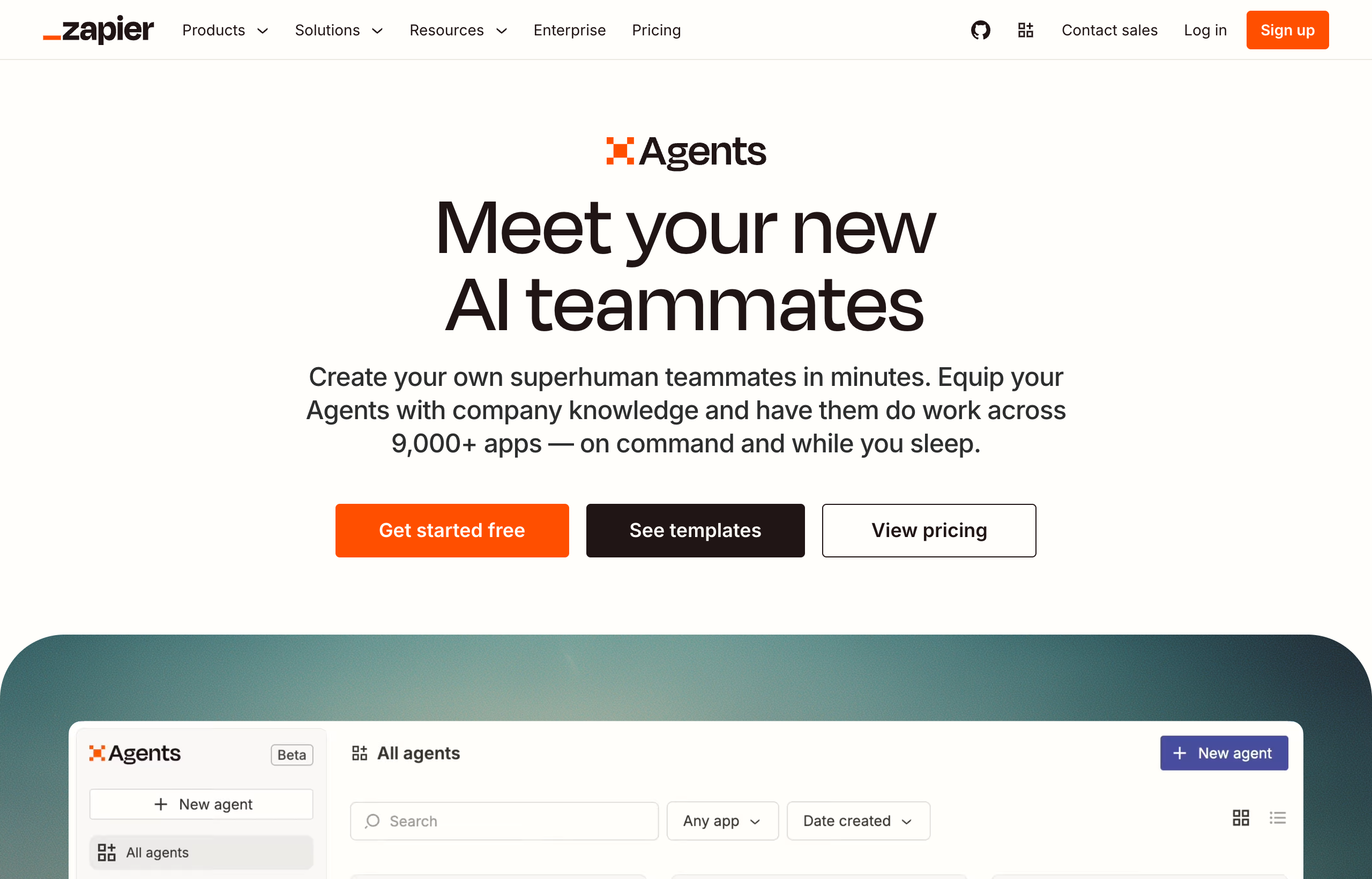
Zapier Agents is a genuinely useful, low-risk way to add AI decision-making into workflows built on Zapier’s existing app catalog, especially if you already have Zaps running and a specific point where a human is currently making a judgment call an AI could handle instead. It inherits Zapier’s biggest asset, a claimed 7,000-plus connected apps, without having to rebuild any of that integration work, and the entry price is genuinely low. It is not, however, a general-purpose AI coworker: it is strongest acting inside flows you have already built, not originating and completing broad, undefined work on its own. I rate it 3.6 out of 5, useful and cheap to try, but narrower in scope than its “AI agent” framing suggests.
- Built on top of Zapier’s mature automation platform and 7,000-plus app catalog, which is a real head start over a standalone agent product built from scratch.
- Genuinely easy to start: a forever-free tier with 400 activities a month, and any Zapier user can try it independently of their core subscription.
- Billed on its own activity-based meter, separate from Zapier’s task-based automation plans, which adds a second pricing line to track if you use both.
- Best suited to a fuzzy decision point inside an otherwise deterministic flow, not to open-ended, cross-system project work with no existing scaffolding.
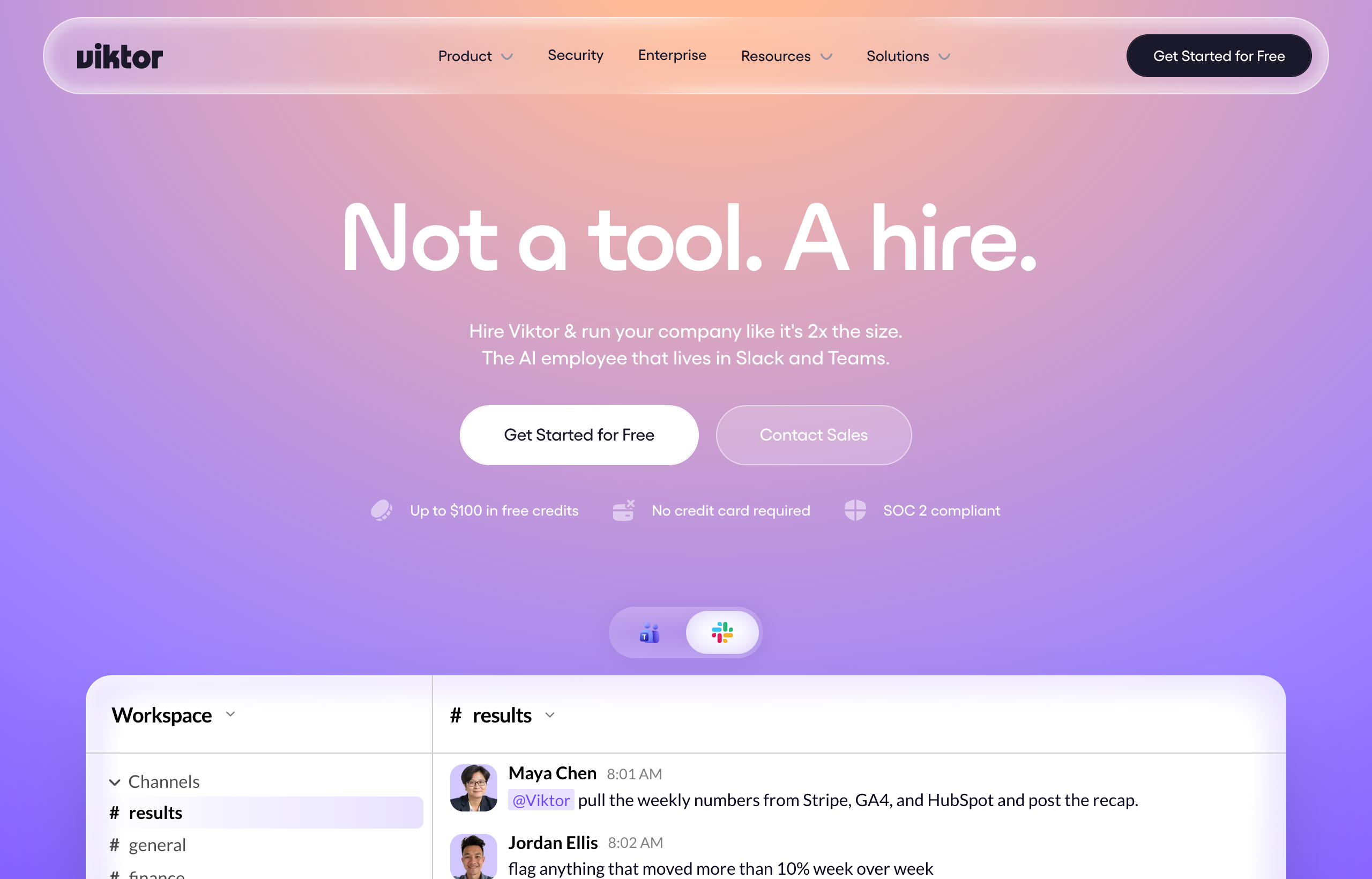
If what you actually want is a coworker to hand a broad, undefined task to rather than an AI layer inside an existing flow, it’s worth testing that against Viktor’s free $100 in credits on the same request before you decide which shape of tool fits.
What Zapier Agents actually is
Zapier Agents is Zapier’s dedicated AI agent product, built on top of the same platform and app catalog that powers Zaps. Where a traditional Zap follows a fixed trigger-and-action sequence you configure step by step, an Agent is designed to reason over information that does not arrive in a clean, predictable shape: it can pull from live data sources, browse the web for current information, and take actions across Zapier’s connected apps with more flexibility than a rigid, linear flow allows. The pitch is straightforward: instead of building an entirely new automation stack for AI, add an AI decision-maker into the processes and connections you already have.
Setup starts inside the same Zapier account you’d use for Zaps, which is either a real convenience or a real dependency depending on how you look at it. You are not learning a new platform from scratch if you already know Zapier’s interface, but you are also inheriting its conceptual model: apps, triggers, activities, connections. Any Zapier user can try Agents for free, independent of their core plan, which lowers the barrier to a first test considerably compared with products that require a paid commitment up front.
What it’s genuinely good at
The single biggest strength is inherited, not built: Zapier Agents gets to stand on top of more than 7,000 connected apps without having to earn that integration coverage from zero, the way most AI agent startups have to. If your operations already run through Zapier, an Agent can act inside that existing web of connections from day one, which is a meaningfully shorter path to value than most competing agent products offer a Zapier-native team.
It’s also genuinely easy and cheap to start. The Free tier is forever free, not a time-boxed trial, with 400 activities a month, enough to run a real evaluation before spending anything. The entry paid tier, $400 billed annually (working out to around $33.33 a month) for 1,500 activities a month, is a low enough commitment that testing it does not require a real budgeting conversation first. Live data sources and web browsing are legitimately useful additions on top of a static flow: an Agent can pull current information into a process rather than working only from what was true when the flow was built, which closes a real gap in traditional Zaps. And for organizations already standardized on Zapier, Enterprise-tier organizational sharing means Agents can be rolled out company-wide the same way Zaps already are, without introducing a second vendor relationship to manage.
Where it falls short
The honest weakness is the flip side of its biggest strength: Zapier Agents is, at its core, still an extension of Zapier’s world, and that shows up the moment a request does not fit inside an existing or easily-built flow. It is built to reason and act inside connected apps, not to independently originate and complete a broad, multi-system deliverable from a plain-language request with no scaffolding behind it. Ask it to do something genuinely open-ended, more like briefing a coworker than triggering a process, and you’ll feel the product reaching for a flow-shaped answer to a question that was not flow-shaped to begin with.
It is also, honestly, newer and less proven than either Zapier’s core automation product or an agent-first tool built from the ground up to handle ambiguous requests. Activity-based billing carries the same unpredictability every usage-based pricing model does: a data-heavy or tool-heavy task consumes more of the monthly allotment than a simple lookup, and 1,500 activities a month at the entry tier can go quickly once a team starts relying on it daily rather than testing it occasionally. And running it means tracking a second meter alongside your existing task pool if you also use Zaps, which adds a small but real amount of billing complexity that a single-product agent tool does not have.
| Category | Zapier Agents |
|---|---|
| Best for | Teams already on Zapier who want AI judgment inside existing or new flows |
| App/tool coverage | Zapier’s app catalog, 7,000+ apps (per Zapier) |
| Free tier | Forever free, 400 activities/month |
| Entry paid tier | $400/year (around $33.33/month), 1,500 activities/month |
| Enterprise | Custom pricing, custom activity volume, contact sales |
| Billing relationship to core Zapier | Separate activity-based meter, independent from the task pool on Zaps |
| Strongest use case | A fuzzy decision point inside an otherwise deterministic, connected-app workflow |
| Weakest use case | Broad, open-ended project work with no existing flow or app scaffolding |
Real pricing, checked in 2026
Zapier Agents’ pricing, confirmed directly on Zapier’s live pricing page, runs on three tiers, separate from the core Zapier automation plans. The Free tier is forever free with 400 activities a month, no card required to keep using it. The Pro tier costs $400 billed annually, which works out to around $33.33 a month, for 1,500 activities a month. The Enterprise tier is custom-priced, with a custom number of monthly activities and organizational sharing for larger deployments, arranged through a sales conversation.
It’s worth being clear that this is a separate bill from Zapier’s core automation plans. Zapier’s Free plan for Zaps is $0 a month forever with 100 tasks a month; Professional starts from around $19.99 a month; Team starts from around $69 a month for up to 25 users; Enterprise is custom. If your team wants both Zaps and Agents, you are either combining two separate free tiers, or paying for both products, which is worth factoring into a real budget rather than assuming Agents is simply included in whatever Zapier plan you already have.
How this review was tested
I connected Zapier Agents to a small set of real, already-connected apps (a Google Sheet, Slack, and a CRM) rather than testing it in a vacuum, since that’s the actual condition most teams will use it under. The most useful test was a simple one: I asked an Agent to monitor a lead-intake sheet, classify each new row by likely deal size using unstructured notes in a free-text field, and post a summary to Slack, a task that would have needed either a rigid keyword rule in a plain Zap or a person reading each row by hand. The Agent handled the classification step reasonably well, closer to what a person would conclude than a hardcoded rule ever could get. Where it struggled was a second test: asking it, with no existing flow as scaffolding, to independently pull data from two unrelated systems and assemble a comparison report from scratch. That’s the kind of open-ended, multi-system request that Viktor handled cleanly in a single Slack message when I tested it separately, and it’s the clearest illustration of where Zapier Agents’ scope currently ends.
Activity consumption during testing tracked roughly with what Zapier documents: simple lookups and classifications used a handful of activities each, while the multi-step comparison attempt, even though it did not fully succeed, burned through a noticeably larger share of the monthly allotment on the entry tier. That’s worth knowing before you plan a heavy testing week on the free 400-activity tier; a handful of ambitious, multi-step requests can eat through it faster than a similar number of simple ones would.
What a real activity actually costs you
“Activities” as a billing unit is a reasonable idea in principle, since it should scale cost with actual usage rather than charging a flat fee regardless of how much work gets done. In practice, the entry Pro tier’s 1,500 activities a month sounds generous until you map it against real usage: a team running a handful of Agent-assisted classifications or lookups a day across a few flows can realistically land in the hundreds of activities a month, which leaves comfortable headroom, but a team that starts routing a meaningful share of its operational judgment calls through Agents can climb toward that ceiling faster than the sticker price of around $33 a month implies. There is no dollar figure published for overages on the Pro tier at the time of writing, so the practical ceiling of that plan is worth testing against your own real usage pattern before assuming it will comfortably cover a growing use case, rather than assuming the $33-a-month framing caps your cost the way a flat subscription would.
Who this is genuinely right for
- Teams already running meaningful automation on Zapier who want to add AI decision-making to an existing or planned flow without adopting a new platform.
- Anyone testing agentic AI on a near-zero budget, since the free tier and low-cost Pro tier make experimentation cheap.
- Processes that are mostly deterministic with one fuzzy step, like classifying an inbound request or summarizing unstructured data before an automated action fires.
- Organizations that prefer to consolidate vendors rather than add a separate AI agent product to their stack.
Who should look elsewhere
- Teams without existing Zapier infrastructure who would be adopting an entirely new platform’s mental model just to get value from an agent.
- Anyone who wants a genuinely broad AI coworker, one that can be handed an open-ended request with no existing flow and return a finished deliverable.
- Teams that live in Slack or Microsoft Teams and want an agent that operates directly where they already talk, rather than inside a separate automation dashboard.
- Anyone whose work requires broader outputs than actions inside connected apps: written code and pull requests, deployed applications, full reports.
For that last group especially, the more direct fit is a Slack-native AI employee. Viktor’s free trial gives you $100 in credits, enough to hand it a real, undefined task and see the difference in scope for yourself.
Frequently asked questions
Is Zapier Agents free?
Yes, there is a forever-free tier with 400 activities a month and no card required. The paid Pro tier costs $400 billed annually, around $33.33 a month, for 1,500 activities a month.
Do I need a Zapier account to use Agents?
Any Zapier user can try Agents, and it operates inside the same account and app catalog as Zaps. It is built as an extension of the Zapier platform rather than a fully independent product.
Is Zapier Agents billed separately from regular Zapier plans?
Yes. Agents runs on its own activity-based tiers, separate from the task pool that powers Zapier’s Free, Professional, Team, and Enterprise automation plans. If you use both, expect two separate usage meters.
Can Zapier Agents replace a general AI assistant or coworker?
Not really. It is strongest acting inside flows and connected apps you already have, reasoning over live data and taking actions within that scaffolding. For genuinely open-ended requests with no existing flow, a Slack-native AI employee like Viktor is built for that shape of work more directly.
What is the biggest limitation of Zapier Agents right now?
Its scope. It’s newer and narrower than a general AI coworker, best suited to a fuzzy decision point inside an otherwise deterministic process rather than independently originating and completing broad, multi-system deliverables from scratch.
My honest take
Zapier Agents is a smart, low-risk product for exactly one situation: you already run real workflows on Zapier, and there’s a specific point where a human is currently exercising judgment that an AI layer could reasonably take over. For that situation, it’s worth the free tier and worth the cheap Pro tier if it earns its keep. What it is not, and what its “AI agent” framing sometimes implies more than the product delivers, is a general-purpose coworker you can hand an open-ended, undefined request to and trust to figure out the rest without an existing flow behind it.
If your operations already live in Zapier and you just want to sprinkle AI judgment into what you’ve built, start here, it costs almost nothing to find out. If what you actually want is a Slack-native AI employee that takes a plain-language request and comes back with a finished deliverable, whether or not you have ever touched Zapier, that is a different product built for a different job.
See the direct Viktor vs Zapier Agents comparison for a full side-by-side, or try Viktor’s free $100 in credits on the same task you’d consider handing to an Agent, and compare the results yourself.
For more, see the full Viktor review, the broader Viktor vs Zapier comparison, the best Zapier alternatives roundup, or the best AI agents in 2026 hub for how it fits against the wider field.
Pricing captured directly from zapier.com/pricing, July 2026. Zapier changes plans and limits regularly, so confirm current numbers before you buy.


